
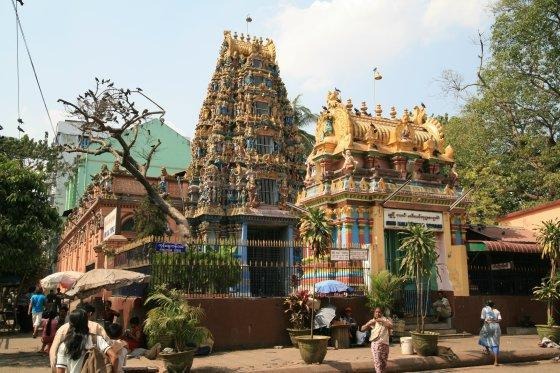
In the recent times, India has been focusing greatly on developing and maintaining ties with its diaspora all over the world and they are considered as one of the most important factors in the foreign policy of our country. It is deemed to be one of the significant tools in India’s soft power diplomacy which has helped in bridging the gap between India and various other nations. With the advent of India’s Act East Policy, India has been especially focusing on her South East Asian neighbours wherein the role of diasporas has been given a lot of importance. In this connection, the role of Indian Diaspora in Myanmar is considered as significant not only because of its proximity, but because these diasporas had played a significant role in its economy from British period. Although their status has changed during the post-Independence period and decreased in number, mainly due to the military rule, but still, they hold an important role in the country and today nearly 2% of the total population of the country consists of People of Indian Origin (PIO), the original migrants of British period. Although the political participation is limited, they played an important role in the cultural assimilation, socio-economic condition of the country (Chakraborty, 2019). Indians have lived in Burma for centuries, but large-scale migration took place during British-colonial rule, when the country was part of British India, during the 19th and early 20th centuries. They were used as civil servants, traders, farmers, labourers and artisans – and came to be considered the backbone of the economy.
- The historical arc: From colonial settlers to post-colonial minorities
Myanmar-India links are deeply rooted in history and belief. The legend of Shwedagon Pagoda, the story of two Burmese merchants meeting and obtaining a few strands of the hair of Lord Buddha, may just be that, a legend, but it has had a powerful hold on the ordinary person’s perception in Myanmar that Buddhism originated in India. Historians point out that a royal monk of Asoka the Great visited Myanmar in 228 BCE, bearing the Buddha’s message and Buddhist sacred texts. Later, Theravada Buddhism reached Myanmar from India via Sri Lanka. An intense desire on the part of ordinary people as well as high dignitaries to visit Bodh Gaya and other famous Buddhist pilgrimage sites in India continues to be a strong bond between Myanmar and India. Beyond religion and philosophy, ethnic links between the people of four Indian states bordering on Myanmar, namely Arunachal Pradesh, Nagaland, Manipur and Mizoram, and the people of western Myanmar, including Chins, Kukis and Kachins, have continued through the millennia. These links, cemented by linguistic commonality or affinity, family and tribal ties, traditional trade exchanges, shared lifestyles and conflict and cooperation among rulers, began well before India and Myanmar emerged as nation-states (Bhatia, 2011).
It was with the spurring of the Indian freedom struggle, particularly from the nineteenth to the early twentieth century, that many Indians migrated to Burma (presently Myanmar) for varied reasons. Events such as the tracheotomy of successive Anglo-Burmese Wars elevated the bustling of immigrants to Myanmar, which accentuated the ballooning of potent cultural, social and political allegiance between the two countries (Das).
- The British colonial period (1824 – 1948)
The documented prominent presence of People of Indian Origin (PIO) in Myanmar dates back to 1886 and shaped the course of the relations between the two inter-linked British colonies till the independence of Myanmar in 1948. This migration across the open borders of the two countries during the British rule was a result of the British policies of promoting co-dependent trade and labour movement throughout various British colonies during the period of colonisation. During India’s freedom struggle, leaders like Subhash Chandra Bose and Rashbehari Bose used these intertwined people-to-people linkages between Indian and Myanmar to mobilise support for their anti-British movements. Since India was one of the bigger and more advanced British colonies in the region in terms of education, skills and infrastructure, the movement of PIO’s was indelibly linked to the expansion of the British occupation in Southeast Asia, especially in countries like Myanmar, Malaya, Fiji, Mauritius etc. In most of these countries, PIO’s occupied positions of authority under the overall supervision of the British Empire. The major sectors recording their presence were education, judiciary, constitutional experts, medical practitioners, infrastructure development (engineering, railways, urban planning etc.), trade and defence (Chaturvedi and Fellow n.d.).
The British annexed Upper Burma in 1885 to their Indian Colony following the Third Anglo-Burmese War. After this campaign, almost all of the country was taken over by the British Colonial Rulers and became the part of British India. This allowed for free movement of skilled and unskilled labourers under the aggressive British Policy of importing labour which was inked in the 1862 Treaty between the then king of Burma, Mindon Min from the Konbaung Dynasty and the British Commissionerate entrusted with the responsibility of managing administrative affairs in Burma. Since Burma was always seen a less progressive province of British India, it was excluded from the Morley-Minto Reforms and later the Montague-Chelmsford Reforms which led to Self-Rule in India. As a consequence, free movement of PIO’s continued. Historically, like other parts of Southeast Asia, Burma came under the spell of Indian cultural influences. Imperialist domination made India the pivot of the British Empire and the vast reservoir of manpower were exploited to serve the colonial interests of Britain. Large armies of labourers, soldiers, clerks, and traders migrated to different parts of the Empire to serve the politico-economic interests of Britain (Chaturvedi and Fellow n.d.).
The annexation of Burma led it to be brought under the British rule as a part of the Indian colony. The expansion of its rice industry due to a spike in demand was because of the disruption of rice supplies from the United States during the American Civil War. Steadily, Burma became the largest exporter of rice leading to a higher demand of labour in the country. The majority of early Indian migrants were poor and chose to go to Burma because of the population pressure, poor land tilling practices, exploitation and agrarian overpopulation (Kaur 2009). Tamil and Telugu unskilled labourers and farmers initially dominated this migration flow. By 1931, the number of Indians in Myanmar had exceeded 1 million (Baxter 1941) and unsurprisingly, they were concentrated in the rice-producing Lower Burma. The later British policy of on land divided rice production activities into Industrial Agriculture based and Processing and specialisation in financing, cultivation and exporting of rice (Furnivall 1948). Myanmar was a resource rich but labour-scarce country leaving a vacuum where the Indian labourers found a comfortable spot to carry out all agricultural activities, from bunding to threshing. This also allowed the money-lending Chettiar community to rise as primary moneylenders to farmers and peasants in Lower Burma (Chaturvedi and Fellow n.d.).
In the beginning, the role of Indian farmers was seasonal as they would travel to Myanmar only during the prime rice-season. In the intervening periods, they either went back to India or found small employment in Myanmar itself. While, most Indians followed an annual system of cyclical employment and returned home every once a year; many of them worked for three years in one go (Pillai 1947). Three-year contracts eventually became more and more common. The British started exporting rice globally which led to the rise of port towns in Yangon, Bassein, Sittwe, and Moulmein. Until the First World War, these towns were mainly occupied by Indian workers hired in rice processing mills because Indian communities dominated the working class in this industry, while the export and management of processing activities was taken over by the British (Cheng 1968). Indian brokers and contractors started rising in the ranks becoming more and more influential in the entire process and thriving with the gains accrued (Chaturvedi and Fellow n.d.).
- The rise of ethnic tensions
Having left in search of greener pastures from their native villages, whether in Bengal, Bihar, United Provinces, and Madras Presidency, the Indian working classes braved the seas, provided the much-needed labour to clear the swamps in Lower Burma and malaria-infested jungles and in that process also became the most exploited and vulnerable section of the Indian population. The laissez-faire policies of the British Raj and the xenophobic and ultranationalist policies of the governments in independent Burma have contributed to this. As the nationalist movement in Burma began to gather momentum, it also took an anti-Indian dimension. The alienation of vast tracts of agricultural land to Indian Chettiars, the Burmese entry into the labour markets following the depression of the 1930s, which was hitherto an exclusive Indian domain; the opening of the University of Rangoon and consequent turning out of Burmese graduates searching for clerical jobs; all these proved as catalyst for the growth of anti-Indian sentiments. There were large scale riots against the Indians in the 1930’s, due to social, economic, and cultural reasons. The Burmese nationalists wanted freedom not only from the British political domination but they were also equally keen to throw out the yoke of Indian economic stranglehold (Chaturvedi and Fellow n.d.).
The Indian community was gainfully employed in almost every industry in Myanmar and in some, a very large extent. Moreover, because of the gains of the rice and timber trade, the early settlers managed to get quality education for their children, hence, the educated class of Indians occupied important positions in education, bureaucracy, politics and other important sectors. By early 1900’s, the Young Men Buddhist Association spearheaded a nationalist movement in Myanmar which gained steam in the coming years. The British separated Burma Province from British India in 1937 and granted the colony a new constitution calling for a fully elected assembly, with many powers given to the Burmese, but this proved to be a divisive issue as some Burmese felt that this was a ploy to exclude them from any further Indian reforms (Chaturvedi and Fellow n.d.).
The period of Japanese Occupation, 1942-45, was the darkest period in the history of the Indian community in Burma. The war entirely destroyed the pre-war economy and the commanding position which the Indian community enjoyed. Some Chettiars saw the writing on the wall and even before the war began, they repatriated their vast wealth from the country. The majority of Indians suffered untold misery and hardship. Nearly 500,000 Indians left the country and out of these nearly half of them died on the way (Bhattacharya 2007). Those who were left in Rangoon joined the Indian National Army in large numbers. At a later period, they also supported the Burmese demand for independence. After World War II, the thriving Indian communities at every level were no longer seen as a part of the Burmese community by the local Buddhists. They were viewed as a threat to the future employment and prospects of the local. Therefore, after the end of colonial rule, stricter immigration regimes were enforced along borders of the nascent nation states to discourage Indian immigration. This also differentiated between inhabitant (locals) and aliens (minorities, Indian communities). During the Japanese occupation, there was a steep rise in the ultra-nationalist sentiments in Myanmar. The Japanese put nationalist leaders in positions of authority to govern the people. This in turn further added to the ferment through which the Indian communities were being subjected to.
When the Government introduced Burmanisation of public services in the 1950s large number of Indians employed in the railways, water transport, customs, post and telegraph, and public works and other departments were retrenched. In the 1960s under the Burmese Socialist Programme, the government even nationalized petty trade. These measures sounded the death knell of the poorer sections of the Indian community in Burma. To add insult to injury, they were not even allowed to bring back their savings to India. Women were not even allowed to take back their mangalsutras. The repatriates also complained of demonetization of currency notes, expropriation of properties, confiscation of valuables, and unimaginable humiliations. According to the Policy Note issued by the Government of Tamil Nadu, from June 1963 onwards, 1,44,353 Burmese repatriates have returned to India. What is more tragic, even after the lapse of forty-five years, the compensations due to these people have not been settled (Chaturvedi and Fellow n.d.).
- Between belonging and expulsions: Major crises faced by the diaspora
An estimated 300,000 Indians, who had primarily inhabited Burma, in mercantile, banking and agricultural occupations, at the dawn of the 1920s and 1930s, faced at least two ousters in a thin span of two decades at the behest of forces much beyond their influence. While some claim the Indian community was merely a victim of collateral damage, others theorise, as a matter of fact, that the ethno-nationalist forces among the Bamars were sewing plumes of hostility against the community for decades. It was at the peak of the 1930s that the smoke first emblazoned against the existing Indian community in pockets of Rangoon and Mandalay. Post 1937, when the British government in India declared the Burma Province a separate colony, a number of anti-Indian riots in these major cities, including the unforgettable Dockyard Riots, killed thousands. These also led to the dismantling of private property leaving a multitude of Indians to fend for themselves (Chugh and Chugh 2021).
The following years were those of sheer uncertainty, for close to four lakh Indians who either returned to the land or never chose to leave despite the atmospheric hardship. General Aung San, the father of the Burmese nation was assassinated with his cabinet in 1947, but the Union of Burma, led by his successor and the first Prime Minister, U Nu, attained its hard-fought independence and became a democratic republic. For the time, winds blew in favour of a steady restoration of internal stability. But less than two years after the reformation of U Nu’s party, the AFPL, as the Union Party, and his subsequent election triumph, the government was toppled by the infamous Burmese coup d’état in March, 1962. The pallbearer of this momentous spin, General Ne Win fostered the grand idea of “the Burmese Road to Socialism”, and hand in glove with that, the policy of political detentions.
It was in the months that followed that politically active youth, those of the coven of the Indian community, were sentenced to house arrests. A phased campaign of Indian expulsion then began in quick succession. Most immovable property, including houses, businesses, offices, schools, cinema halls, temples, and other zones of social and economic life, were found besieged by the military under what is now known as the most anti-Indian measure of the day– the Enterprises Nationalization Act of 1963. Indians, now carefully scrutinising an array of options at their disposal, started to flee the country eastwards, in spurts, by the 1960s. About a lakh Indians fled Burma in 1964, while most of them, including Prime Minister U Nu were given asylum by the erstwhile Indian government (Chugh and Chugh 2021).
The independent Government of Burma introduced large number of progressive measures to give the land back to the tiller. These measures naturally hit the interests of Chettiars very badly. The Standard Rent Act, Tenancy Disposal Act, Agricultural Debt Relief Act, Land Nationalisation Act, Agricultural Bank Act, and Burma Foreigners Act; all these had the cumulative effect of depriving the Chettiars of their enormous wealth. No one, with a tinge of social conscience, could protest against these progressive measures. At the same time, the compensation paid to the landlords was meagre; what is more, the Chettiars found it difficult to repatriate their money into India due to stringent foreign exchange restrictions. When the new Constitution was promulgated, it was stipulated that those who had been in continuous residence in Burma for eight out of the past ten years immediately preceding war years were eligible for citizenship. But the immediate prospects of stability in the country were so uncertain that most Indians preferred to sit on the fence and did not apply for citizenship.
In the Yangon area, which has its largest concentration, most of the PIOs are engaged in jobs like domestic help, mechanics and construction workers. Only a handful of them are doing well in trade and business. There are hardly any Indian students in colleges and universities and there has been a virtual extinction of a professional class among the Indians. They have no social or political clout as the present military government (junta) does not allow any political activity (Mukhopadhyay, 2010).
- Between Diplomacy and Disengagement: The Role of the Government
As T. P. Sreenivasan, former Indian Ambassador to Myanmar has pointed out “they had no rights either in the land of their origin or in their land of adoption, and neither the two governments seemed concerned.” There has been practically no compensation for the land holdings of Indians nationalised in 1948 or the private business nationalised in 1962 following military takeover. However, New Delhi has followed a “hands-off policy” with regard to the Indian community in Myanmar. New Delhi is in fact quite keen to provide legitimacy to the authoritarian government in Myanmar and trying to constructively engage the junta for a host of reasons like countervailing Chinese presence, securing cooperation to tackle insurgency in the north-east, getting access to reserves of natural oil and gas in Myanmar and so on. The issue of securing the right of dispossessed Indian community is sacrificed at the altar of realpolitik (Mukhopadhyay, 2010). It is important to note that at the time of Myanmar’s independence in 1948, Indian Prime Minister Jawahar Lal Nehru made a call to pursue economic and political relations with the first Prime Minister of Myanmar, U Nu. However, in his quest to forge strong economic ties with Myanmar, which, at that time, was considered one of the most promising and upcoming countries, owing to being the largest exporter of rice worldwide, Nehru did not take up the issue of providing citizenship to the large Indian community in Myanmar. This set the stage of their alienation and eventual persecution. Later, in 1961, when India and Myanmar joined hands in the Non-Alignment Movement also, this subject was not brought up. According to the Singhvi Committee Report, the total Indian population in Myanmar is estimated to be 2.9 million, of which 2,500,000 are PIO, 2,000 are Indian citizens, and 400,000 are stateless. Regarding the Stateless category, it must be mentioned that all of them are born in Myanmar, they belong to the third or fourth generation. But since they do not have any documents to prove their citizenship under the Burmese citizenship law of 1982, they are deemed to be “stateless” (V. Suryanarayan 2008).
A paradigm shift occurred when India recalibrated its approach under P.V. Narasimha Rao and adopted the Look East Policy (1991). Strategic concerns, including China’s influence in Myanmar, insurgency in Northeast India, and ASEAN integration, pushed India toward an engagement-based policy (Malik, 2016). Growing political visits (e.g., Than Shwe’s visit in 2004; President Kalam’s in 2006) normalised ties. Bilateral trade increased from $273 million (1997) to nearly $1 billion by 2008 (Ganguly, 2010). Myanmar became central to India’s Act East Policy, focusing on trade corridors like the Trilateral Highway and the Kaladan Multimodal Transit Transport Project (Jnrid and Issn, 2025).
However, so far, the Indian government has not had much success in engaging the Indian Diaspora in Myanmar. While the Singhvi Committee has put a number on the large multitude of stateless people in Myanmar, it is albeit an outdated number. The number of stateless PIO’s in Myanmar could be at least 10-15 per cent higher than the report. The large number of stateless people and the PIO’s who are Burmese citizens being extremely impoverished and under employed or unemployed bears testimony to this (Chaturvedi and Fellow n.d.).
- Present Diaspora Realities and Emerging Trajectories
The legal status of Indian communities in Myanmar has gone a paradigm shift since the 1960’s. The policies enacted by Gen Ne Win and subsequent military rulers of the country curtailed all freedoms, rights and privileges the Indian community enjoyed in Myanmar (Taylor 2006). The Indian communities are no longer recognized as an ethnic minority in Myanmar. They were classified as an alien minority leading to a suffocating death to their status in Myanmar. The discriminatory treatment to the Indian communities, continued through the last five decades and as a result, the Indian communities are left orphaned and impoverished. There are restrictions imposed on their movement, cultural and religious freedom, right to employment and livelihood, education, land holdings and asset acquisition.
Considering Myanmar’s great importance to India economically, strategically and geopolitically, it is in the best interest of India to engage with the Myanmar government bilaterally to resolve the issue of citizenship and a better standard of living to the Indian communities in that country. Following are some recommendations for facilitating such action (Chaturvedi and Fellow n.d.):
- There is an urgent need for registration of PIO’s for recognition in Myanmar to address the issue of statelessness. The process must be made simpler and more accessible to the communities even in the most remote parts of the country. For this, a concerted effort is required by the Indian mission in Myanmar and the Central government.
- Myanmar is extremely important geo-strategically and economically and now the Indian government has huge investments in the country. Perhaps the time is right to use this influence, like China does, to engage with the Indian Diaspora and bring up their status. Government intervention is therefore, a must.
- India has extensive soft power potential, especially in promoting itself as the birthplace of Buddhism, the majority religion in Myanmar. There is also great potential in promoting language centres, Bollywood, arts and cultural centre on the lines of Confucius Centres of China. This can help in making the Indian communities feel more connected to their roots.
- Indian government could initiate education exchange programs for the Indian origin residents of Myanmar to give them opportunities to explore higher education in India. This way, a strong network of inter-linked educated individuals can be created who can add value to India’s interests in Myanmar. For this, assistance can be sought from agencies like Indian Council for Social Science Research (ICSSR) to initiate three months to one-year programmes for deserving candidate to spend some time on their proposed projects pertaining to Indian Diaspora. Cultural exchanges under Indian Council for Cultural Relations (ICCR) can also be facilitated with scholarships. Easier visa regulations for this purpose can be granted to such individuals. Setting up remote campuses by Indian universities could also help.
- As the Chinese companies tend to hire Chinese employees on their projects worldwide, be it in Southeast Asia, Africa or the middle east, India too can follow a similar policy thereby generating employment for deserving individuals on the vast array of Indian projects in Myanmar. This way the Indian community would not feel orphaned by their own government. Skilling programmes can be initiated by Indian institutions in Myanmar for relevant industries.
- The way that the Indian government deals with Indian migrants in the GCC countries, replicating the model in Myanmar can bear favourable results. While in GCC countries, most of the emigration is based on pre-guaranteed employment, for existing migrants, relevant amendments can be made. This would include setting up nodal agencies for recruitment agents, providing consular assistance and a crisis intervention centre. Initiatives like MEA helpline Madad which has been extended to Indian citizens for all consular assistance can be strengthened in Myanmar (Chaturvedi and Fellow n.d.).
India now has a sizeable bilateral economic relationship with Myanmar. The government could consider capitalizing on this developing equation with the nascent democratic country to uplift the status or at least provide consular assistance to the PIO’s in Myanmar. Talks could yield positive results in the form of better migrant policies for the Indian community in Myanmar which could pave way for their development. The Indians in Myanmar have held an important role in relation to the foreign policy of the country especially in the era when the diaspora and soft power diplomacy have been given importance. Due to its strategic location, the Indian Diaspora in Myanmar has huge potential to play a greater role in the development of two nations. The Indians in Myanmar have maintained their unique Indian culture in Myanmar. Though they have very little political influence but surely, they have huge impact on the socio-cultural assimilation of the country (Chakraborty, 2019). The Indian community even though is not as much powerful in terms of administrative and political position which definitely needs to be worked out, so that they can hold a better position in the future and can contribute to both the nations in terms of economy and development.
References:
1. BBC News. 2015. “The Burmese Indians Who Never Went Home,” September 3, 2015, sec. Asia. https://www.bbc.com/news/world-asia-33973982.
2. Chakraborty, Ankita. (2019). A Study of Indian Diaspora in Myanmar in Contemporary Period. Think India Journal, 22(4), 9211–9218. https://thinkindiaquarterly.org/index.php/think-india/article/view/104983.
3. Bhatia, Rajiv Kumar. “Myanmar-India Relations: The Way Forward.” Indian Foreign Affairs Journal 6, no. 3 (2011): 315–26. http://www.jstor.org/stable/45340900.
4. Das, Poulami. “Questions of Identity: Reconsidering Narratives of Indian Migrants in Myanmar,” n.d.
5. Chaturvedi, Medha, and Senior Fellow. n.d. “Indian Migrants in Myanmar: Emerging Trends and Challenges.” Accessed June 29, 2026. https://www.mea.gov.in/images/Indian-Migrants-Myanmar.pdf.
6. Chugh, Samridhi, and Samridhi Chugh. 2021. Burma Days: Revisiting the Indian Exoduses in Myanmar – Dhaara.” Dhaara. July 26, 2021. https://dhaaramagazine.in/2021/07/26/burma-days-revisiting-the-indian-exoduses-in-myanmar/.
7. Baxter, J. (1950). Report on Indian Immigration. Retrieved from http://www.netipr.org/policy/downloads/19390715_baxter-report.pdf
8. Bhattacharya, S (2003). Indian Diaspora in Myanmar. Singh, S.D., Singh, M (ed). Indians Abroad. Gurgaon: Hope India Publications & Greenwich Millennium Press Ltd.
9. Mukhopadhyay, Jayita. “INDIAN DIASPORA IN SOUTH EAST ASIA: Predicaments and Prospects.” The Indian Journal of Political Science 71, no. 3 (2010): 995–1002. http://www.jstor.org/stable/42748423.
10. Ganguly, S. (2010). India’s foreign policy: Retrospect and prospect. Oxford University Press.
11. Jnrid, and Issn. 2025. “The Historical Trajectory of India-Myanmar Relations: From Colonial Interactions to Strategic Cooperation”. https://tijer.org/jnrid/papers/JNRID2509018.pdf.


Leave a Reply