
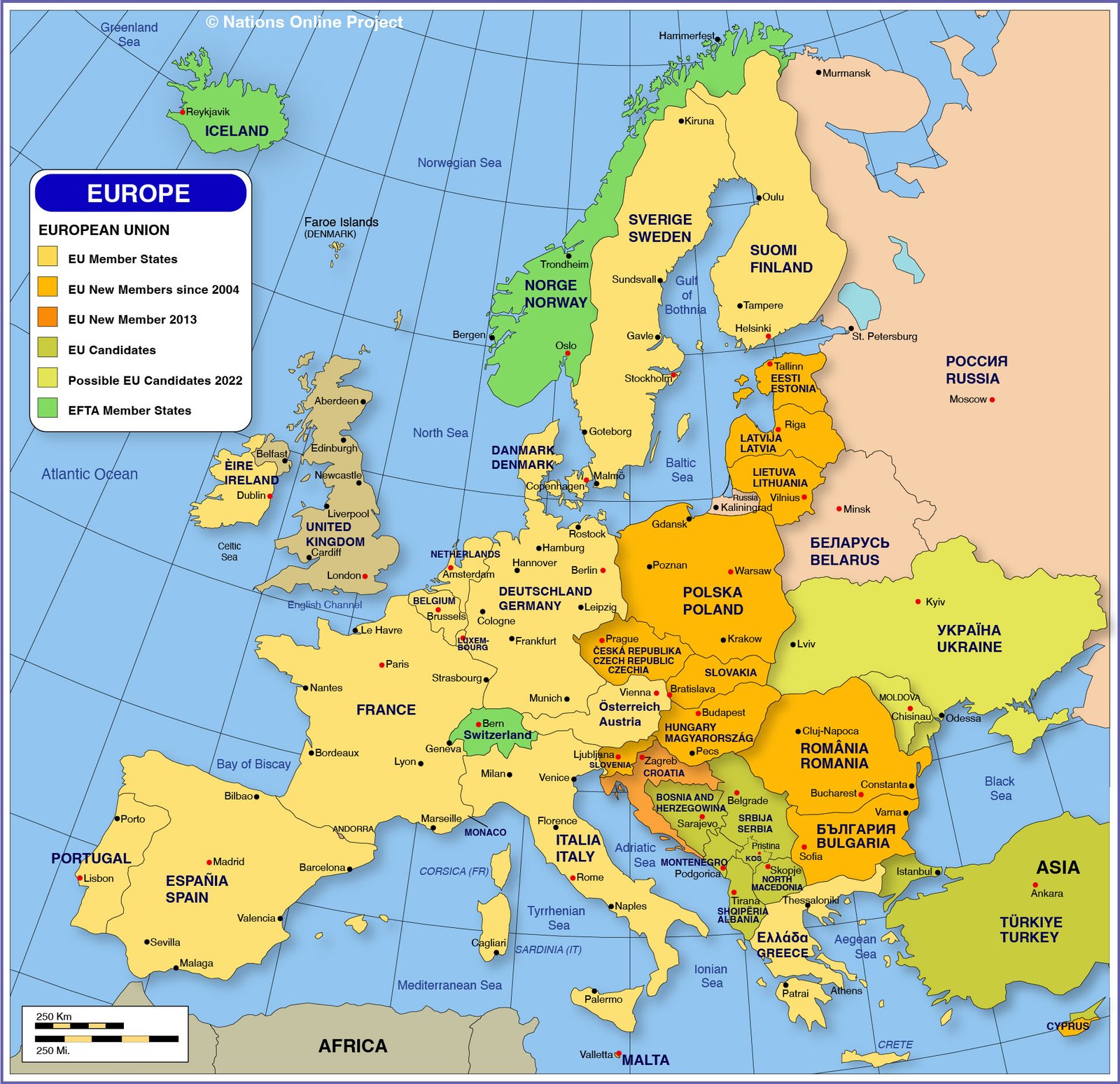
This paper investigates the reality of the Indian diaspora in Europe amid growing sentiment against immigrants against recent political, social, and economic developments post-2020. Around 1.6 million persons of Indian origin inhabit the EU and UK. They are among those who constitute one of the most economically integrated yet culturally distinct migrant communities on the continent. Drawing on sociological frameworks of identity, belonging, and structural exclusion, the paper analyzes how the surge in far-right nationalism, post-Brexit transitions and restrictive immigration policies throughout major European states have made Indian diasporic communities increasingly vulnerable. Using specific UK, German, French, and Italian case studies, it follows the interaction between race, labour, and citizenship within the lived experience of Indian migrants. It goes on to discuss media interpretations, institutional reactions, and the developing methods pursued by diaspora associations in order to respond to more adversarial politics. It ends, in part, by drawing attention to important policy implications and suggests that there are several angles to the analysis of the Indian diaspora beyond the “model minority.”
- Introduction
Migration has shaped modernity, nation-states, labour markets and cultural landscapes across the world. In this global narrative the Indian diaspora occupies a unique position historically grounded in colonial labour circuits but increasingly sculpted by post-colonial professional mobility. Today, about 32 million persons of Indian origin reside outside India, representing one of the world’s largest diaspora (Ministry of External Affairs, India, 2023). A large proportion of this population lives in Europe — all over the UK, Germany, France, Italy, the Netherlands and farther.
The European political and social landscape has been upended since 2020. The COVID-19 pandemic caused economic contraction and worsened pre-existing pain points around labour competition and welfare dependency, creating a breeding ground for anti-migrant rhetoric. At the same time, the official end of Brexit has changed the legal status of Indians in the UK, while the emergence of far-right and nationalist political parties throughout the continent has seen immigration restrictions increase in France, Italy, Germany and the Netherlands (Castles, De Haas & Miller, 2020).
This paper therefore asks: in what way have the growing anti-migrant sentiments across Europe, in particular post-2020, affected the Indian diaspora? What are the political, social and economic aspects of this impact? And how do Indian communities across Europe — which have long been perceived as a “model minority” — respond to an evolving landscape of belonging?
The paper goes in six major parts. Section 2 describes the Indian diaspora in Europe. In Section 3 we provide a brief history of Indian migration to the continent. Section 4 examines the surge in nativist anti-migrant sentiment in European countries in the post-2020 era. Section 5 focuses on political, social and economic effects — political, social, economic on Indian communities. Media narratives and institutional responses are addressed in Section 6. Finally, the paper offers policy implications.
2. The Indian Diaspora in Europe: An Overview
The Indian diaspora in Europe is huge, scattered and demographically important. The United Kingdom is still the site of such concentration with more than 1.8 million persons of Indian extraction represented on the 2021 Census (Office for National Statistics, 2022) which leads to the Indians being the largest ethnic minority group in Britain. That community includes first-generation immigrants, second-generation British Indians and a new group of recent international students and skilled workers. Outside of Britain, Indian communities are broadly spread out over continental Europe. Germany has around 200,000 people of Indian origin, who are attracted by its large IT sector and research institutions (Statistisches Bundesamt, 2023). The Netherlands has a more advanced Surinamese-Indian community as well as a new group of IT professionals with over 250,000 working professionals in the country. Each country, Italy, Portugal and Spain, has tens of thousands of Indian nationals who are employed in hospitality, healthcare and technology.
The Indian diaspora in Europe punches above its weight economically. British Indians have higher educational attainment, a lower unemployment rate, and higher median incomes than the national average in the UK (Bhambra, 2022). The trends are similar in Germany and the Netherlands, where Indian-origin workers are overrepresented in high-skill professions. This economic absorption has resulted, albeit informally, in the community being classified as a ‘model minority’ – a designation that, while flattering on the surface, has been condemned for covering up internal heterogeneity, masking structural racism, and being used politically to undermine broader migrant rights agendas (Prashad, 2000). Indian communities in Europe continue to have a strong cultural and social identity through economic integration.
Religious institutions, other institutional institutions, cultural groups, language schools, and the media in Gujarati, Punjabi, Hindi, and Tamil, for example, act as anchors of ethnic identity. The spread of Indian student organizations in European universities, the growth of Hindu temples and Sikh gurdwaras in Europe, and the rise of Diwali festivals in some of the key European cities are evidence of a diaspora that is simultaneously economically embedded and culturally distinct.
3. Historical Context of Indian Migration to Europe
The history of Indian migration to Europe is inseparable from the history of British colonialism. The first significant waves of Indian settlement in Britain arose from the end of the British empire after 1947, as citizens of newly independent India—and especially members of the Commonwealth—came to Britain under the British Nationality Act of 1948. Driven from majority Punjab, Gujarat, and some territory from Bengal, these migrants stepped into critical gaps in the British labor sector, including the manufacturing, transportation, and healthcare sectors (Visram, 2002).
A second big wave came after the expulsion of South Asians — notably many Gujarati Indians — from East Africa in the late 1960s and early 1970s, notably from Uganda under Idi Amin’s regime in 1972. These “twice migrants” (Bhachu, 1985) arrived with significant commercial acumen and social capital, creating an established business community, especially in the Midlands and East London. Indian migration to Continental Europe evolved in different fashions. The post-war reconstruction of the Netherlands included Surinamese workers, many of whom were descended from Indian indentured laborers imported under Dutch colonial rule in the 19th century.
The Gastarbeiter (guest worker) program of Germany in the 1950s and 1960s included migrants from Turkey, Yugoslavia, and Southern Europe, but not from India in much of these groups. Migration from India to Germany first began in earnest in the 1990s but intensified with the advent of the German Green Card scheme in 2000, aimed at IT professionals — most of whom emigrated from India (Hunger, 2000). Post-liberalization India (1991–present) churned out a new class of skilled migrants going for careers in Europe and North America. This “new Indian diaspora” is fundamentally different from its predecessors — more educated, more transient, and more tightly intertwined within transnational professional networks. It’s this cohort that has been particularly conspicuous — and especially at risk — in post-2020 anti-migrant politics.
4. Rise of Anti-Migrant Sentiment in Europe: After 2020 Progress
4.1 Far-Right Movements Post 2020
A consolidation of far-right and nationalist political actors across Europe has made a radical transformation of the continent’s migration politics. In Italy, the Brothers of Italy (Fratelli d’Italia) led by Giorgia Meloni took the reins in 2022, establishing Italy as one of the first significant Western European countries to be ruled by a post-fascist party. The Meloni administration has pushed for aggressive immigration restrictions consisting of a naval blockade of crossings of the Mediterranean and even legal provisions that make rescue activities (such as those by rescue organizations (NGOs)) a crime (Jones, 2023). Marine Le Pen’s Rassemblement National (National Rally), France in 2022 and 2024 delivered historic election results, thus mainstreaming a narrative with which immigrant citizenship equates crime, cultural debasement, and the welfare state. The Socialist-leaning, centrist government of Emmanuel Macron has in turn shifted right on immigration, climaxing in the 2023 Immigration Law, which tightened residence permits and limited access to social benefits for nationals who are not members of the EU (Fekete, 2024).
Germany tells a subtler story. Although they fell out of power after this alliance lost out in the 2025 federal elections, the ascendancy of the AfD (Alternative for Germany) as the second largest party led to a clear shift in German popular sentiment on migration. Meanwhile, the governing CDU-led coalition has, following the COVID-19 Pandemic, initiated more hardline border controls and sped up deportations, a policy unimaginable ten years ago as with Angela Merkel’s “open door” immigration (Oltermann, 2025).
4.2 After Brexit
Britain’s exit from the European Union as of January 2021 was one of the most dramatic structural changes for the Indian diaspora in Europe. Free movement became a point system of immigration after Brexit, one that, in theory, included no discrimination between EU and non-EU citizens. In reality, this has translated into increased bureaucratic complexity for Indian nationals who are looking to work, study, or reunite with family in the UK, despite the fact that the annual net migration to the UK reached record highs in 2022 (Home Office, 2023). The conservative government responded to record migration figures with a number of restrictive measures implemented from 2022-2024, which included raising the income threshold on skilled worker visas, restricting international students from bringing dependents, and scaling back the Graduate Route visa. These measures hit Indian nationals hardest, who represented the biggest group of potential non-EU migrants to the UK — with more than 250,000 study visas granted in 2022 alone (Home Office, 2023).
4.3 COVID-19 and the Racialisation of Migration
The impact of the COVID-19 pandemic has broadened anti-migrant sentiment across Europe, bringing new legitimating models — public health, pressure over housing, competition in the labour market — by which antipathy towards migrants can be articulated while avoiding the explicit use of racial rhetoric. Research found rising hate crimes against South Asian communities in Britain at the time of the pandemic, with verbal abuse and physical assault becoming a substantial number of assaults in 2020-21 (Hope Not Hate, 2021). The racialization of the virus — famously epitomised by the UK government’s own labelling of the Delta variant as the “Indian variant” — intensified this trend, bringing fiery protests from the Indian High Commission in London.
5. Impact on the Indian Diaspora: A Political, Social and Economic Perspective.
5.1 Employment and Economic Security
The economic effect of increasing anti-migrant sentiment on the Indian diaspora is complex. At the level of employment, highly qualified Indian professionals in fields like tech, finance, and medicine largely have avoided direct labour market discrimination. Demand for Indian IT talent has particularly expanded worldwide: Germany issued a record number of IT-specialist visas to Indian nationals covering 2022 to 2024 under the revised Skilled Immigration Act (Fachkraefteeinwanderungsgesetz), which came into full effect in 2024 (BMAS, 2024). But Indian workers in sectors where they are less skilled — including food processing, hospitality, retail, and care work — have been stuck with wage stagnation and a double whammy, exposed more directly to exploitation as post-Brexit labour market dynamics tightened.
In principle, EU free movement has increased the value of EU labour, but the removal of EU free movement has led to enhanced precarity of migrants without credentials or the employer mandate required in the new points-based system. Indian nationals, who overstay visas—a reality noted by the UK Home Office—are a group especially at risk of detention and deportation (Goodfellow, 2022). Restrictions on dependant visas for students from overseas have already resulted in severe economic repercussions for Indian families. An important part of this, for Indian students had, and still are, accompanying others with spouses and children to the UK as part of the Graduate Route, whose suspension in January 2024 forced difficult choices about family separation, creating emotional and financial strain that is difficult to quantify but pervasive in community experience (Patel, 2024).
5.2 Identity, Belonging, and Social Cohesion
The social, as well as psychological effect of heightened anti-migrant sentiment could be less noticeable than economic effects but are more significant. “Integration paradox” has long been the central idea, which has been established for many sociologists of migration that upwardly mobile second-generation migrants who had more success in more established economies show a “heightened awareness of ethnic otherness and encounter new types of exclusion” (Gans, 1992
This paradox seems to be gaining further strength for the second generation of British Indians. In-depth studies and survey results of British Indian communities indicated that Brexit led to a major re-negotiation of identity, with a marked increase in identification with the Indian background and detachment from a British identity increasingly defined in exclusionary, nativist language. If anything, paradoxically, Brexit engendered political empowerment in some of the British Indian community, as the removal from post-EU free movement was on paper an even playing field for EU and Commonwealth migrants (Bhambra, 2022). In France, the confluence of the republicanist assimilationist (laicite) and the increasing Islamophobic, xenophobic politics constitutes a hostile environment for visibly ethnic minorities. Indian migrants in France, particularly within the main Tamil community in the 10th arrondissement of Paris, have faced these pressures through the use of strong social networks, but have reported more encounters with work discrimination and social marginalisation since the 2023 immigration debates unfolded (Weil, 2023).
5.3 Political Participation and Civic Voice
The differential citizenship status of the Indian diaspora in Europe has a political dimension in how the diaspora responds to anti-migrant sentiment. As full citizens in the UK, British Indians have the right to vote and stand for election, and a substantial increase in political participation has taken place over the past two decades. So popular with many people, the 2022 leadership succession of Rishi Sunak to the premiership (a simplistic interpretation — at least among many) has served as an inspiration for the Indian independence movement and political representation in British society at large. But the more general Indian community has not been protected from the impacts of anti-migrant policy by political representation. Sunak’s own government implemented some of the toughest immigration policies in British history, including plans for a Rwanda deportation scheme. Indeed, an Indian-origin actor’s action to pursue aggressive anti-immigrant policies highlighted the complexity of diasporic politics and the failings of ethnic solidarity to explain community interest.
On the continent, Indian nationals — who, most of the time, have Indian passports and live in Europe on temporary or residence permits — cannot vote in national elections. Their political power is exerted mainly through diaspora institutions, lobbying groups, and cultural associations. Formally, Indian groups such as the UK-India Business Council, Federation of Indian Chambers of Commerce and Industry in Europe and several caste and regional NGOs serve as ‘informal political actors’ and advocate on behalf of Indian nationals and on behalf of both Indian and European governments (Lall, 2001).
6. Media Narratives, Public Discourse, and Institutional Responses
6.1 Media Representations
Media narratives represent one of the key players shaping public perceptions of migrants and diaspora communities. The prevailing European media framing of migration in the post-2020 era has been framed through two competing narratives of migration: a nativist-populist one (that stresses uncontrolled immigration as a threat to national culture, public services and security) and a liberal-humanitarian counter-narrative (that emphasizes and advocates migratory rights, cultural diversity, and the economic contributions of immigrant communities) (Berry, Garcia-Blanco & Moore, 2016). The position of the Indian diaspora within these two competing framings is ambivalent. On the one hand, stories about Indian economic progress — hailing British Indian doctors in the NHS, Indian tech entrepreneurs in Berlin or the “curry economy” — cast Indian migrants as exemplary inhabitants in need of inclusion. On the other hand, tabloid and social media coverage of South Asian communities has occasionally fueled stereotypes of gender violence, social conservatism and “parallel communities” that fight integration. The Indian media landscape in Europe — including newspaper formats like Eastern Eye and Asian Voice in the UK and digital platforms and YouTube channels in multiple Indian languages — serves as a major counter-public sphere — equipping diaspora communities with information, community news and advocacy rarely available from the mainstream media. These platforms have more frequently been vocal in reporting on experiences of discrimination and demanding policy accountability.
6.2 The Indian Diplomatic Response
The Government of India has gradually seen the diaspora as both a geopolitical asset and as a constituency in need of protection. The Ministry of External Affairs has expanded its consular services, strengthened its Pravasi Bharatiya Divas convention, and engaged bilaterally with European governments on issues affecting Indian nationals. India’s increasing economic and diplomatic clout — compounded by its G20 presidency in 2023 plus its position as a critical partner for European states seeking diversification in their supply chains — has given New Delhi increasing leverage over bilateral negotiations which concern the diaspora. With the signing of migration and mobility partnerships of India and several European states that included France (2023) and Italy (2024), it provides a new diplomatic architecture for managing Indian migration to Europe. These collaborations allow skilled labour to flow and put in place systems to manage irregular migration, including readmission agreements. They represent a pragmatic alignment of European labour demands and Indian interests in safeguarding the interests, rights, and pathways of its citizens when working abroad (MEA, 2024).
7. Policy implications and future directions
The foregoing analysis offers several important implications for policy and practice. For starters, European nations must remember that anti-migrant rhetoric and policy that is even aimed at other migrant populations unavoidably breeds a wider climate of hostility towards settled, economically cohesive societies, such as the Indian minority. Hate crime data consistently demonstrates that times of higher anti-immigrant political discourse reflect higher incidents involving visible ethnic minorities, irrespective of citizen status (Tell MAMA, 2023). Secondly, the so-called “model minority” paradigm needs to be critically questioned and sidelined as a lens through which to understand the Indian diaspora. Although the aggregate set of economic measures provides a portrait of relative success, it obscures considerable intra-community heterogeneity by caste, class, region, gender and generation. Working-class Punjabi or Tamil communities in Britain’s post-industrial city centres face a different set of challenges than Gujarati business families in Leicester or Bangalore-origin tech workers in Berlin.
Third, existing bilateral migration frameworks between India and Europe — including negotiations over the UK-India Free Trade Agreement and distinct migration mobility partnerships — provide an important policy vehicle for the institutionalisation of protections for Indian workers in Europe. Advocacy from diaspora organisations and the Indian government needs to be directed at establishing meaningful measures for workers through meaningful worker rights provisions, pathways to permanent residence and anti-discrimination enforcement mechanisms within these frameworks. Fourth, the work of European civil society organisations, anti-racist advocacy groups, as well as academic institutions can document and contest structural racism as it manifests in South Asian communities.
The strands of postcolonial sociology, influenced by scholars like Stuart Hall, Paul Gilroy and Avtar Brah, afford rich conceptual tools to account for the Indian diaspora’s experiences in Europe, understanding these diasporas not simply in question of economic integration but instead as negotiated terrain of colonial history, racial capitalism and transnational belonging (Gilroy, 1993; Brah, 1996).
8. Conclusion
This paper has argued that the post-2020 rise of anti-migrant sentiment in Europe represents a genuinely new challenge for the Indian diaspora — not because Indian communities are the primary targets of this politics, but because they are inevitably implicated in the hostile environments it creates. As European politics moves rightward, as points-based immigration systems proliferate, and as the discourse of national identity becomes increasingly ethnically coded, Indian migrants and diaspora communities face new uncertainties around belonging, rights, and recognition.
At the same time, the Indian diaspora in Europe is not merely a passive recipient of hostile forces. It is an active, politically engaged, and economically powerful constituency that has demonstrated remarkable adaptability across the centuries. From the indentured workers who crossed the seas under colonial compulsion, to the IT professionals who navigate global labour markets with considerable agency, the Indian presence in Europe is testimony to a resilience that transcends political weather.
What the post-2020 conjuncture demands, however, is a more conscious, critical, and collectively organised response — one that moves beyond the comforts of the model minority narrative and engages seriously with the structural conditions that produce both the successes and the vulnerabilities of the Indian diaspora in contemporary Europe. As India itself rises as a global power, the relationship between New Delhi and its European diaspora will be an increasingly important arena of foreign policy, cultural diplomacy, and social justice advocacy.
References
Berry, M., Garcia-Blanco, I., & Moore, K. (2016). Press Coverage of the Refugee and Migrant Crisis in the EU: A Content Analysis of Five European Countries. Cardiff: Cardiff University Press.
Bhachu, P. (1985). Twice Migrants: East African Sikh Settlers in Britain. London: Tavistock Publications.
Bhambra, G. K. (2022). Relations in Motion: The Plural Constitution of British Sovereignty and Its Implications for Brexit. Mobilities, 17(1), 1–15.
BMAS (Bundesministerium fur Arbeit und Soziales). (2024). Fachkraefteeinwanderungsgesetz: Annual Report on Skilled Labour Immigration. Berlin: BMAS.
Brah, A. (1996). Cartographies of Diaspora: Contesting Identities. London: Routledge.
Castles, S., De Haas, H., & Miller, M. J. (2020). The Age of Migration: International Population Movements in the Modern World (6th ed.). London: Red Globe Press.
Fekete, L. (2024). Europe’s Crackdown on Migration: From Criminalisation to Externalisation. Race & Class, 65(3), 3–22.
Gans, H. J. (1992). Second-Generation Decline: Scenarios for the Economic and Ethnic Futures of the Post-1965 American Immigrants. Ethnic and Racial Studies, 15(2), 173–192.
Gilroy, P. (1993). The Black Atlantic: Modernity and Double Consciousness. London: Verso.
Goodfellow, M. (2022). Hostile Environment: How Immigrants Became Scapegoats. London: Verso.
Home Office. (2023). Immigration Statistics, Year Ending December 2022. London: HMSO.
Hope Not Hate. (2021). Fear and HOPE Report 2021: State of Hate in Britain. London: Hope Not Hate.
Hunger, U. (2000). Temporary Transnational Labour Migration in an Integrating Europe. In P. Faist & A. Ette (Eds.), The Europeanization of National Policies and Politics of Immigration. Basingstoke: Palgrave Macmillan.
Jones, T. (2023). Fratelli d’Italia and the New Italian Right: Immigration Policy under Meloni. Journal of Modern Italian Studies, 28(4), 401–420.
Lall, M. (2001). India’s Missed Opportunity: India’s Relationship with the Non-Resident Indians. Aldershot: Ashgate.
MEA (Ministry of External Affairs, India). (2024). Annual Report 2023–24. New Delhi: Government of India.
Oltermann, P. (2025, February 28). Germany’s AfD Election Results Signal Major Shift in Migration Debate. The Guardian.
ONS (Office for National Statistics). (2022). Census 2021: Ethnic Group, National Identity, Language and Religion in England and Wales. Newport: ONS.
Patel, S. (2024). The Dependant Visa Restriction and Its Impact on Indian Students in the UK. South Asian Diaspora, 16(2), 123–139.
Prashad, V. (2000). The Karma of Brown Folk. Minneapolis: University of Minnesota Press.
Statistisches Bundesamt. (2023). Bevolkerung und Erwerbstatigkeit: Bevolkerung mit Migrationshintergrund. Wiesbaden: Destatis.
Tell MAMA. (2023). A Constructed Threat: Anti-Muslim Prejudice in the UK — Annual Report 2022. London: Tell MAMA.
Visram, R. (2002). Asians in Britain: 400 Years of History. London: Pluto Press.
Weil, P. (2023). The Republican Integration Model Under Strain: Laicite, Immigration, and French Politics Post-2020. French Politics, 21(1), 4

Leave a Reply