Introduction:
Migration has been one of the important aspects in the civilisation history which tends to shape societies, economies, and cultural identities. The concept of Diaspora in this context refers to the people living outside of their homeland while maintaining social, cultural, emotional, or economic ties with it. The Diaspora of India is currently recognised as one of the largest and most diverse globally. It extends across places like North America, Europe, Middle East etc. The Indian Diaspora however, is not a homogenous entity as it includes skill labour migrants, students, working professionals, descendants of earlier migrants, and much more. Each of this is shaped by different historical, cultural, and economical value. Despite the differences they have, the communities continue to share a degree of connection through the land mass of India and their transnational practices.
Among countries France holds a special place in the history of Indian migration.
Historical interactions between India and France go back to the period through French territories like Pondicherry, Karaikal, Mahe, Yanam, and Chandannagar. These colonial ties set up patterns of movement and cultural exchange that later turned into more complex migration networks.
Over time Indian migration to France grew beyond ties and started to include students, skilled professionals, entrepreneurs, researchers and service-sector workers.
In todays times France has become a destination for Indian students, technology professionals, business communities and highly skilled migrants because of educational opportunities, economic prospects and growing India-France bilateral relations. The growth of the diaspora in France shows bigger global changes linked to globalisation, mobility and transnationalism. Earlier migration patterns were about settling down and preserving culture while todays migration is marked by circular mobility, digital connectivity and mixed identities.
Today Indian diaspora members in France often handle identities at once balancing Indian cultural heritage with French social, political and cultural realities. The diaspora also adds a lot to Frances scene through business activities, educational participation, cultural institutions, cuisine, festivals and professional achievements. At the time the Indian diaspora in France faces several modern challenges, including integration issues, racism, identity negotiation, immigration policies and labor-market adaptation. These experiences are further shaped by Frances model of secularism and assimilation which is quite different from multicultural frameworks in countries like Canada or the United Kingdom. So the Indian diaspora in France is a case for understanding how migration, identity and transnational connections work in modern European societies.
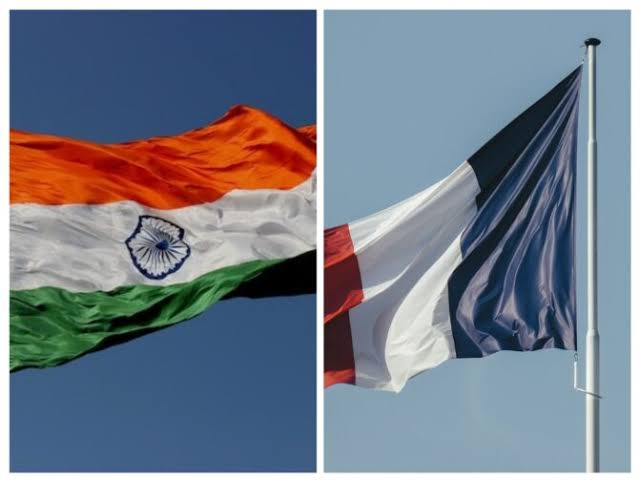
This paper looks at the evolution migration patterns, demographic profile, socio-economic participation, cultural presence and modern challenges of the Indian diaspora in France. It also explores the growing role of the diaspora in strengthening India & France relations through cooperation, cultural diplomacy, education and strategic partnerships. By combining analysis with modern data and policy perspectives the paper aims to give a complete understanding of the changing dynamics of the Indian diaspora, in France in the twenty-first century.
Historical Evolution of the Indian Diaspora in France
The story of the Indian diaspora in France isn’t linear or straightforward. Unlike the waves of Indian migrants settling in the UK or Canada under British colonial rule, the Indian community in France grew in smaller, less obvious bursts, mostly tied to old French colonial territories and, later, to shifting economic and educational opportunities. With each round of migration, the community picked up new layers, growing more diverse and dynamic.
It all began back in the colonial era when French had outposts in India: Pondicherry, Karaikal, Mahe, Yanam, Chandannagar; places that turned into hubs where cultures, goods, and ideas mingled. Not a tidal wave of migration, but in the 1800s and early 1900s, some people from these French Indian territories; soldiers, workers, sailors, students, made their way to France, usually through jobs connected to the colonial system. The numbers weren’t huge, but they planted the roots of what would eventually become a global Indian-French network.
After India won independence in 1947 and those French territories slowly merged with the rest of India, migration patterns started to change. The postcolonial decades brought students, professionals, and ambitious traders from India. People from Pondicherry and nearby areas, especially Tamil speakers stood out, since their French language skills and familiarity with French culture helped smooth their path. Families reunited, new businesses popped up, and more folks arrived from places like Punjab, Gujarat, Kerala, and Tamil Nadu, all looking for work or building small businesses.
The 1990s kicked off an even bigger shift. As globalisation picked up speed and India’s links to France deepened, France became a popular place for skilled Indian professionals: engineers, researchers, doctors, IT specialists, business managers. Multinational companies expanded. Indian universities formed partnerships with French schools and labs. Indian students starting filling up business schools, engineering programs, and science departments, one of the fastest-growing groups in recent years.
But the community didn’t just get bigger; it got better connected, too. Unlike earlier migrants who usually settled for good, today’s Indians in France move back and forth, staying in touch with home through WhatsApp, Facebook, flights, and cash sent back to family. Indian festivals like Diwali, Pongal, and Holi are a regular sight in Paris and other cities now, showing how much the diaspora shapes French culture.
At the same time, ideas about identity and belonging keep evolving. First-generation migrants tend to hang on tight to their language, religion, and customs. The younger crowd, though, doesn’t see it as an “either-or” choice, many mix Indian traditions and French social values in their day-to-day lives. Issues like secularism, multiculturalism, racism, and the sense of fitting in (or not) are all part of the ongoing conversation.
Right now, the Indian community in France is more varied and active than ever, contributing to everything from schools and tech companies to the arts and cultural festivals. Their journey from colonial ties, to a new life in Europe, and now to a globe-spanning, interconnected network, shows just how migration shapes and reshapes who we are.
Migration Patterns and Phases of Indian Migration to France
Indian migration to France has gone through a lot of changes over the years. It started out during the colonial era, and then shifted thanks to new economic opportunities, the push for education, and globalisation. Compared to places like the UK, Canada, or the US, not as many Indians live in France but, if you look closely, the way people moved, why they moved, and who moved has really shifted with time.
Back in the colonial days, Indians from French territories like Pondicherry, Karaikal, Mahe, Yanam, and Chandannagar made their way to France. Most were soldiers, sailors, workers, interpreters, or administrative assistants, all linked to the colonial system and maritime trade. Because they shared language and educational background with France, these migrants found it easier to settle in the country. Still, migration was pretty limited and usually involved people tied to colonial administration.
Then, after India became independent and the French territories joined India in the 1950s and 60s, things changed. Migration started to diversify; students, small business owners, restaurant entrepreneurs, and workers looking for stability or education began to arrive. Tamils from Pondicherry and nearby places created some of the first visible Indian communities in France, especially in Paris and its suburbs. Families started reuniting, which made the diasporic networks stronger and helped community life bloom.
By the 1990s, globalisation kicked in and skilled migration became the new story. India’s economy opened up, IT boomed, and collaboration between India and France grew, attracting engineers, software pros, scientists, and business leaders. Indian professionals began showing up in sectors like IT, finance, engineering, healthcare, and higher education, often through multinational companies or research partnerships.
Lately, student migration has really taken off. French universities and business schools try hard to attract students from abroad by offering scholarships, English-language programs, and research roles. Indian students come to study engineering, management, luxury business, AI, hospitality, and international relations. Partnerships like the India–France migration and mobility deal have pushed for more educational and professional exchanges.
Where Indians come from inside India has shaped the French diaspora too. Tamil Nadu and Puducherry lead the way due to colonial ties, but now you see migrants from Punjab, Gujarat, Kerala, Maharashtra, and Andhra Pradesh making their mark, especially as skilled workers or entrepreneurs. Most Indians in France live in Paris and the Île-de-France region because that’s where the jobs, schools, and business opportunities are.
One big change now is how migration works. Many Indians treat their move as part of a bigger, fluid journey rather than permanent settlement. They keep strong connections to India, thanks to digital tech, frequent travel, and professional networks. So, the story of Indian migration to France reflects global changes, movement, education, technology, and cross-border connections all come together to shape the modern Indian diaspora.
Demographic and Socio-Economic Profile of the Indian Diaspora in France
The Indian community in France is a mixed and expanding group, shaped by history, education, work, and the web of business ties that reach across borders. Sure, it isn’t as large as the Indian communities in places like the US or the UK, but you see it more and more in fields like education, tech, healthcare, business, and the arts. This community’s story reflects old migration patterns plus the new realities of people moving around for jobs and study.
You’ve got all sorts here: Indian passport holders, Overseas Citizens of India (OCI), Persons of Indian Origin (PIO), and people whose families arrived generations ago. Most live around Paris and the greater Île-de-France region, which is France’s main hub for business, learning, and culture. But you’ll find smaller Indian communities in cities like Marseille, Lyon, Toulouse, and on islands like Réunion. Tamil-speaking families from Puducherry and Tamil Nadu have a long history here, thanks to the colonial ties between India and France.
This diaspora skews young and stays busy. Lots of students and skilled workers have made their way here, many between twenty and forty-five. Lately, even more Indian students are coming over to study things like engineering, management, artificial intelligence, hospitality, and science. You can really see their impact on campuses and in high-tech or professional fields all over France.
| Year | Estimated Indian-Origin Population | Trend |
| 1990 | ~35,000–40,000 | Early expansion |
| 2000 | ~50,000 | Moderate growth |
| 2010 | ~65,000–70,000 | Skilled migration increase |
| 2020 | ~109,000+ | Student + professional rise |
| 2024 | ~120,000–130,000 (est.) | Continued growth |
| Age Group | Approx Share |
| 18–30 years | 35–40% |
| 31–45 years | 38–42% |
| 46–60 years | 15–18% |
| Age Group | Approx Share |
| 60+ years | 5–7% |
As you’d expect, there’s a lot of variety in languages and faiths. Indian migrants in France speak everything from Tamil and Hindi to Punjabi, Gujarati, Malayalam, Telugu, and of course, English and French. Their religious backgrounds are just as diverse: Hindus, Sikhs, Muslims, Christians, and others live side by side. Temples, gurudwaras, churches, mosques, and community groups help people hold onto their roots and settle into French society.
| Indicator | Trend |
| STEM graduates | High concentration |
| Business education | Increasing |
| Research & PhD mobility | Growing |
| International students | Rapid increase |
When it comes to jobs, many Indians have found spots in the middle class and skilled professions: working in IT, engineering, finance, science, healthcare, universities, or global companies. Some run businesses in food, retail, textiles, hotels, and import-export, often in neighbourhoods with lots of migrants. More and more, Indian professionals are part of France’s skilled workforce, which fits the bigger trend of Indian talent moving around the globe.
| Category | Dominant Pattern |
| Skilled professionals | High representation |
| Middle-class households | Majority |
| Category | Dominant Pattern |
| Entrepreneurs | Increasing |
| Informal/service employment | Smaller but present |
But the picture isn’t all smooth. Not everyone lands a high-paying job. Some migrants still work in low-paid service jobs or informal gigs and don’t have it easy, grappling with tough housing situations, tricky paperwork, language hurdles, and slow access to stable work, especially when they’ve just arrived.
Questions about fitting in and figuring out your identity are always there. France’s way of seeing things focuses a lot on secularism and blending into a shared national culture, not celebrating differences outright. So Indian migrants often have to walk a fine line, finding their place in a system that doesn’t really do multiculturalism the way other countries do.
Still, despite the challenges, Indians in France have managed to build an educated, professional, and visible community. They’re shaping both French daily life and the friendly ties between France and India.
Sectoral Distribution and Occupational Patterns
The Indian community in France shows all kinds of job diversity and you really see more and more people moving into skilled and knowledge-based fields. It wasn’t always like this.
Earlier generations mostly worked in small trading or service jobs, but now you find Indians in high-level professional roles, education, start-ups, and international business. This shift fits right in with bigger trends of global migration changing, India’s middle class growing, and stronger connections between India and France.
| Sector | Approx Share (%) |
| Information Technology & Engineering | 28–32% |
| Higher Education & Research | 15–18% |
| Business & Entrepreneurship | 18–22% |
| Healthcare & Pharmaceuticals | 8–10% |
| Hospitality & Retail | 12–15% |
| Finance & Corporate Services | 7–9% |
| Other Services | 8–10% |
IT and engineering, especially, stand out. Indian professionals contribute a lot in software, artificial intelligence, cybersecurity, telecom, and analytics. Multinational consulting firms attract them too. Paris, Toulouse, Lyon are hotspots for Indian tech specialists and engineers, thanks to big companies, research centres, and industries pushing innovation. With France investing more in digital transformation, it’s opened up even more doors. Indian engineers are everywhere, from aerospace and auto engineering to research projects with giants like Airbus and various European networks.
Education and research are another big draw. You see Indian students and scholars heading to French universities, business schools, and science institutes. They’re studying everything like management, luxury business, environmental science, biotech, international relations, and engineering. After graduation, plenty stick around and work in France’s research labs, academic institutions, and companies. It’s helping build up a skilled workforce in the country.
| Year | Indian Students |
| 2016 | ~3,000 |
| 2019 | ~6,000 |
| 2022 | ~10,000 |
| 2024 | ~10,500–11,000 |
Indian migrants run restaurants, grocery shops, textile stores, jewellery businesses, hospitality services, and import-export firms. Paris and its suburbs especially have vibrant Indian commercial pockets. Tamil communities from Puducherry and Sri Lanka have built networks of restaurants and retail spaces that aren’t just business, they’re hubs for culture and community.
Indian food, fashion, and cultural products are finding their place in France’s colourful city life. Healthcare and pharma are seeing more Indians too. You find doctors, medical researchers, pharmacists; they’re in hospitals, labs, and research facilities all over France. Emerging fields like renewable energy, sustainable tech, digital marketing, finance, and luxury management are attracting Indians as well. The job landscape is getting broader.
But honestly, it’s not all smooth sailing. Skilled migrants tend to find good jobs and move up socially, but others, especially in low-wage service roles or informal sectors, face tough challenges like unstable jobs, language issues, red tape. Getting French authorities to recognise foreign degrees or adjusting to the local work culture isn’t always easy for newcomers.
All this paints a picture: the Indian diaspora’s working life in France is shifting away from traditional labor toward global, knowledge-driven, and entrepreneurial careers. Through their impact in tech, education, business, healthcare, and culture, Indians are now a key piece of France’s social and economic puzzle, and their efforts are keeping the bond between India and France stronger than ever.
Cultural and Institutional Presence of the Indian Diaspora
The Indian community in France isn’t as big as in the UK or Canada, but you can’t really miss their mark on the country’s culture. Over the years, they’ve built a network of temples, mosques, gurdwaras, churches, cultural centres, festivals, and businesses, especially in Paris and its suburbs. It’s not just about keeping old traditions alive, they’re also blending in, finding their own place in French society.
Every year, cities buzz with Indian festivals like Diwali, Holi, Pongal, Navratri, and Eid. Paris, in particular, lights up with colour and energy. These aren’t just community get-togethers; they’re also invitations for the rest of France to join in and get a taste of Indian tradition. And, speaking of taste, Indian food has taken root, too. Whether it’s a North Indian curry house, a Tamil dosa spot, or a Punjabi grocery shop, these flavours now mix right into the city’s multicultural vibe.
Religion and community life are really at the heart of it all. Temples, gurudwaras, churches, mosques, they’re more than just places to pray. They double as neighbourhood meeting spots, classrooms for heritage languages, and centres for festivals, kids’ events, and social support. Tamil Hindu temples are especially prominent, thanks to historic links between Puducherry and France. Many Tamils, both from India and Sri Lanka, set up the first big Indian communities here. La Chapelle in Paris, for example, feels almost like a mini Tamil Nadu, with its crowded stores, restaurants, temples, movie theatres, and regular cultural gatherings. If you want to see Indian life in France up close, this is the place.
The digital world brings everyone even closer together. Social media, WhatsApp groups, diaspora YouTubers, they make it easy to catch the latest Bollywood hit, watch cricket matches live, or keep up with news back home. Yogis, musicians, and influencers are helping spread Indian culture even further, reaching French audiences and younger generations who are curious about their roots.
For the people born and raised in France of second or third generation, the story is a bit different. They often juggle two worlds. They’ll go to French schools, have French friends, and live by pretty secular values, but still hold onto bits of Indian culture, maybe through language, food, or religious holidays. For them, being Indian in France isn’t about choosing one side; it’s about making a new identity that mixes both worlds.
In the end, the Indian community in France holds on to its old roots while reaching for something new. It’s a constant balancing act, shaped by family stories, changing neighbourhoods, and life in a place that keeps moving forward.
Contemporary Challenges and Emerging Trends
The Indian community in France has become more visible and keeps making big contributions, but they’re still up against plenty of tough challenges. French migration policies, identity politics, and the way the country handles labor markets, all these things make life complicated. It’s a balancing act, living in a society shaped by strong secular values, expectations of cultural assimilation, and constant debates about immigration and multiculturalism.
Cultural integration stands out as a major hurdle. France sticks to its republican model, pushing national identity and secularism, not so much multiculturalism. So, Indian migrants are expected to blend in, often keeping their ethnic or religious differences under wraps. For first-generation Indians, finding harmony between their traditions and French norms isn’t easy. They feel pressure around how they speak, dress, practice their faith, or celebrate their culture. The next generations deal with a mix of identities: Indian family values at home, French social standards outside.
Language is another headache. Even though English-language university programs are more common now, job and everyday life in France are all about speaking French. Students, newcomers, and small business owners often struggle with documentation, securing work permits, finding housing, or getting their qualifications recognised. These obstacles can really limit their opportunities and chances to move up socially.
And then there’s racism, discrimination, and xenophobia. Indian migrants, like other immigrant groups in Europe, sometimes face unfair treatment at work, negative stereotypes, or just plain exclusion. Since the immigration debate grew louder across Europe, Indians in France have found themselves caught in arguments over security, secularism, and what it means to belong. Sikhs and Muslims of Indian origin face extra challenges because their religious customs make them more visible and, sometimes, more scrutinised.
But things aren’t all bad as there are new developments too. Student migration from India is booming, thanks to growing partnerships between Indian and French schools. France has rolled out the welcome mat for Indian students, offering scholarships, research opportunities, and jobs after graduation, especially in fields like science, tech, business, and innovation. On top of that, highly skilled migrants are increasingly showing up in areas like AI, renewable energy, aerospace, and IT.
Digital life is changing things as well. Social media and online communities help Indian migrants stay close to home while getting involved in French society. You have this “digital diaspora” where people juggle multiple roles, connecting to India and France at the same time, living in two worlds. So, the Indian diaspora in France isn’t just about migration and settling down anymore. It’s shaped by constant movement, digital connection, and changing experiences that stretch across borders.
Role of the Indian Diaspora in India-France Relations
The Indian community in France isn’t huge compared to other Western countries, but it’s becoming a real force in connecting India and France on all sorts of fronts: political, economic, cultural, educational, and even strategic. They bring the two nations closer through their own networks, professional lives, cultural exchanges, and just regular people building friendships across borders. There’s no doubt about it: Indian professionals, students, entrepreneurs, and cultural groups have made the India-France partnership a lot stronger in recent years.
| Indicator | Current Status |
| Indian-origin population | ~120,000–130,000 |
| Indian students | ~10,000–11,000 |
| Dominant migrant type | Skilled professionals + students |
| Major settlement region | Paris & Île-de-France |
| Fastest growing sector | Technology & higher education |
| Major challenge | Language integration |
| Emerging trend | Digital transnationalism |
| Bilateral mobility trend | Increasing |
On the business side, Indian entrepreneurs and professionals keep both countries plugged in through trade, investment, and collaborative work. You’ll find them in fields like IT, hospitality, retail, pharmaceuticals, engineering, and import-export. A lot of skilled Indian workers like engineers, scientists, managers, hold key jobs at French companies and research labs, sharing knowledge and making economic cooperation grow. The tech scene in France, especially in aerospace, digital tech, renewable energy, and artificial intelligence, is getting more Indian talent every year, a sign that deeper collaboration is happening.
Education and science are big deals, too. More and more Indian students are heading to French universities and business schools. This shift is fuelling academic exchanges, joint research projects, and partnerships between institutions. Student mobility and shared research programs have boosted intellectual and technological ties. And these Indian students? They often double as unofficial ambassadors, sharing their culture and stories to help their French peers understand India better.
Culturally, the diaspora gives India a strong presence in France. Indian festivals, yoga, Bollywood movies, classical dance, food, and community groups all make waves in French society. The Indian Embassy and diaspora organisations host events that build bridges, foster dialogue, and encourage friendships. Indian cuisine, spirituality, and cinema are pretty popular nowadays, and that’s helped deepen France’s engagement with Indian culture.
On the strategic front, the Indian diaspora subtly backs the larger partnership between the countries, especially around Indo-Pacific cooperation, tech and defence collaborations, and global governance. Their networks keep conversations going in business, academia, and culture, which builds trust for the long haul.
India’s government isn’t standing on the sidelines. It’s launched programs like the Overseas Citizenship of India (OCI), Pravasi Bhartiya Divas, and embassy outreach to keep the diaspora involved in India’s development and its cultural and international activities.
In short, the Indian diaspora in France is a vital link. They’re not just making connections, they’re helping both countries understand each other, work together, and grow stronger across the board in the twenty-first century.
Discussion
The story of the Indian diaspora in France really tells you a lot about how migration has changed across the world. It started with colonial ties between French-India and all that grew into a community that’s pretty varied and active in lots of different fields. People aren’t just
moving for work anymore; they’re chasing education, better jobs, and new opportunities, thanks to globalisation. You can really see a shift from the old idea of migrants settling down and holding onto their roots, to something more fluid and connected. These days, folks might live in France but stay hooked into India through WhatsApp, professional groups, or regular travel. They’re creating a sense of belonging that’s not tied down to just one place.
Older generations mostly tried to keep their language, religion, and traditions alive while settling in. But today’s migrants often have a foot in both worlds. It’s not just about roots, but also about routes, the paths they travel and the connections they keep. Their identity is shaped by where they come from, sure, but also by where they go, who they meet, and what they experience. Hybrid culture and global networks matter just as much as heritage.
Navigating French society is its own challenge, though. The French model focuses on national integration and secularism, there’s not much space for standing out as an ethnic group, unlike places like Canada or Britain. So Indian migrants find themselves balancing their culture with a push to blend in. Many have climbed the ladder in fields like tech, business, healthcare, and education, but still deal with hurdles like language issues or discrimination.
You also see the diaspora serving as a kind of bridge between India and France. All those entrepreneurs, academics, chefs, and professionals, plus festivals and digital media, connect the countries in ways that go beyond politics. Indian students and experts are especially important for strengthening links in technology, research, and strategy.
Digital life has made everything even more connected. Online communities, streaming platforms, and social media help people stay plugged into Indian culture no matter where they are, while also being part of French society. This “digital diaspora” shows just how much migration has expanded beyond physical moves. Now, it’s about staying present in both worlds.
So, the Indian diaspora in France really isn’t just about moving from one country to another anymore. It’s about mixing old traditions with new ones, juggling different identities, keeping close ties across borders, and living in multiple worlds at once. That’s what global migration looks like today.
Conclusion
The Indian diaspora in France is a fascinating example of how migration and globalisation have changed the way people live, connect, and see themselves away from home.
Starting from colonial ties between France and French India, the community now includes students, professionals, entrepreneurs, and researchers from all corners of India. It’s a far cry from the old days of migration, today it’s about people who are plugged into global networks, moving for knowledge, opportunity, and digital connections.
This group isn’t just a single bloc. It’s made up of people from different regions, languages, and backgrounds. Early on, Tamil communities from former French territories were the bedrock of the diaspora, building early networks. But in recent years, more skilled migrants have arrived: folks working in tech, science, business, education, healthcare, all adding new layers to the Indian presence. Their contributions don’t go unnoticed either; Indian migrants have helped shape France’s economy and cultural scene with their entrepreneurship, expertise, and cultural institutions.
Living in France isn’t always straightforward, though. The Indian diaspora wrestles with questions about fitting in; things like secularism, language, discrimination, and where they belong. For younger generations especially, blending Indian roots with French life can be tricky, full of negotiations and hybrid identities. Still, the community stands out as educated, active, and increasingly visible within French society.
India and France have grown closer, and the diaspora plays a big part in that. Whether it’s trade, education, cultural projects, technology, or just people connecting, Indians in France act as a bridge. Students, professionals, and cultural groups boost not only trade and strategic ties but also India’s soft power.
With digitalisation making the world even smaller, it’s easier for migrants to stay linked to both countries. The Indian diaspora in France now lives in a space that’s transnational, shaped by constant mobility, cultural mixing, and digital connectivity. So today’s migration isn’t just about picking up and moving, or simply blending in. It’s about creating new ways to belong, participate, and connect in a world where borders mean less and networks mean more.
References
Appadurai, A. (1996). Modernity at large: Cultural dimensions of globalisation. University of Minnesota Press.
Bhabha, H. K. (1994). The location of culture. Routledge.
Berry, J. W. (1997). Immigration, acculturation, and adaptation. Applied Psychology, 46(1), 5–34. https://doi.org/10.1111/j.1464-0597.1997.tb01087.x
Brah, A. (1996). Cartographies of diaspora: Contesting identities. Routledge.
Castles, S., de Haas, H., & Miller, M. J. (2020). The age of migration: International population movements in the modern world (6th ed.). Guilford Press.
Clifford, J. (1994). Diasporas. Cultural Anthropology, 9(3), 302–338. https://doi.org/10.1525/can.1994.9.3.02a00040
Cohen, R. (2008). Global diasporas: An introduction (2nd ed.). Routledge.
Embassy of India, Paris. (2024). Indian community in France. Government of India. https://www.eoiparis.gov.in
Government of France. (2023). Immigration, integration and nationality statistics. French Ministry of the Interior. https://www.interieur.gouv.fr
Hall, S. (1990). Cultural identity and diaspora. In J. Rutherford (Ed.), Identity: Community, culture, difference (pp. 222–237). Lawrence & Wishart.
Institut national de la statistique et des études économiques (INSEE). (2024). Immigrant population statistics in France. https://www.insee.fr
International Organisation for Migration. (2022). World migration report 2022. United Nations. https://worldmigrationreport.iom.int
Jaffrelot, C., & Therwath, I. (2007). The Sangh Parivar and the Hindu diaspora in the West: What kind of “long-distance nationalism”? International Political Sociology, 1(3), 278–295. https://doi.org/10.1111/j.1749-5687.2007.00017.x
Jain, R. (2018). Indian diaspora and cultural identity in the age of globalisation. International Journal of Social Science and Economic Research, 3(7), 3564–3572.
Landy, F. (2008). India in the world: The globalisation of Indian culture. Routledge.
Liczba, K. (2021). Skilled migration and international student mobility in France. Journal of Migration Studies, 9(2), 88–104.
Ministry of External Affairs. (2024). Population of overseas Indians. Government of India. https://www.mea.gov.in
Mishra, V. (2007). The literature of the Indian diaspora: Theorising the diasporic imaginary.
Routledge.
Nayar, P. K. (2010). Post-colonialism: A guide for the perplexed. Continuum International Publishing Group.
Organisation for Economic Co-operation and Development (OECD). (2023). International migration outlook 2023. OECD Publishing. https://doi.org/10.1787/migr_outlook-2023-en
Safran, W. (1991). Diasporas in modern societies: Myths of homeland and return. Diaspora: A Journal of Transnational Studies, 1(1), 83–99. https://doi.org/10.3138/diaspora.1.1.83
Therwath, I. (2010). Shining Indians: Diaspora and India’s soft power. International Journal of Cultural Policy, 16(2), 123–138. https://doi.org/10.1080/10286630902898784
United Nations Department of Economic and Social Affairs. (2020). International migrant stock 2020.
United Nations. https://www.un.org/development/desa/pd
Vertovec, S. (1999). Conceiving and researching transnationalism. Ethnic and Racial Studies, 22(2), 447–462. https://doi.org/10.1080/014198799329558
Williams, R. (2020). Digital diaspora and online identity formation among Indian youth abroad. Journal of Global Media Studies, 12(2), 44–59.
Zubair, M. (2015). Globalisation and the changing identity of the Indian diaspora. South Asian Diaspora, 7(2), 157–172. https://doi.org/10.1080/19438192.2015.1058395
Campus France. (2024). Key figures on international students in France. Campus France. https://www.campusfrance.org
Direction générale des étrangers en France. (2023). Annual report on immigration and integration in France. Ministry of the Interior, France. https://www.immigration.interieur.gouv.fr
Embassy of India, Paris. (2024). India–France bilateral relations and Indian community profile.
Government of India. https://www.eoiparis.gov.in
Institut national de la statistique et des études économiques. (2023). Immigrants and descendants of immigrants in France. INSEE. https://www.insee.fr
Ministry of Europe and Foreign Affairs, France. (2023). France–India strategic partnership and mobility cooperation. Government of France. https://www.diplomatie.gouv.fr
Organisation for Economic Co-operation and Development. (2024). Indicators of immigrant integration 2024. OECD Publishing. https://www.oecd.org
Organisation for Economic Co-operation and Development. (2023). International migration outlook 2023. OECD Publishing. https://doi.org/10.1787/migr_outlook-2023-en
United Nations Department of Economic and Social Affairs. (2020). International migrant stock 2020.
United Nations. https://www.un.org/development/desa/pd
UNESCO Institute for Statistics. (2023). Global mobility in tertiary education database. UNESCO. http://uis.unesco.org
World Bank. (2023). Migration and development brief 39. World Bank Group. https://www.worldbank.org

Leave a Reply