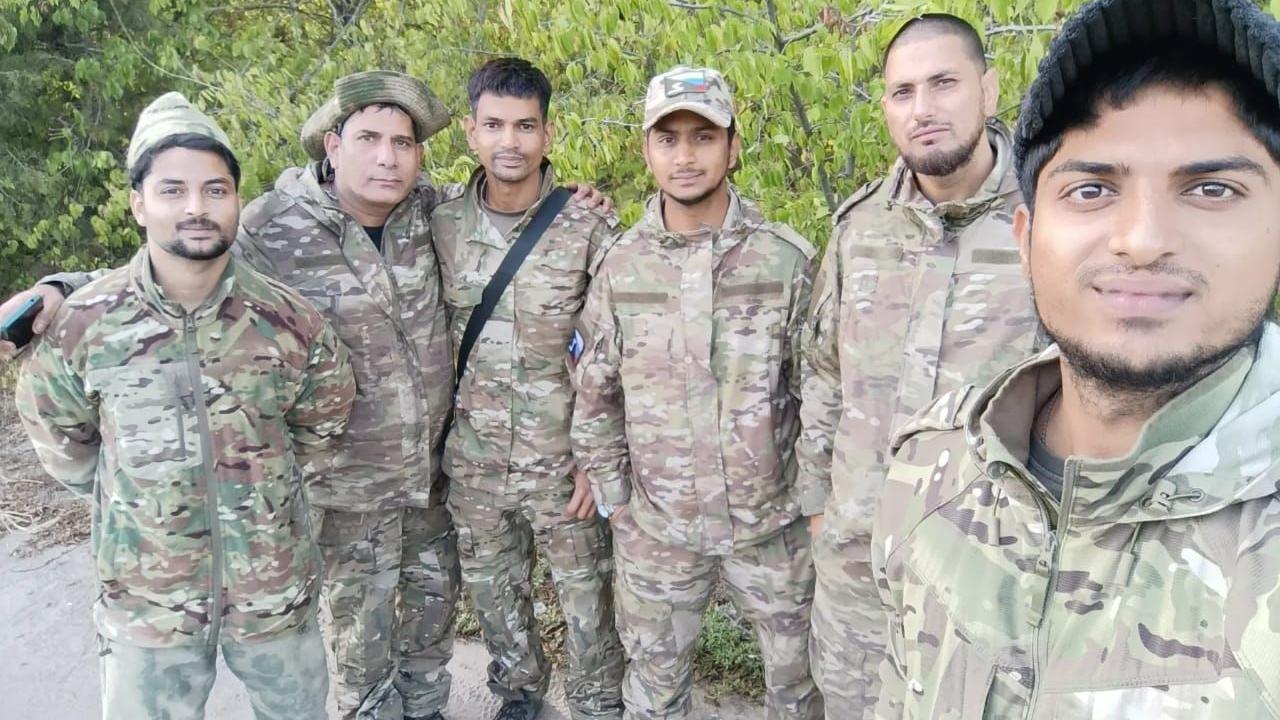
The illicit recruitment of Indian citizens into the Russian Federation’s armed forces is one of the more severe and consistently under-reported human rights crises affecting Indian citizens overseas in recent years. In March 2024, the Central Bureau of Investigation (CBI) in India announced the busting of a major transnational human trafficking network that operated out of several cities in India, but also with nodes in Dubai and even Russia, that had tricked and deployed Indian nationals as combat soldiers in the Russia-Ukraine conflict (Ranjan, 2024). The CBI confirmed the recruitment and training of at least 35 nationals in combat positions, their deployment in active combat zones without their consent, and the arrest of 35 people suspected of human trafficking-related crimes, as well as the recovery of approximately ₹50 million ($600,000) in cash and large amounts of documentary evidence (CBI, 2024). Several victims were seriously injured while in combat situations (National Herald, 2024).
The crisis was brought to a higher level with judicial action. In 2026, the families of 26 victims from India filed a habeas corpus petition before the Supreme Court of India detailing how these individuals had travelled to Russia from 2024 to 2025 on legitimate visas (tourist or student), believing they were going for work or education. Still, they had had their passports impounded, their movement restricted, and contracts written in an unfamiliar language, forced on them to sign (Sehgal, 2026). Recruitment agencies had a wide geographical reach – from New Delhi in the north of India to Tamil Nadu in the south – and targeted economically vulnerable groups through a mix of social media and local agents. By December 2025, the Minister of State for External Affairs had confirmed to the Rajya Sabha that 202 Indian nationals had been recruited by the Russian army since 2022; of these, 26 men were killed in action, seven are missing, and 50 others have yet to be discharged from service despite ongoing efforts by the Indian government to secure their release (Singh, 2025).
This paper examines the crisis through two complementary analytical lenses: as a policy failure – by analysing the regulatory, legislative and consular loopholes that facilitated the unchecked operation of the trafficking pipeline; and as a human rights violation – by considering the legal consequences under Indian constitutional law, international human trafficking law and international humanitarian law. The crisis is analytically important because it blurs the lines between labour migration, human trafficking and coercion during wartime, and illustrates how war creates a structural condition that exists when the demand for military labour in the war economy is met through informal, exploitative labour recruitment networks that straddle the boundaries between legal and illegal migration and trafficking. As this paper contends, the crisis calls not for ad hoc diplomatic action but systemic change: of the governance of emigration from India, of the regulatory framework for digital platforms, and of India’s consular representation and protection for nationals in conflict-bordering countries.
Background and Context
The Russia-Ukraine war is typically understood in terms of territorial integrity and as the contestation of great powers, a framing that Hendl et al. (2023) caution could lead to “epistemic imperialism” at the expense of understanding the vulnerabilities of Global South communities caught in the conflict’s crossfire. This paper is immediately concerned about two structural effects of the conflict: the current workforce shortfall in the Russian military and its accompanying civilian labour shortage, both of which have been exploited to create state-run recruitment schemes that Molodikova and Chupik (2023) liken to a new form of slavery for foreign citizens.
Origins of the Conflict
The Russo-Ukrainian war dates, formally, to February 2014, when Russia’s invasion of Crimea and backing for separatist movements in the eastern Donbas region kick-started an eight-year-long conflict that has claimed more than 14,000 lives and displaced some 1.5 million people (Harvard Ukrainian Research Institute, 2022). Russia’s opposition to Ukraine’s Euro-Atlantic integration, which President Vladimir Putin viewed as an encroachment on Russia’s sphere of influence, was the underlying cause. The full-scale invasion began on 24 February 2022, kicking off the largest conflict in Europe since the Second World War. What was expected to be a short-lived conflict has evolved into a war of attrition, despite devastating losses (estimated at nearly a million lives).
India’s Structural Vulnerability
Demand from Russia cannot be blamed. The other factor is India’s glaring youth jobless crisis. The India Employment Report 2024 by the International Labour Organisation (ILO) and Institute for Human Development (IHD) shows that in India, youth make up about 83% of the unemployed population, and the unemployment rate among educated youth is much higher than the rate among uneducated youth (ILO & IHD, 2024). For young men from semi-rural families in Haryana, Gujarat, and Uttar Pradesh – burdened with family debt, skilled for an economy that cannot absorb their labour, and with no viable alternatives – the opportunity of a monthly salary (₹2 lakh) as a “security helper” in Russia was not reckless. It was rational. It is the synergy between Russia’s military losses and India’s youth unemployment, in a bilateral relationship that has until now favoured strategic cooperation over democracy, that opened the space for transnational trafficking networks to find both their market and their prey.
Mechanisms of Recruitment: Agents, Misinformation, and Illegal Channels
Recruiting into the war in Russia was a multilayered trafficking procedure and not a one-time deal. The frameworks of human trafficking underline that the exploitation usually starts at the recruitment stage with the use of fraud, deception, vulnerability exploitation, and the use of intermediary networks, and worsens once the movement has been made, where the loss of control over the documents, phones, contracts, and work conditions is no longer possible. There have been multiple media reports investigating the possible transnational trafficking and recruitment of young individuals into combat roles through deceptive means, since the incident of Hemil Mangukiya, a 23-year-old boy from Surat, who died in a Ukrainian airstrike in the Donetsk region. He was offered a job in Russia but was later tricked into being sent to the front lines with limited training. In response to the growing event, Minister of State, Kriti Vardhan Singh, on December 18th, released a statement in Rajya Sabha that “202 Indians were believed to have been fighting the war for Russia, one of the longest and deadliest since the Second World War. Of which, seven of them were reported missing by the Russian side, and twenty-six others lost their lives. This section examines each stage of the recruitment pipeline in sequence, integrating primary testimonies from victims documented by The Wire (2024) and the CBI’s official investigative record.
Social Media Platforms – Main Recruiting Channel: The first and most sophisticated element of the trafficking process was the use of digital channels to build trust with the masses. Indian officials claimed that social media was the predominant platform used by shady characters to recruit young people. Still, according to the CBI report and media reports, young people were recruited through YouTube, WhatsApp and local agents. The recruiter, Faisal Khan, has an office in Dubai and has published recruitment videos on YouTube, Instagram, and TikTok. In one clip, Khan is strolling in St. Petersburg and explains how he got his job: he was paid $3,600 and became a helper in the Russian army. The financials were carefully crafted: the upfront fees of $1,200 to $3,600 (described as a processing fee), the promise of a monthly pay of around ₹2 lakh, and the long-term allure of Russian permanent residency after a year. Importantly, it was claimed that the work was not in a combat zone. The Wire, prior to the videos being deleted, analysed the videos to find specific misleading statements such as: “You don’t have to be on the frontline of the war, operate a cannon, or fire a gun” and “Since you’ll become a government official, you’ll get good food and shelter, and priority if you want to become a permanent resident” (The Wire, 2024).
The Ground Network: Agents, Fees and the Debt Trap: After a potential victim was drawn into the scam with online videos and then engaged with the scammers, they were passed to a ground-based network of agents and visa consultancies who translated online interest into a journey. This part of the operation was based in communities in high-unemployment states, and was financially savvy and bureaucratically legitimate. The CBI raids in March 2024 across 15 premises across seven cities provided insights into this network. The police found ₹50 lakh in cash, laptops, cell phones, CCTV footage and papers proving at least 35 victims. A single visa consultancy in Delhi had facilitated the journey of around 180 people to Russia, primarily on student visas (NDTV, 2024; The Hindu, 2024). The fees charged by agents were not just financial arrangements – they were traps. The fees charged and travel expenses paid by victims (usually around ₹3-4 lakh) were often borrowed from family or village lenders. This pre-flight debt generated a strong sense of urgency to continue, even when victims realised something was wrong: returning home would mean not only returning home without work, but with a crippling debt. This dynamic – debt bondage pre-departure – is one of the ways labour traffickers have been found to exert control over victims across borders (Molodikova & Chupik, 2023).
Student Visa Fraud: The trafficking network primarily used two types of visas: tourist visas and, more consistently, student visas. The latter category is of particular interest here, due to its institutional complexity and the way it exploited people’s dreams of social mobility through education. Recruiters would present to victims letters of admission to private Russian universities with reduced fees and “guarantees” of visa extensions. The framing of the trip as an educational endeavour conferred a structured legitimacy on it, which was especially appealing to parents whose families were paying exorbitant fees for their children’s education.
In fact, the CBI report found that students were deceived into enrollment in “dubious private universities” rather than legitimate universities; once in Russia, most students did not attend any classes, but were handed over to local handlers in the military recruitment pipeline (Ranjan, 2024). The university was a legal façade – it was enough for the victim’s visa, but played no role thereafter. This is in line with documented instances of “paper institutions” used by traffickers around the world to lend the semblance of credibility and facilitate deceptive cross-border travel (Ozer et al., 2025).
Entry and Exploitation: The Institutionalisation of Disempowerment. The fourth stage started once the victims arrived in Russia, and it turned a deceitful recruitment into a formalised enslavement. This was a sudden, systematic and uniform process across all the cases. Within hours of arrival, two “tools of agency” were taken away. First, victims’ SIM cards were replaced with government-issued SIM cards, cutting off victims’ independent means of communicating with family, friends and the Indian Embassy. Victims were told they had to communicate over Telegram, a messaging platform that their handlers can monitor. Second, passports were taken away. Without a passport, a victim in Russia cannot exit the country, go to an airport, interact with immigration officials, or convincingly show their passport to the Indian Embassy without being detained for overstaying their visa.
Third, the recruits were asked to sign a military contract, drafted in Russian – a language none of the Indian recruits spoke. The contract, a copy of which was obtained by AFP journalists, explicitly stated that an individual would be engaged in “military service in the armed forces of the Russian Federation”, “participate in hostilities” and “serve the Russian people without limit” (AFP, 2024). They were not given any time to read it, or a translator, or a lawyer. By signing this form, they were no longer, in Russian law, migrant workers, but contracted soldiers, without their consent.
Service in Combat: Broken Trust
All victims were promised they would not be deployed in combat. All the promises were broken. This was not a fluke, accident, mis-deployment or an unexpected outcome – this was the inevitable end of the pipeline that was always meant to supply combat soldiers, not warehouse assistants. The ‘training’ period was about 15 days, at Ryazan (about 200 kilometres from Moscow), a training camp where, according to victims, other soldiers from various countries were also being trained to fight. Training comprised shooting a rifle, throwing a grenade and repairing rifles. Soldiers were then moved towards the Ukrainian border and assigned to active duty on the front lines in various places, such as Donetsk, Luhansk, Kherson, and Kupyansk.
The short length of training – 15 days to prepare for combat tasks that professional soldiers train for months – is a consequence of Russia’s military mindset towards foreign soldiers: they are expected to die before they need advanced training. According to Ukrainian Defence Intelligence sources, foreign contract soldiers in Russia live an average of 140 days on the front lines (Kyiv Independent, 2024). The length of training time is thus commensurate with the expectation of longevity.
CASE STUDY:
Humanising the Case of Fraudulent Recruitment. The case study below is derived from The Wire’s ongoing primary research documenting the victims, their families and escapees since May 2024 (The Wire, 2024). Here, they are considered not just as individual tragedies but as real-world examples of the structures outlined above, offering an insight into a particular aspect of the trafficking pipeline, government complicity, and the human reality of the abstract analytical categories that precede them.
Case Study: Harsh Kumar – Karnal, Haryana (Tourist Ensnared)
Profile: Late 20s. From Karnal, Haryana. School student, traveller. Left India: November 26 2023, on a tourist visa. On frontlines to this day (July 2024).
Harsh Kumar’s case is analytically different in that he was not a product of a job scheme. He was a typical tourist who was criminalised, incarcerated, and extorted in a different way – one that shows that the risk to Indian nationals was not just those who answered job ads. Kumar was one of seven Indian tourists (five from Punjab, two from Haryana) who travelled together to Russia. They had valid tourist visas and did not contact any agent. In Russia, they were deceived by a local travel agency that promised them a trip to Belarus. On their way, they argued with the taxi driver over money and were arrested by the Russian Army. Their phones were immediately taken. They were in prison for six days.
They were then faced with a simple choice: either join the Russian Army as “helpers” or spend a decade in a Russian prison. In response to this state pressure, they enlisted in the Russian Army. Harsh later claimed a promised monthly salary of Rs 2 lakh and that they had Russian bank accounts, to which they never received their salaries. Harsh’s follow-up conversations with The Wire on WhatsApp provided graphic details of conditions on the frontline. May 20 2024: “Fifteen others who were living with us, from different countries like Cuba, South Africa, Sri Lanka, and including two from Russia, were killed just yesterday. Another problem we are facing is that we don’t know the Russian language.” In July 2024, Harsh had spent three trips to the frontline. His brother, Sahil, wrote to the MEA, Karnal MP, and District Magistrate. All failed to bring back Harsh. Their mother remained distressed, unaware of the true gravity of her son’s predicament, as he would not share details of the casualty with his family over the phone. This incident shows the coercive administrative pipeline (manufacturing legal vulnerability for recruitment) in parallel with the deceitful social media pipeline. It shows that Russian recruitment efforts were not always directed at the people who volunteered, and that even those with tourist visas could easily fall prey. It also records the breakdown of several levels of the Indian response.
LEGAL AND HUMAN RIGHTS IMPLICATIONS
The legal implications of the scam recruitment problem play out on three fronts: within the domestic law of India (its constitution and criminal law); within international law (international human rights law and international anti-trafficking law); and within international humanitarian law (the status of foreign nationals in armed conflict). Each point refers to a different set of violations and obligations—on India, Russia, and the international community —that have been systematically breached.
Article 21 and Life Abroad
At the constitutional level, the starting point is the right to life and liberty that is guaranteed by Article 21 of the Constitution of India, which provides that no person shall be deprived of life or personal liberty except by a procedure established by law. The use of force to deploy Indian citizens as soldiers – by confiscating their passports, persuading them to sign contracts, and deploying them in a conflict zone – is the type of arbitrary deprivation of life and liberty that Article 21 seeks to prevent. The Supreme Court has consistently held that Article 21 of the Constitution applies to Indian nationals outside India’s territory when the Indian state can intervene on their behalf (Prajwala v. Union of India, 2016). The State’s inaction is thus a constitutional, and not just an administrative, concern. Article 23 of the Constitution also outlaws human trafficking and all forms of forced labour, making forced military service by means of deception illegal. The Supreme Court has noted in Bandhua Mukti Morcha v. Union of India (1984) that Article 23 imposes an obligation on the State to prevent and eliminate forced labour wherever it exists and wherever it affects Indian citizens.
International Law on Human Trafficking: Palermo Protocol
The activities constitute human trafficking in international law under Article 3(a) of the UN Protocol to Prevent, Suppress and Punish Trafficking in Persons (the Palermo Protocol, 2000) to which India is a party. The three elements (A-M-P) are satisfied:
The Act element is satisfied by the procurement of victims via social media and agents, and their transit from India to Russia through Gulf transit points and their accommodation in military training camps. The Means element is satisfied by the routine use of fraud (promises of work, contract misrepresentation), deception (presentation of Russian-language contracts without translation), abuse of power (passport confiscation, control of communications), and coercion (the ultimatum of jail or enlistment in the tourist groups). The Purpose element is satisfied by the exploitation of victims through forced military service – a form of forced labour and servitude explicitly mentioned in the Protocol’s definition of exploitation (La Strada International 2021). Here, the principle of non-punishment in the Palermo Protocol comes into play: victims of trafficking shall not be punished for the crimes they were forced to commit (Helen Bamber Foundation, 2025). Those coerced or deceived into contracting with the Russian armed forces, or who served in armed conflict at the risk of imprisonment, should not be regarded as mercenaries, or even as conscripts.
International Humanitarian Law: Status of Foreign Combatants who Lack Consent
Probably the most challenging and unresolved aspect of the crisis for international law is the status of the Indian nationals under international humanitarian law (IHL) – in particular, whether those who have been coerced or deceived into serving the Russian army are entitled to prisoner-of-war (POW) status if taken prisoner by Ukraine.
The Third Geneva Convention (1949) defines POWs as members of armed forces who are wounded, sick or taken prisoner during an international armed conflict. The problem is that Indian nationals serving in the Russian armed forces are nationals of a third state (not a party to the conflict) with claims to be coerced conscripts. Their status is indeed unclear: Russia may deny that they were conscripted and claim that they were voluntary contractors, thereby denying POW status; Ukraine may deny that they were “voluntary”, and refuse to accord them POW status as hostile combatants; and the non-consenting status of the nationals themselves is not formally protected under IHL. India’s diplomatic engagement with both Russia and Ukraine should highlight the status of its nationals as non-consenting and seek to have this status acknowledged under IHL, with coerced combatants having the same or higher status rights as POWs.
India’s Consular Obligations
India also has an obligation towards its nationals detained in Russia under the Vienna Convention on Consular Relations (1963), which affirms the rights of nationals outside their territory to communicate with and seek consular assistance from their home country. In the instances outlined in this paper, these rights have been routinely ignored: the Indian nationals are not allowed to communicate with the Indian Embassy; their SIM cards have been confiscated, and their private communication devices have been replaced with listening devices. Russian authorities did not notify the Indian Embassy in Moscow of the arrests and forced conscription of Indian nationals, as in Divya & Ors. v. Union of India & Ors. (2026) explicitly called for, India must pursue consular access to all its nationals in Russian military institutions and diligently pursue their release via all consular and other means.
The Supreme Court Proceedings: Constitutional Responsibility
The most important constitutional development in this crisis came in April 2026, when the case went before India’s Supreme Court, in which a bench comprised of Chief Justice Surya Kant and Justices Joymalya Bagchi and Vipul Pancholi accepted a habeas corpus petition on behalf of families of 26 Indian nationals who are allegedly being held in Russia, and forced to fight in the war at the frontlines. The petition claimed that the government’s failure to act had been “continuous and uninterrupted,” and asked for not just consular and diplomatic action but also positive judicial intervention to secure the production of the detained nationals or their location. The Supreme Court’s role in this context elevates this from a matter of executive action to a constitutional concern and, for the first time in a court of law, raises the question of what is happening in Russia.
INSTITUTIONAL RESPONSE OF THE GOVERNMENT OF INDIA & POLICY INTERVENTIONS
The government of India’s response to the illegal recruitment of its citizens into Russia’s military has played out on three fronts – law enforcement, diplomatic, and judicial – and, collectively, is reactive, intermittent and diplomatically constrained.
Law Enforcement Response (The CBI Investigation): The first – and most operationally important – institutional response was the CBI registering a human trafficking case on March 6, 2024 and simultaneous raids on 15 sites across seven cities on March 7, 2024. The CBI seized about ₹50 lakh cash, computers, mobile phones, CCTV footage and documents revealing at least 35 cases of human trafficking. An FIR was subsequently filed against 19 companies/persons with charges under Section 370 IPC (human trafficking), Section 120-B IPC (criminal conspiracy) and Section 420 IPC (cheating). Four people were later arrested: Nijil Jobi Bensam, a contractual translator at the Russian Defence Ministry and the main operator of the network; Anthony Michael Elangovan from Mumbai; and two recruiters, Arun and Yesudas Junior, alias Priyan, from Thiruvananthapuram, Kerala (National Herald, 2024). In response to a question in the Lok Sabha in August 2024, External Affairs Minister S. Jaishankar stated: “The CBI has registered a criminal case against 19 individuals and entities, and sufficient evidence has surfaced against 10 human traffickers, and four accused have been arrested” (The Wire, 2024). Thirty-five people were probed for involvement in human trafficking.
MEA Advisories: Since the beginning of 2024, the MEA has released several advisories to Indian nationals cautioning them against joining Russia’s army. Randhir Jaiswal, Spokesperson, MEA, said: “We once again strongly urge all Indian nationals to stay away from offers to serve in the Russian army, as they are fraught with danger and risk to life” (MEA, 2024). Advertisements with a warning message were published on Facebook, YouTube, and other platforms to counter the recruitment ads appearing there. The problem with the advisory-based approach was that it was victim-centric, relying on the victim’s awareness to avoid the trap, while the recruitment machinery remained in place.
Bilateral Diplomatic Representations: India regularly took up the matter diplomatically, including several representations by the MEA with the Russian Embassy in New Delhi and by the Indian Ambassador in Moscow to the Russian Ministry of Foreign Affairs. The MEA confirmed it had raised the issue with the Russian authorities to have them released at the earliest and to put an end to this practice (MEA Spokesperson, November 2024). In April 2024, Russia’s Embassy in New Delhi claimed that Russia’s Ministry of Defence had ceased to recruit Indians, but this was not confirmed.
Leaders’ Meeting: Modi-Putin July 2024: The most high-profile and publicised diplomatic activity occurred during Prime Minister Modi’s visit to Moscow on July 8-9, 2024 – his first in five years. Foreign Secretary Vinay Mohan Kwatra confirmed Modi raised the matter, with the need for the early release of all Indian nationals. In turn, the Russian government “assured that all Indian nationals would be promptly discharged from their service” (India.com, 2024).
This matter was also raised at the BRICS Summit in Kazan in October 2024, and during Putin’s visit to New Delhi for the 23rd India-Russia Annual Summit in December 2025. At each step, Russia made promises of co-operation that were only partially realised: of 202 confirmed recruits, 119 were discharged via diplomatic channels by December 2025, with 50 still missing, 26 dead and 7 missing. Finally, the trajectory of India’s response – from the advisory in early 2024, to the CBI raids in March 2024, to the Modi-Putin summit in July 2024, to the Supreme Court in April 2026 – outlines a set of institutional responses that occur after the next escalation in public visibility, rather than in anticipation of the next set of victims. Two years later, families were still appealing to the Supreme Court for “continuous and uninterrupted inaction”. The disconnect between rhetoric and reality is the defining characteristic of India’s institutional response to this crisis, and this is what the next sections explore in terms of regulatory shortfalls and reform.
GAPS IN PROTECTION AND REGULATION
The illegal recruitment of Indians into the Russian army was not possible because of the cleverness of the criminals. It was made possible by the failure of India’s regulatory, legislative and consular frameworks to adapt to the realities of the contemporary world of digital, transnational labour markets.
Lack of Regulation of Digital Platforms for Recruitment: The biggest regulatory vacuum this crisis has revealed is the non-existence of regulation for the use of digital platforms for recruitment to foreign employment. The Indian Information Technology (Intermediary Guidelines and Digital Media Ethics Code) Rules, 2021, mandate due diligence by major social media intermediaries, including the obligation to remove illegal content upon notification. But there is no mechanism for the MEA or MHA to notify platforms of trafficking-based recruitment content, and no platform has been found liable for enabling the recruitment of Indian citizens into overseas military service through its algorithmically boosted content. YouTube did not take down the Baba Vlogs videos – spotted by the CBI investigation – for months after deaths were reported (The Wire, 2024).
No Comprehensive Tracking of Vulnerable Migrants: India does not have an integrated, real-time data system to track when its citizens travelling on tourist or student visas to a country with a conflict are diverted into human trafficking networks. The lack of data has flow-on effects. The families of the disappeared have no government mechanism to report a person missing in a foreign country and seek an inter-ministerial response to do so. An integrated, real-time tracking system – connecting databases of passports, visas, travel and consular registrations – is a basic prerequisite for pre-deployment intervention.
Lack of Regulation of Agents for Overseas Recruitment: The Emigration Act, 1983, mandates that overseas recruitment agents be licensed as Recruiting Agents (RA) by the Protector General of Emigrants. But this requirement is only for agents who recruit workers to work in ECR countries – not for the visa consultancy and travel agents who organised the trips to Russia. The draft Overseas Mobility Bill 2025 enhances penalties for unauthorised recruitment agents but leaves a definitional loophole that enabled Russia-route agents to disguise themselves as visa consultancies and travel agencies.
Lack of a Protocol for Military Trafficking: India does not have a special protocol to deal with Indian nationals forced into foreign military service. The current consular assistance scheme is tuned to cases of labour disputes, medical emergencies and repatriation of bodies of deceased workers – all of which are distressing situations, but not situations in which a person is in armed captivity in a war zone. The unique circumstances of the Russia cases (the confiscation of Indian nationals’ passports by a state’s armed forces, forced deployment in combat, death and maiming in an ongoing conflict, and the need for a separate mechanism to negotiate disengagement from a military rather than an employment contract), demand an institutional response that is distinct from the consular framework designed for labour disputes, medical crises, or repatriation of the deceased.
POLICY RECOMMENDATIONS
· Pass a Comprehensive Overseas Military Trafficking Act: India needs a stand-alone Act which explicitly defines fraudulent recruitment for foreign military service as an aggravated form of human trafficking, accompanied by a mandatory minimum sentence. The Act must: (a) identify “military trafficking” as a separate, aggravated crime; (b) criminalise digital platforms that host or promote (via algorithms) content for fraudulent military recruitment of Indian nationals; (c) set up a special National Military Trafficking Investigation Unit within the Central Bureau of Investigation (CBI); and (d) establish a victim-focused repatriation fund that provides immediate compensation to families of nationals recruited into foreign military forces, regardless of diplomatic processes.
· Amend the Overseas Mobility Bill 2025 Before Enactment: Before the Overseas Mobility (Facilitation and Welfare) Bill 2025 is enacted, Parliament should mandate the following amendments: (a) inclusion in the list of “high-risk destinations”, countries at risk of conflict, like Russia, that require pre-departure risk assessment for all travellers, including those travelling on tourist or student visas, not just ECR workers; (b) requirement for licensing of recruitment agents to include visa consultancies, travel agents, and digital platforms that facilitate travel to high-risk destinations; (c) amendment to restore the right of migrants to sue exploiters directly; and (d) mandate pre-departure briefings for all citizens travelling to high-risk destinations for tourist or student visas.
· Mandate Digital Platform Accountability: The Ministry of Electronics and Information Technology (MeitY) should issue specific directions under the IT (Intermediary Guidelines) Rules, 2021, for: (a) all major social media platforms to create a category for reporting “foreign military recruitment” content targeting Indian nationals; (b) platforms to take down flagged military recruitment content within 24 hours of being notified by the MEA or CBI; (c) proactively using algorithmic detection to identify and flag posts matching recognised patterns of Indian military trafficking; and (d) civil liability for platforms that fail to take down flagged content if it results in harm to Indian nationals. The BABA Vlogs scenario (videos left online for months after public announcements of the deaths of migrants) should not be repeated.
· Negotiate a Bilateral Protocol on Indian Nationals in Russian Military Structures: India should seek a bilateral protocol between Russia and India to require: (a) a 72-hour notice to the Indian Embassy of any Indian national joining the Russian military, whether voluntarily or not; (b) consular access for Indian nationals in Russian military custody, as per Article 36 of the Vienna Convention on Consular Relations (1963); (c) a time-limited discharge system for any Indian national who expresses a desire to leave Russian military service (maximum 30 days discharge period); and (d) a compensation framework for families of Indian national casualties that can be enforced through diplomatic channels independent of Russian cooperation. This should be made a precondition for further expansion of economic ties, leveraging India’s strong position in trade and energy.
· Implement Source-State Awareness and Intervention Programs: The governments of Haryana, Punjab, Gujarat, Uttar Pradesh, Telangana, Tamil Nadu, and Kerala – which are most highly represented among known victims – should be instructed to: (a) conduct district-level awareness activities in local languages about the specific risks of Russian military recruitment, particularly among young men (18-35 years old) in rural districts with high unemployment rates; (b) mandate district-level police training on indicators of recruitment networks and coordination with the CBI National Military Trafficking Unit; (c) conduct community liaison programs to engage panchayat heads, school teachers and local media to promote information on safe migration; and (d) mandate that travel agents and visa consultancies in these states report the name of any client seeking travel to Russia on a tourist or student visa, to be cross-checked against indicators of recruitment networks.
· Fix the Fundamental Problem- Youth Employment: No regulatory measures and bilateral protocols will end the vulnerability of Indian youth to military trafficking as long as the root causes of their vulnerability – the economic conditions that render a Russian army helper’s salary so attractive – remain unfixed. India must develop a funded strategy to: (a) foster formal-sector manufacturing employment, which has collapsed between 2016 and 2021 despite the Make in India program; (b) develop skilling and certification programs for semi-educated rural youth (the most represented victim demographic) that result in internationally recognised qualifications that enable legitimate overseas employment; and (c) expand bilateral Labour Mobility Agreements with European, Southeast Asian and Gulf destinations that establish safe, legal, monitored pathways for Indian workers that offer a legitimate alternative to the fraudulent pathways exploited by criminal networks.
This paper has considered the illicit recruitment of Indians into the Russian invasion of Ukraine as a criminal, diplomatic, constitutional and structural crisis. But the analysis in this paper reveals the crisis continues. The recruitment of Indian nationals into Russian military units continued in 2024 and 2025 despite the CBI raids, MEA advisories, and “promises” made at the summit. By December 2025, 50 Indian nationals were still in the Russian military waiting to be discharged; 26 are confirmed to have died, and 7 are missing. Their families were still battling their case in April 2026. The system of exploitation – its online presence, its brokers, its visas, its military supply chain – has evolved. India’s response has been serious but not commensurate with the visibility, not the scale, of the crisis. The wider lesson from this crisis will be a concern not just to India and Russia. It shows, with empirical rigour, that contemporary armed warfare creates a displaced demand for labour that informal, exploitative labour markets are well placed to exploit; that governance vulnerabilities in the Global South – in emigration, digital platforms and consular services – are exploited by actors with state power and impunity; and that the experiences of Global South migrants caught up in the collateral damage of great-power conflict remain, as Hendl et al. (2023) warned, chronically undertheorized and underprotected. India’s government response to the crisis will be a test not only of its bureaucratic efficiency but also of its concern for the economic conditions of its citizens, which its governance failures have produced.
REFERENCES
1. AFP. “Indian Nationals Sign Russian Military Contracts.” Agence France-Presse, 2024.
2. Bandhua Mukti Morcha v. Union of India. AIR 1984 SC 802. Supreme Court of India, 1984.
3. Central Bureau of Investigation. “Press Release on Human Trafficking Network Supplying Indian Nationals to Russian Armed Forces.” CBI, Government of India, Mar. 2024.
4. Divya & Ors. v. Union of India & Ors.. Habeas Corpus Petition. Supreme Court of India, 2026.
5. Harvard Ukrainian Research Institute. The Russo-Ukrainian Conflict: A Chronology. Harvard University, 2022.
6. Helen Bamber Foundation. Non-Punishment of Trafficking Victims: Policy Brief. Helen Bamber Foundation, 2025.
7. Hendl, T., et al. “Epistemic Imperialism and the Ukraine Crisis: Centring Global South Perspectives.” Global Studies Quarterly, vol. 3, no. 2, 2023.
8. The Hindu. “Delhi Visa Consultancy Linked to Russia Recruitment Pipeline.” The Hindu, Mar. 2024.
9. India.com. “Modi Raises Indian Nationals Issue with Putin in Moscow.” India.com, Jul. 2024.
10. International Labour Organisation and Institute for Human Development. India Employment Report 2024. ILO, 2024.
11. Kyiv Independent. “Foreign Contract Soldiers in Russia Average 140 Days on Frontlines, Ukrainian Intelligence Says.” Kyiv Independent, 2024.
12. La Strada International. Trafficking for Forced Labour and Servitude: Legal Standards and Case Analysis. La Strada International, 2021.
13. Ministry of External Affairs. “MEA Spokesperson Statement on Indian Nationals in Russian Military Service.” Government of India, Nov. 2024.
14. Molodikova, I., and V. Chupik. “Labour Migration, Coercion, and the War Economy: New Forms of Slavery in the Russian Federation.” Journal of Migration and Human Security, vol. 11, no. 1, 2023, pp. 45–67.
15. National Herald. “Four Arrested in CBI Crackdown on Russian Army Recruitment Network.” National Herald India, Mar. 2024.
16. NDTV. “CBI Raids: 180 Indians Sent to Russia via Single Delhi Consultancy.” NDTV, Mar. 2024.
17. Ozer, S., et al. “Paper Institutions and Trafficking: Cross-Border Deception Through Fraudulent Educational Enrolment.” Anti-Trafficking Review, no. 24, 2025, pp. 112 130.
18. Pandey, V. “How Indian Men Were Lured to Russia’s War.” BBC News, Mar. 2024.
19. Prajwala v. Union of India. Writ Petition (Civil) No. 56 of 2004. Supreme Court of India, 2016.
20. Ranjan, A. “CBI Busts Trafficking Network Sending Indians to Russian Front.” The Print, Mar. 2024.
21. Sehgal, R. “Families of 26 Missing Indians File Habeas Corpus in Supreme Court.” The Hindu, 2026.
22. Singh, Kirti Vardhan. “Statement in the Rajya Sabha on Indian Nationals in the Russian Armed Forces.” Ministry of External Affairs, Government of India, 18 Dec. 2025.
23. The Wire. Indians Trapped in Russia’s War: Ongoing Primary Investigation: The Wire, 2024.
24. United Nations. Protocol to Prevent, Suppress and Punish Trafficking in Persons, Especially Women and Children. UN General Assembly, 2000.

Leave a Reply