

Abstract
It is now nearly ubiquitous for a young adult in India to move to the South of India for higher education, which has seen internal migration for that purpose soar. Education and career opportunities through migration assist students but they have to also face multiple emotional, social and psychological challenges due to it. This study explores the experiences of loneliness, sense of belonging and psychological well-being in young adult internal migrant students in South India. A qualitative research design was employed to comprehensively explore the lived experiences of participants. Data collection involved semi-structured interviews from ten internal migrant students between the age group of 18 and 25 years, who is relocated from other Indian states to study higher education in South India. The raw data were analyzed thematically using Braun and Clarke (2006). Through this study, they found out four thematic areas – emotional loneliness, struggle for belongingness, coping strategies and effect on psychological health. Participants experienced homesickness, emotional loneliness, cultural differences in lifestyle and attitudes toward loss of face, language problems, and social exclusion all made it difficult for them to adjust. Despite these challenges, participants mainly coped with them through friendships; family support via digital communication methods such as the telephone or video calls and personal coping strategies. Migration was also related to both psychological distress and personal growth whilst away. These results emphasize the necessity for educational institutions to develop more inclusive environments and enhance mental health support services for students who are internal migrants. Its contribution to the limited literature on internal student migration in India, as well as its implications for university managers and policymakers is discussed.
Keywords: Internal migration, loneliness, sense of belonging, psychological well-being, higher education, young adults, South India, qualitative research.
CHAPTER 1: INTRODUCTION
1.1 Background of the Study
The internal migration in India has become a major socio-economic phenomenon, primarily fuelled by education, employment opportunities, regional disparities and more (Cena et al., 2021). Of these, education-related migration has significantly grown in recent years with young adults ditching rural areas for the urban and semi urban centres in search for better education and academic opportunities. South India is home to known educational institutes and the influx of students all over the country leads to students of all cultures, language, and backgrounds. Migration for education brings opportunities for learning and development—including personal and professional—but also adjusts students to several challenges (Gidwani et al., 2025). Language barriers, cultural differences, unfamiliar social environments and isolation from family support system are some of the difficulties that internal migrant students often face. These issues can impact how well they’re able to settle into new school and social environments, and can have an impact on their student experience. “Growing up in the unfamiliar setting of a new region and ensuring a successful transition out of a familiar and familiarizing home environment needs substantial emotional and psychological adaptation.
One problem that many of the migrant students experience is loneliness and social isolation. Loneliness is not just that you don’t have anyone to interact with, but your own sense of isolation and a give-and-take relationship (Lamouchi, 2022). Closely knit social relationships often are more difficult to establish among students who move for education, particularly in cases of cultural and/or language differences in the region where they move. This disconnection can then impact on their sense of belonging, which is a fundamental human need and an important factor in their identity and integration into the community/institution. Lack of the feeling of belongingness in everyday life experiences has significant consequences for psychology. Psychological well-being refers to emotional stability, life satisfaction, self-acceptance as well as the capacity to effectively manage stress (Lopez-Rogina, 2024). Being a migrant pupil can add to feelings of isolation, academic pressure and adjustment difficulties and can increase their stress levels, which can in turn increase their anxiety and emotional distress. Psychological research in the field of mental health indicates that socially disconnected students are at risk for poor psychological outcomes which affects not only their academic achievement, but also their quality of life (Ghosh, 2021).
While there is an increasing research interest in student mental health and migration, there is a dearth of literature that examines migration issues for domestic students, or that investigates issues in a qualitative fashion (Batuwanthudawa & Udayanga, 2025). There is still limited qualitative knowledge of the lived experiences of the internal migrant students in the Indian context, specifically in South India. This gap suggests the requirement to understand lonesomeness among these learners and the ways of coping with it, requiring a sense of belonging, and maintaining psychological well-being in the new socio-cultural context. Thus, the overall objectives of the study are to explore the connection between loneliness, sense of belonging and psychological well being of the internal migrant students of the selected colleges in South India; to understand their lived experiences; to gain deeper insights into the psychosocial realities in their lived experiences .
1.2 Conceptual Focus
This study focuses three main psychological aspects that are interrelated and impact much on the lived experience of young adult internal migrant students of South India: Loneliness, Sense of belonging and Psychological well being. These concepts serve as a conceptual framework which will be used to identify and comprehend the emotional and social issues which migrants students face when they come to study abroad. The psychological aspects of internal migration are crucial in the context of migrants’ adjustment experiences because in some cases, internal mobility can involve leaving behind comfortable surroundings, culture and family and sometimes a completely different learning context behind (Nolte, 2025). Loneliness’ is the first key concept in this study: it indicates a subjective emotional state, characterized as a discrepancy between the desired and actual social relationships. Loneliness isn’t only about living by yourself, it is related to emotional isolation, limited meaningful social interactions, and the lack of emotional support. The feeling of loneliness can arise for internal migrant students as a result of being physically separated from family members, with fewer or less rewarding connections with established, longer-term friends, in new places and contexts, and generally struggling with establishing new social networks (Mohan et al., 2026). Those who moved away to go to school may have had a good network of social or emotional support systems to begin with and might be homesick, feel isolated and emotionally out of place for the first few years. The level of loneliness might differ person to person, depending on their personality, coping mechanisms, socialization skills and level of support in the new setting (Balakrishnan & Bleibleh, 2024).
The second key idea is sense of belonging, a person’s experience of being accepted, valued, respected and included in a specific social environment or community. Students’ sense of belonging in higher educational settings is linked to their interpersonal relationships with peers and faculty, as well as with the campus culture and support systems (Kusci et al., 2023). It can be especially difficult to build a sense of belonging for those students who came from other countries but are studying in China as an internal migrant student, because there are differences in culture and language, or stereotypes between different regions, as well as social differences and norms. A feeling of not belonging or being left out might make students more likely to feel lonely and emotionally upset. Pupils, on the other hand, who are making useful friendship and are feeling accepted socially are more likely to make good adjustment to new settings. The third principal idea is psychological health, an individual’s mental and emotional well-being. It encompasses factors like self acceptance, positive interpersonal relationships, autonomy, purpose in life, emotional stability and handling stress effectively. Psychological well-being is more than the lack of mental illness—it is about positive functioning and positive life satisfaction. The wellbeing of internal migrant students could relate to their own coping skills, social supports and the ease of adapting to academic and cultural changes (Chen, 2025). All three concepts are intricately interwoven. The belief that one is lonely or unwanted alone can have a negative impact on psychological well-being, causing stress, anxiety and emotional exhaustion; grief and feelings of belonging can help create resilience and emotional stability. This study aims to gain an overall overview of these inter linked concepts examining the psychosocial experiences of internal migrant students in South India.
1.3 Problem Statement
In India, there has been a rise in internal migration for educational purposes, especially for young adults who are pursuing higher education in certain parts of the country, for instance, South India. Although this movement presents students with personal development and professional opportunities, it simultaneously introduces students to a variety of psychosocial issues that are currently under-studied in academic research. Studies to date examining the relationship between student migration and mental health have largely neglected internal migrant students from India or have tended to be quantitative in nature, lacking an appropriate qualitative and context-specific exploration of student experiences that account for the diversity of their experiences. It is worth noting that, little attention has been paid to the internal migrant students in the South India, especially considering the prevalence of the presence of large number of Higher Education Institutions for various socio- cultural and linguistic students in this region. South Indian culture may present unique cultural dynamics that affect how students adjust, due to language differences, regional identities etc., which are not fully investigated in the current literature.
Moreover, the phenomenon of loneliness and sense of belonging, and psychological well-being has been researched separately and there is very little qualitative investigation of the way these experiences can intersect and intersect with the lived experiences of internal migrant students. The subjectivity, depth, and complexity of these psychological experiences are often not being captured by quantitative studies. Consequently, migrant students’ perspectives and experiences have been marginalised, and little is understood about the stresses and emotions they face in their daily lives. This absence does however indicate a possibility for additional qualitative investigation to more deeply comprehend the process of feeling lonely, coping strategies and features of psychological wellbeing among internal migrant students in South India. This is important not only for the development of academic knowledge but also to inform institutional policies and social support systems that will help student mental health and conformation.
1.4 Research Objectives
- To understand the lived experiences of loneliness of the internal migrant students in higher education institutions in South India.
- To explore factors that affect these students in their sense of belonging to academic and social contexts.
- To know the psychological health of the internal migrants students in regard to migration/adjustment experience(s).
- To examine the relationship between internal migrations and loneliness, sense of belonging and psychological well-being.
1.5 Research Questions
- What are the experiences of internal migrant students with loneliness in their learning and social places?
- What are the factors that affect the sense of belonging of internal migrants in south India?
- What are the effects of internal migration on these pupils’ mental health?
- How do loneliness, sense of belonging and psychological wellbeing interrelate in the lives of internal migrant students?
1.6 Significance of the Study
The present study is significant at various levels—academic, policy oriented, institutional and in terms of addressing a relatively underexplored area within Indian higher education and mental health. Quite from an academic view, the study can be said to be one of the few academicians who has focused on the lived experiences of internal migrant students in South Indian region, which has been largely overlooked by the scholarly work. In contrast to many previous studies that focus on international students and/or use quantitative methods, this study seeks to offer a new perspective on the intricate relationships between loneliness, sense of belonging and psychological well-being through a qualitative approach. The synergisation of these three constructs provides a more encompassing view of mental health of students in the context of internal migration.
On the policy level the results of this study can give educational authorities and policymakers insight into the psychological or psychomotive problems of the internal migrant students. The rise in student mobility within India also makes it important to have inclusive policies that consider mental health and psychosocial support, social integration, and accessibility to support resources. This research can then help design interventions and mental health and student care programs tailored to the needs of migrant populations. The study will be useful at the institutional level to Universities/colleges in south India. The knowledge of migrant learners’ experiences will help institutions to create supportive space that supports migrant learners’ sense of connection and emotional health. This can be through orientation programmes, peer support groups, language support programmes and counselling. The study brings attention to the dangers of excluding practices and promotes positive action toward improving user of inclusive practices, retention, and success for students. The study is important because it fills a gap in literature—between research, policy and practice—that is necessary to create a more inclusive and supportive higher education experience for internal migrant students.
1.7 Scope and Delimitations
The study is aimed towards look into the experience of loneliness, sense of belonging and psychological well-being of young adult internal migrant students in South India. The geographical boundary is confined to selected institutions of higher education in South India where substantial student migration from other regions of India has been for higher education. This study particularly targets young adult students of higher education, who are generally within the age of 18-25 years, and are involved in internal migration within India. The target population selected reflects a unique transition and developmental period related to early adulthood and student migration.
It is a qualitative study which emphasizes depth of understanding for the purposes of the description and is not generalizable. The results therefore have to be interpreted in the context of the current study and may not be applicable to other sections or to the entire migrant students’ population in India and other parts of the world. Further, the experiences in the study were self-reported via interviews and could be reflective of the participants’ perceptions and willingness to share personal experiences. Further, the study is constrained since it examines only three major constructs (loneliness, sense of belonging and psychological well-being) and not other potentially related factors like academic achievement, financial problems, family issues, etc. With these restrictions in mind, the present research attempts to make meaningful contributions to the understanding of the psychosocial experience of internal migrant students in the limited areas covered by the study.
CHAPTER 2: LITERATURE REVIEW
2.1 Theoretical Framework
The present study builds on three key theories that comprehensively explain the relation between loneliness and sense of belonging and psychological well-being of internal migrant students: Maslow’s Hierarchy of Need, Social Identity Theory and Ryff’s Model of psychological well-being. These together, can contribute to an understanding of the various ways in which people try to find a sense of connection, gain personal identities in various social settings, and manage their mental health from a general perspective.
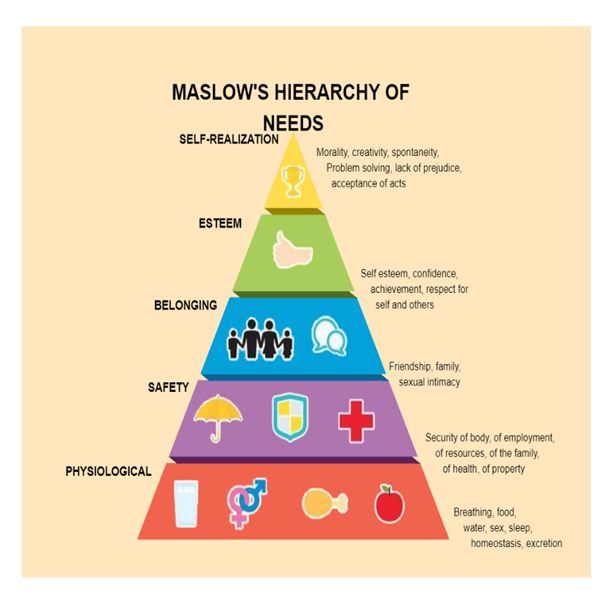
Helds Pyramid. Abraham Maslow’s “Helds Pyramid”.
One of the most significant psychological theories that can be used to explain human motivation through a hierarchy of needs is Maslow’s Hierarchy of Needs (1943). People are motivated to satisfy a series of needs, from basic physical needs (food, water, shelter) to safety needs, love and belongingness needs, esteem needs, and the highest level, self-actualization needs, according to Maslow. The theory is that one’s needs must be fulfilled at lower levels before they can be achieved at higher levels of psychology and fulfillment. The need for love and belongingness is relevant to the current study and is one of these stages. This stage deals with people’s hunger to connect with others, to be attached, to belong, friends and to have relationships that are meaningful. People must be attached to others and have affection, trust and belonging in social settings. In the absence of these, individuals may feel lonely, withdrawn, have low self-esteem, and suffer emotional distress.
South Indian students who migrate to study are also likely to lose the emotional bonds they have with family, friends and familiar communities. Changing your school environment can be problematic in respect of new relationships filtering by language, culture and new social environments. This can cause students to struggle to meet the need to “belong” in their lives which can result in their feeling alone and isolated. The theory of Maslow can be used to explain why unmet belongingness needs are problematic in terms of students’ psychological functioning. Without such meaningful relationships with others, students’ emotional regulation may be impacted, and difficulties in acquiring confidence, academic achievement and personal development exist. Thus, this theory is a valuable underpinning concept to the impact of social belonging on the mental health experiences of internal migrant students.
Social Identity Theory
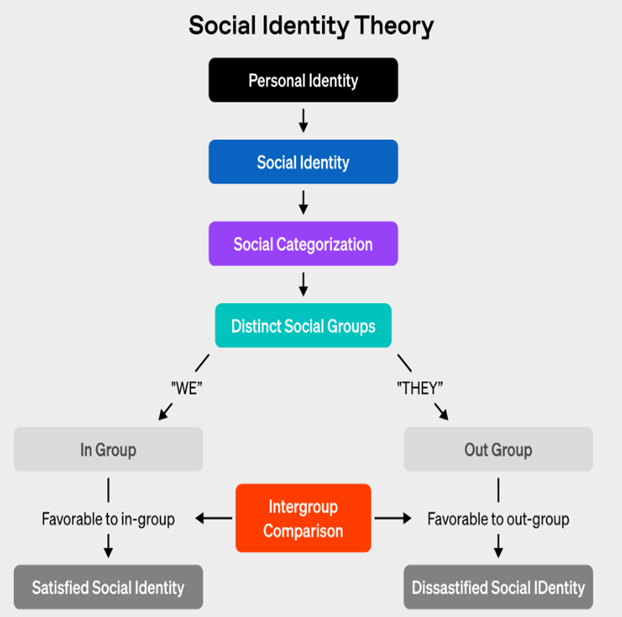
Henri Tajfel and John Turner (1979) developed a theory of social identity, a theory that attempt to explain how individuals develop a sense of identity and self-esteem through their membership in social groups. This theory suggests that humans group themselves and others into social groups according to their common attributes, including language, ethnicity, religion, nationality, culture, gender and regional affiliation. The influences that accrue from these group membership serve a major function in shaping the individual’s concept of himself or herself, in his or her behavior, attitudes, and interactions with others. Thus the theory proposes that a person has preference for groups to which he or she belongs (ingroups) and sometimes perceives other groups as out-groups, affecting social relations and a sense of belonging in and out of groups. The theory is composed of 3 significant processes: social categorization, social identification and social comparison. The process of categorizing oneself and others into groups is called social categorization. Social identification is defined as when an individual starts to identify with a group, and to feel an emotional connection to them. Social comparison is the comparison of one’s group with other groups that can have an impact on group behaviour and self-esteem. This is because these processes are crucial for the self-evaluation in social settings.
Social Identity theory becomes relevant when discussing internal migration associated with higher education, as students are likely to leave their comfort zone of the familiar cultural setting and enter a completely new foreign environment, where possibly they could find themselves in the minority social group. The language, eating and drinking, traditions, communication, and social norms of south Indian states might seem unfamiliar to internal migrant students at the host state. Such contrasts can result in marginalization of learners in the dominant regional culture. Student from North India, North East India or Eastern states of India for example may not be able to settle in the local peer group because of language or culture differences. These experiences can result in loneliness, feelings of exclusion, discrimination and decreased sense of belonging, and cause emotional distress. The theory also accounts for enhancement of sense of belonging as a result of a student friendship with others who share reminiscent backgrounds or the student’s becoming profitable in a new group of friends. Thus, Social Identity Theory is a significant model which can help explain the belongingness, loneliness and emotional experiences of the internal migrant students as a result of social group dynamics.
Ryff’s Model of Psychological Well-Being
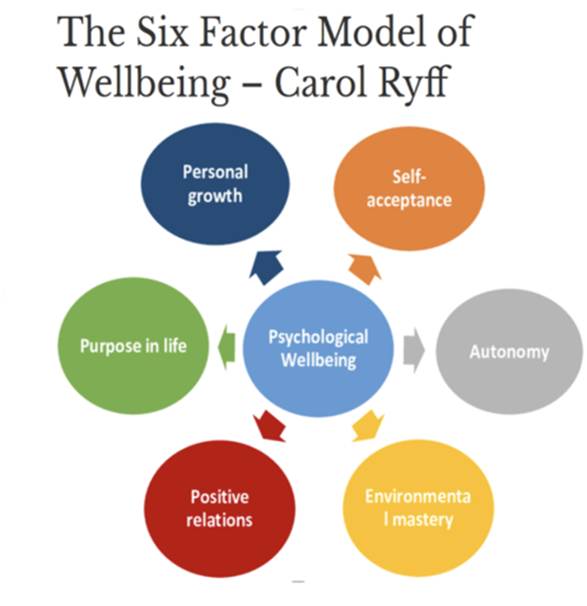
Carol Ryff’s (1989) Model of Psychological Well-Being emphasizes positive functioning rather than merely the absence of mental illness and emotional distress and offers a comprehensive, multi-dimensional framework for mental health. Ryff’s model discusses psychological functioning and living a meaningful, fulfilled life, whereas, traditional models focus only upon happiness. A model that identifies six main aspects of psychological well-being: self acceptance, positive relationships, autonomy, environmental mastery, purpose in life, and personal growth. Self acceptance is the capacity for a person to have a positive attitude towards his or herself and accept both strengths and weaknesses. Positive relationships with others includes the capacity to develop relationships with others appreciating the significance of positive relations, interpersonal trust and support. Independence in decision making and self-regulation. The mastery of the environment is the person’s ability to cope with every day demands and be adaptable to the environment(s) in which they live. Purpose in life is characterized by purposes, direction and meaningfulness, and personal growth by ongoing self-development and receptivity of new experience.
The present study can gain much from this theoretical perspectives as internal migrant students generally experience major emotional, social and academic adjustment upon the relocation for higher education. Students might need to adjust to different cultures, unfamiliar languages, academic press, and a different place of living when they arrive in South India. Such difficulties—can directly impact some aspects of Ryff’s model, specifically self-acceptance, positive relationship and environmental mastery. For example, a student may find it hard to form relationships if they are feeling lonely, and struggle with environmental mastery if they have problems adjusting to the hostel, to school, or to their host country. Likewise, the sense of marginalization may result in a lack of self-confidence and emotional well-being. But if adaptation is successful, it can also lead to development, strength and self-reliance. Thus, Ryff’s Model offers a significant framework to understand the psychological well-being of internal migrant students, and how they either sustain or struggle while facing challenges in the context of migration.
Integration of Theoretical Framework
The inclusion of these three theoretical lens gives a comprehensive view of the study. So if belonging has a central role for humans, Maslow as well as group dynamics and group identity in Social Identity Theory have pointed to such relationships and Ryff’s model provides evidence that support the more general parts of well-being in psychology.
Incorporating these frameworks together, it is hoped that the study will be able to explore relationship between unmet belongingness needs with other problems related to migration like issues of identity with loneliness and also give the understanding about how loneliness experiences of internal migrant students have an impact on their overall psychological well-being.
2.2 Review of Literature
2.2.1 Studies on Loneliness: Global and Indian Context
Loneliness is a people issue that, these days, is being increasingly acknowledged as a serious psychological issue among university students. It is not just that there are no people there, but an emotional sense of not belonging, interpersonal isolation and lack of meaningful relationships with others. A recent study revealed that loneliness is prevalent during the university transition period as students encounter new academic pressures, patterns, lack support from familiar friends and join new social circles (Riboldi et al., 2025). With the addition of migrant students, this includes not just an academic challenge, but what happens to the students who need to process their experiences for cultural, language, and emotional reasons?
Zheng et al. (2023) conducted qualitative analysis and found that international student loneliness is associated with negative emotions and social experiences, a decrease in social confidence, withdrawal from social situations, and struggles in educational functioning and social functioning. Although the study was with international students, the results in this study are helpful for understanding internal migrant students, too, as they also face situations where they are forced to relocate, separate from home and build new social relations. Learning space for social engagement is also restricted – it emphasises how loneliness can become self-reinforcing with students who feel lonely withdrawing from society adding to further feelings of loneliness.
Recent meta-analysis conducted by Dost (2025/2026) showed that there is a moderate to strong negative correlation between loneliness and belongingness for HES students; that is, a positive score on the belongingness scale was associated with reduced loneliness among HES students. The study analyzed 56 studies with 30,062 participants and found that the association between loneliness and belonging is found in all educational contexts, but these can vary in magnitude. This finding is relevant to the current study because it highlights the necessity to consider the experience of loneliness and sense of belonging in tandem, instead of viewing them as a psychological experience alone.
The issue of loneliness experienced by university students in the Indian scenario is not explored enough particularly in case of internal migrant students. Previous studies in India have been more general in nature towards stress, anxiety and depression among students and academic pressure. Roy et al. (2025) undertook a review on the stress, anxiety, and depression among college students, revealing various factors contributing to psychological distress among students from 2015 to 2024. However, there is a lack of studies that specifically examined the feelings of loneliness among internal migrant students in India. This suggests a significant gap – because migration and separation from family, language barriers, the lack of familiar food regimens, and cultural differences could exacerbate time out of their home state students’ feelings of loneliness.
2.2.2 Sense of Belonging in Students: Campus Belonging and Cultural Adaptation
Sense of belonging: A sense of being accepted, included, respected and valued in a social or institutional setting. For Higher Education students, belonging is significantly related to their engagement, motivation, retention, emotional security, and well-being in school. Students who had high level of university attachment exhibited high level of motivation, University confidence, participation, and academic performance, this was found by Rehman (2023). The study also found that social and academic involvement have an independent impact on an individual student’s feelings of attachment and persistence in college.
Importance of belonging for migrant students is particularly strong as they start entering into a new social and cultural setting where they can feel like a outsider. However, qualitative research by Cena et al. (2021), which interviewed international students based in Northern Ireland, identified that language barriers, cultural differences, social interactions and adjustment to the educational system impacted on international students’ sense of belonging. The study was done upon the international students, however, it is applicable to internal migrant students in India, because South part of the country is linguistically and culturally diverse. Students could also find difficulties with language, food, culture and relative exclusion based on region of origin; when moving from northeast, east and north.
Tewari et al. (2024) also emphasised that the experience of belonging does not simply exist within classrooms, but through leisure, informal peer relationships and social engagement. The focus of their study on international graduate students revealed that leisure experiences and social spaces contribute to international graduate students’ sense of belonging following relocation. These are relevant for this study because the internal migrant students might be able to cultivate a sense of belonging, as well as in their academic environments, they may find it in hostels, peer groups, cultural associations, language-based friendships, and informal spaces which are accessible to students on campus.
The systematic review and meta-analysis conducted by van Kessel et al. (2025) revealed a clear positive link between increases in well-being and university belonging. The study found a medium to large positive relationship between well-being and sense of belonging to the University, indicating the sense of belonging as a protective factor for the mental health of higher education students. This is a direct support to the present research which aims sense of belonging as one of the important factors influencing psychological well-being of internal migrant students.
2.2.3 Psychological Well-Being: Emotional Health and Coping Mechanisms
Psychological well-being is multidimensional and contains the domains emotional stability, positive relations, self-acceptance, autonomy, environmental mastery, purpose in life and personal growth. Academic stress, social support, and strategies for coping, identity formation, and family expectations all contribute to well-being in young adults in higher education settings. An extra emotional burden for migrant children may be that they need to learn to follow the rules of others’ societies as well as cope with academic demands and being away from home.
Riboldi et al. (2025) saw how university transition can impact students’ mental health and how loneliness can be significant in psychological distress. Their analysis of the equivalent groups of students in Italy and the UK also revealed that culture has an impact on the experiences of loneliness and mental ill-being. This is important for the current study because internal migration within the Indian context includes culture at various levels too, particularly in the South Indian context where language, food habits, customs and campus cultures might vary from the home state or region.
Van Kessel et al. (2025) suggested that the sense of belonging at university is a social determinant of student well-being. Their results suggest that when students feel more connected to their University they are more likely to rate higher on psychological outcomes. This validates the concept that psychological well-being of migrant students cannot be approached as a personal problem and that it should be investigated in the context of campus climate, social support, peer relationships and institutional inclusiveness.
Psychological coping is another key element of wellbeing. Migrant students might find coping by staying connected with their families, making friendships with fellow migrant students, joining culturally diverse organizations, consulting with a counselor, using online communication, and employing academic and recreational activities. Coping can, however, become maladaptive when students become withdrawn or isolate themselves, suppress their feelings, or withdraw from social situations. Therefore, qualitative research can provide the benefit that student’s own words can be used when describing their own coping strategies and emotional adjustment which are being studied.
2.2.4 Migration and Student Adjustment: Internal vs. International Migration
The majority of previous studies on migration and student adjustment problems are on foreign students. Common topics included in these studies are acculturation stress, cultural adaptation, discrimination, language barrier, and social integration. Academic difficulties, social interaction, and cultural differences were, for instance, found by Cena et al. (2021) to impact international students’ process of adjustment and belonging. In the same vein, Zheng et al. (2023) demonstrated that the feeling of loneliness had a negative impact on emotional well-being, social functioning and the educational experience of international students.
But there are unique aspects of in-country migration in India. Although not crossing a national boundary, internal migrant students may have large cultural and linguistic changes. South India is a popular choice for students coming from various states in India and may present some difficulties for terms of language, food, climate, identity, life in a hostel and other social indicators. This is why inside migration cannot be simply aroused emotionally simply because it combines some type of transfer inside the identical country.
While Singh (2023) studied internal migration of students in the context of India, the study emphasized the need to gain insights into the phenomenon of migration among students in India, particularly in the pre- and COVID-19 era. This is relevant as the internal student migration is an learning, social, and psychological transition experience. Students might relocate to pursue better academic opportunities, but are dealing with emotional issues that are not necessarily reflected in institutional records.
Studies have also revealed that migration correlates with acculturative stress, discrimination, living constraints and mental health issues amongst Indian migrant laborers. In 2025, Yadav et al. reported that 47.9% migrant labourers have mental health problem and both acculturative stress and discrimination were identified as the risk factors. While the population here is not the same as that of student migrants, the study provides an important insight to the potential psychological adverse effects internal migration can create in India when they are lacking in social support and sense of belonging.
2.2.5 Indian Context Studies and Research Gap
Now, going for higher education is another significant factor in the mobility of the Indian youth. South India is a hub for education and students come from across the country and smaller towns and villages to enroll here. The psychological experiences of these pupils remain under-researched however. Previous studies in schools within the Indian context have focused more on academic stress, depression, anxiety and general mental health problems of school children. There is relatively limited research that directly speaks to the dynamics of these three constructs – loneliness, belonging and psychological well-being – for internal migrant students. Study gaps are also observed in the available literature from the methodological perspective. Various mental health studies in the school context rely on quantitative surveys which have their utility in measuring prevalence, but they provide little information about lived experience. Qualitative research is necessary given that loneliness and belonging are a very personal and context-dependent phenomena. For instance, two students might each present feelings of loneliness, one might feel this because of language difficulties, the second student because of being a hostel-raised student, the third student because he/she feels culturally misunderstood. These differences will be revealed in participant experiences using a qualitative method. The regional difference is also significant. As the language and culture is unique to South India and hence, migrating students from other parts of the country may experience adaptation in a different way. However, there is a lack of studies on young adult internal migrant students of South India. To fill this gap, the present study aims to qualitatively examine the experience of loneliness, sense of belonging and psychological well-being among the Internal migrant students in Higher Education Institutions of South India.
2.5 Critical Analysis
This literature review reveals that there is a strong association between loneliness, belonging and psychological well-being; nonetheless, these three are predominantly independent variables in research. Loneliness is well-known to have a detrimental impact on students’ well-being, with a strong association between belonging and a protective effect demonstrated through global research (Dost, 2025/2026; van Kessel et al., 2025). However, much of the research is on intern shots or general populations of students in the university. This poses a limitation as the experience of internal migrant students in India might be different from that of international students. There is a major contradiction in the narratives of university migration as an opportunity for academic development, independence and self-development, and the mental health research that indicates that the same transition can create feelings of loneliness, anxiety, emotional distress and a decrease in belonging. For this reason, the nature of migration is that it may be empowering experiences as well as psychologically one that is challenging. This duality is particularly significant for younger adult students as they develop their sense of identity, independence and emotional coping skills. The other issue is that most of the research has used the concept of belonging as an institutional concern which focuses on engagement, retention and performance. But for migrant pupils, informal and cultural aspects of belonging, including language comfort, food habits, regional friendships, hostel living, festivals, being accepted by peers and perceived discrimination, can be significant factors. This clearly means that we need to encourage the exploration of belonging beyond class time. In general, the gap in the literature is that there is not much qualitative research conducted on young adult internal migrant students that focuses on both loneliness and sense of belonging in relation to psychological well-being in South India. The present study deems it opportune to address these issues by focusing on students’ voice and understanding how migration affects student emotion and sociality in the context of post-secondary education.
2.6 Research Gap
While previous studies have explored loneliness, sense of belonging, psychological well-being and adjustment related to migration among students in detail, our study aims to comprehensively focus where gaps remain. Firstly, the majority of studies employ quantitative designs measuring the effectiveness of treatments on levels of stress, loneliness or well-being via surveys and scales (van Kessel et al., 2025; Roy et al., 2025). Though these studies possess statistics, they do not articulate the students living through it and their emotional experiences. Hence, a qualitative understanding of how students themselves experience these issues is evidently absent. Secondly, most migration studies (like Cena et al. (2021); Zheng et al. (2023)) mostly focus on social impacts of the out-migration of international students but very few attention has been focused on internal migrant students studying in South India This is important because regional variations in language, culture and social norms may affect student experience in ways that are unique to each area. Third, previous studies take on loneliness and belongingness and psychological well-being in isolation instead of interdependently. Hence, this paper bridges these gaps by conducting a qualitative study on each of the three constructs among young adult internal migrant students in South India.
CHAPTER 3: METHODOLOGY
3.1 Research Design
This study is a qualitative research designed to understand the lived experience of loneliness, sense of belonging and psychological wellbeing among young adult internal migrant students in South India. Appropriate Qualitative Research Design for this study: A qualitative type of research design usually is used when the aim of a study is to understand human experiences, emotions, perceptions and social realities on the ground (Driscoll et al., 2018). The researcher collects extensive and detailed stories that may not be adequately captured via quantitative methods, as the focus of the study is to explore subjective experiences regarding migration, emotional adjustment and mental health. Qualitative, on the other hand, allows respondents to explore their situation and interpretation but as quantitative research is more data driven and statistical focused. Internal migrant students encounter various complex emotional and social challenges that cannot be adequately addressed quantitatively, making qualitative research the most appropriate approach to explore their lived experiences in-depth.
3.2 Research Approach
The study uses thematic analysis as the main method of inquiry. Thematic Analysis is a qualitative method that takes individual or group data and attempts to identify, analyze and report themes. (Braun & Clarke 2006) This method is appropriate for the current study, given that it enables the researchers to focus on the typical socio-emotional and psychological experiences faced by internally migrated SMT students. Thematic analysis allows for large quantities of interview data to be reduced to meaningful topics that reflect the experiences of participants. This approach also affords flexibility to define and interpret both explicit and latent meanings of participant responses. Here, thematic analysis can serve to systematize the responses into wider themes such as emotional loneliness, struggle with belongingness, coping strategies and psychological well-being.
3.3 Study Setting
THE POPULATION FOR THE STUDY:South Indian Colleges And Universities. Data before Oct 2023: South India is one of the most aspiring education hubs in India which close-up students from various states primarily based on its prestige establishments, have diverse modes of education and understands better instructional prospects. Sample The study covers a limited number of institutions in Tamil Nadu, Karnataka and Kerala where student migration is rife. The diverse student bodies of these institutions provide appropriate environments in which to study migration experiences. Multicultural nature of these academic settings gives us a pertinent backdrop for how students acclimatize to loneliness, belonging and psychological adjustment.
3.4 Sample Selection
This study is conducted among an internal migrant-young adults students (sample aged 18-25) that moved from one Indian state to another for higher education purpose. Candidates should be currently enrolled in South Indian colleges or universities. This sample includes students ranging from psychology to engineering, law to commerce, management, journalism, sociology and even literature for the diversity of experiences. There are ten participants who took part in this study. Note that qualitative research methods use small sample sizes, and this is considered appropriate since the purpose of qualitative research is to gather rich detail rather than statistical generalization. The chosen interviewees shed light on the emotional and psychological aspects of migration.
3.5 Sampling Technique
Sampling Method: The study used purposive sampling as the method of sampling. Purposive sampling is a type of non-probability sampling, which means that not all individuals in a population have an equal chance of being selected to participate in the research — rather, individuals are chosen based on specific attributes relevant to the study. In the current study, participants were screened on the basis that they had either direct experience of internal migration for higher education or related positive insights relevant to having experienced loneliness, belonging or psychological well-being. This kind of sampling allows participants to have knowledge, and experiences needed for the research objectives (Dawson, 2002).
3.6 Data Collection Method
Data were acquired via semi-structured interviews for this work. You can reach out to them if you have any questions about the code and they will give you free advice for at least a few days. This method was selected due to the level of detail it allows about participants’ own emotions, problems, and solutions. During the interviews, an interview guide with open-ended questions regarding migration experiences, loneliness and belonging, adjustment difficulties and psychological well-being was applied. This enabled an open use of participants’ real-life stories and emotional experiences.
3.7 Data Collection Procedure
Participants were recruited via educational institutions, personal contacts, and social media. Participants who fulfilled the selection criteria were then approached, and the researcher clearly explained the purpose of the study while giving an invitation to voluntarily participate in interviews. All data were collected after obtaining informed consent from the subjects prior to conducting the study, Interviews were undertaken either face-to-face or using online tools according to the availability and convenience of the participants. The interviews were audio recorded with the permission of participants as an attempt to ensure accurate data collection. The duration of each interview was somewhere between 30 minutes to 45 minutes. Once the interviews had been conducted, the recordings were transcribed for analysis.
3.8 Data Analysis Method
The analysis of qualitative data was performed through thematic analysis. In preparation, the interview recordings had previously been transcribed into written format. To familiarise himself with the data, the researcher read through the transcripts several times and Common word, feelings, experiences and responses were used to develop initial codes. Related codes were grouped into broader categories which then informed our overarching themes. The study identified four final themes: emotional loneliness, struggle for belonging, coping mechanism and impact on psychological well being. These themes assisted in identifying common experiences shared by participants.
3.9 Ethical Considerations
Ethical principles were strictly adhered to at every step of the research process. All the participants were instructed regarding the aim of the study and their contribution was entirely voluntary. A code, for example P1, P2 and P3 was used instead of the participants’ real names to protect their confidentiality. We did not provide any personal information to anyone and all information remained confidential. All participants were informed that they could withdraw from the study at any point without penalty. Prior to conducting interviews, all participants signed a consent form and all data was stored securely.
3.10 Limitations of the Study
There are some limitations associated with this study that must be recognized. There is a limitation to the sample of our study, as it only explored ten students individual lived experiences which may affect transferability when considering layers of participants from larger populations of this vulnerable group in general. Second, this is an exploratory study with the data being limited to select institutions from South India and hence it may not present a complete picture of experiences in different Indian contexts. Another limitation of the study is that it is based on self-reported responses, which can be affected by how comfortable people are answering sensitive questions. Nonetheless, the research offers much-needed insights into a relatively under-studied field of migration and student mental health.
CHAPTER 4: RESULTS / FINDINGS
4.1 Introduction
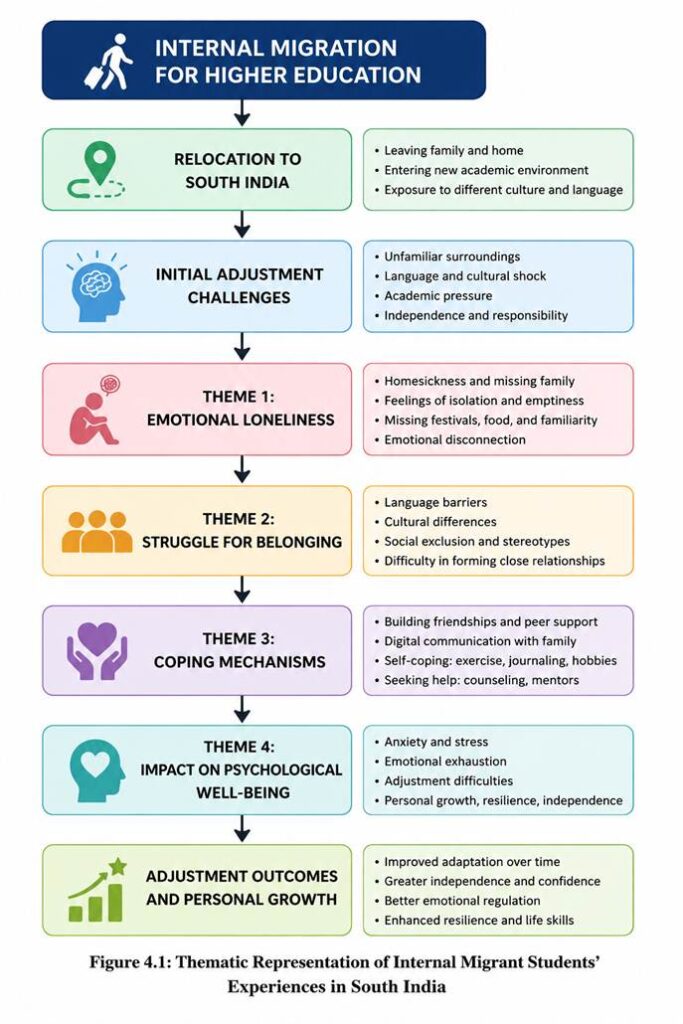
The findings were obtained from qualitative interviews with young adult internal migrant students in South India studying within institutions of higher education, and presented in this chapter. The aim of this chapter is to investigate participants experiences of loneliness, the challenges they have faced with developing a sense of belonging and how this has affected their psychological well-being. Semi-structured interviews were used to collect the data and thematic narrative analysis of Braun & Clarke (2006) was used to analyze it. Codes were created and grouped under higher-order domains, following transcription of the interviews and by iterative reviewing of interview responses. These categories were then condensed into broad themes that identified common lived experiences across respondents. The analysis derived four major themes.
- Emotional Loneliness
- Struggle for Belonging
- Coping Mechanisms
- Impact on Psychological Well-Being
Those themes give better understanding of the emotional, cultural and psychological problems internal migrant students encounter after they shift to new social settings both academically and socially.
4.2 Participant Profile
The study included 10 participants between the ages of 18 and 25 years who had migrated from different states within India to pursue higher education in South India.
Demographic Overview
| Participant Code | Age | Gender | Native State | Current State | Course |
| P1 | 20 | Female | Delhi | Tamil Nadu | Psychology |
| P2 | 22 | Male | Bihar | Karnataka | Engineering |
| P3 | 21 | Female | Assam | Kerala | Law |
| P4 | 19 | Male | West Bengal | Tamil Nadu | Commerce |
| P5 | 23 | Female | Rajasthan | Karnataka | MBA |
| P6 | 20 | Male | Odisha | Kerala | Journalism |
| P7 | 21 | Female | Uttar Pradesh | Tamil Nadu | Sociology |
| P8 | 24 | Male | Jharkhand | Karnataka | MBA |
| P9 | 19 | Female | Punjab | Kerala | Literature |
| P10 | 22 | Male | Maharashtra | Tamil Nadu | Engineering |
The participants represented diverse linguistic, cultural, and educational backgrounds, which provided rich insights into their migration experiences.
4.3 Thematic Findings
Thematic analysis of interview data uncovered four key themes reflective of the experiences of internal migrant students in South India. These include Emotional Loneliness, Struggle for Belonging, Coping Mechanism and Impact on Psychological Well-Being [41]. Its themes represent the expressed realities of emotional, social, and psychological experience post-migrating from their states to pursue a higher level of education. The themes were identified through an iterative coding process of the interview transcripts, looking for common patterns in responses from participants, repetitive emotions or shared lived experience. Although all participant had their own migration experience, common themes surrounding homesickness and adjustment to a new environment, engaging in the social surroundings of family and friends, as well as mental health issues were observed.
Theme 1: Emotional Loneliness
Emotional loneliness was one of the most prominent themes to emerge from the interview data, experienced nearly universally by participants in the course of migration. Emotional loneliness was very common during the early phase of relocation as students have just moved to South India from their native states for education. For many of the participants, migration was their first time leaving home and independently balancing academic studies, social life and personal life. Such an abrupt shift caused a huge rupture in their emotional support networks, forcing them apart from parents, siblings, relatives, close friends and environments that had previously provided comfort and stability. Many participants reported feelings of emptiness, sorrowful daydreaming or thoughts, emotional numbness, and solitude after the move. Since students tended to have to adjust fast-developing academic institutions, the novel setting frequently made these emotions more powerful. Some participants described loneliness as being worst in the initial months following migration because they had yet to establish any meaningful social networks which would have alleviated these risk factors.
Participant 1 shared:
“Everything seemed like a whole other world when I moved here. I have not been away from family ever. I would come back to the hostel and cry like a child any other day cause my parents. Even the little things like having to eat alone were terrible.
Such reaction reveals well some of the emotional cost of being forced to fend for yourself throughout much of your day in that you do not have regular sources of support. One comment from a participant in this study suggests that the emotional sensations of solitude were experienced as isolating, but not physical.
Similarly, Participant 5 explained:
That first semester I detached emotionally from all of them. There were students still falling for this trick, but I never felt close to any.
This corporeal reaction is part of emotional loneliness, to which physical presence does not similarly remedy disconnection of the heart. Some participants also mentioned that while they were never alone with classmates, or other hostel students and the buildings around them, these encounters did not feel emotionally connected.
This was captured by participant 3 in the following words:
I saw that you know studying higher etc is great but it will also make me independent and how fun the whole move-in and living alone equipped with your own stuff would be, what I never thought of was the loneliness it might create. SO yeah I definitely create the people around but even i believe,people around me who are same ME.
Instead it would seem that, with high expectations inflated by many earlier launches through migration hatch, although as this was often open-ended in nature, they emotionally hit a wall instead.
Homesickness and Missing Family
The only emotional need that surpassed the others was homesickness, which was reported frequently and consistently by participants as a subtheme of loneliness. Students often wrote about family members they missed, hometown traditions and celebrations, cultural holidays and meals and home-cooked meals in their everyday lives. Before the migration, such features of home may have seemed banal; after the move, they took on meaning.
Participant 7 stated:
“Festivals were the hardest part. Home was the place of festivals, which are family gatherings and celebrations.
Here, I felt completely alone.”
This explains the role of cultural celebrations in increasing emotional loneliness, as students were reminded that they left families and their traditions behind.
Participant 9 explained:
At home, I missed the food and casual everyday conversations with members of my family. They didn’t feel out of the ordinary until I migrated and then realised that they were essential.
This sentiment speaks to how everyday acts like family meals and daily chats became an anchor for emotional stability.
Multiple respondents also mentioned feeling empty around birthdays, holidays, weddings and family events. Social media was cited often for making the problem of loneliness worse seeing family celebrations that felt physically distant from the family events.
- Participant 4 stated:
- “I was really lonely after seeing pictures of my family celebrating I wanted to be there.
- It is through these that homesickness continued to be an emotional obstacle throughout the migration experience.
- Isolation in Hostel Life
- Isolation in hostel life is also a frequent sub-theme. Meanwhile, some felt hostel is an actual independent, fun adventure where new people are met. However, many went on to describe hostel life as isolating, particularly when they struggled to form close friendships.
- Participant 8 explained:
- At first it seem like a good fun colorful life but stay at hostal for few days one can say this time of traveling kinda boring some times without having best mates.
- This indicates that even when being in a dormitory environment is, ostensively, socialamost emotional solitude becomes set up in their absence.
- Participant 2 shared:
- The nights in hostel rooms were a little lonely. Still, I found that every one was busy with their own life and felt like there is NO ONE for me to speak.
- In the same way, Participant 6 elaborated:
- Just because u share space with those people sometimes you are not even that close,
- On the other hand, these responses infer that proximity does not entail emotional proximity.
Successful preparation needs to encompass more than just the practical components of relocation, as this theme demonstrate s that internal migrant students experience loneliness related to em otional disconnect felt beyond the physical distance from home. It will entail dislocation, exacerbation of homesickness, alienation from meaningful social connections and struggle with adjusting in unknown settings. The third theme illustrates the extent to which moving for education can affect students in the early phase of their migration regarding emotional well-being.
Theme 2: Struggle for Belonging
The second main theme that arose from the interviews was difficulty in forming a sense of belonging contextually — academic, social and cultural — in South India. Participants moved mostly in search of educational betterment, but many claimed adjusting to an entirely new environment was worse than they had anticipated. A strong sense of belonging is imperative in making students feel accepted, valued and emotionally secure in their educational institutions. Yet several participants felt that they were not of this place and still experienced the work culture as alien. Some said (as I now often hear from others) that language, or cultural background, or different modes of social interaction means you are never fully included in the new region (or even beyond region: some Regional Australian government staff feel like outsiders at conferences).
Many of our participants told us that they struggled to feel part of their new environment, and felt like outsiders. Many of the students I have spoken to have detailed how even while physically attending classes in the classroom, staying at hostels and socialising with peers their sense of emotional presence was lacking – they felt unable to connect with others on any meaningful level. The absence of belonging often exacerbated loneliness and undermined social confidence.
Participant 5 explained:
I thought that college would be fun and social, but I spent much of my time feeling like I was watching everyone else make friends from the sidelines.
Similarly, Participant 1 shared:
It was almost as though everyone knew everyone else but I just felt a little out of place, exercising on the pitch making it clear that I didn’t belong there.
These responses demonstrate that belonging is not an automatic result of being at the same institution. It requires not substitution but emotional validation, social inclusion & authentic human bonding.
Cultural Differences
Probably the most repeated one in talks about belonging was cultural adaptation. The students who came to South India were previously from different regions of India for their education, many times they also faced and over struggled with the same issues in adapting themselves to the culture practices or turned into a locally acceptable employable factor having undergone personality improvements, native dialects locality adjustment work practice styles etc., it was hopeless. The differences made it harder to settle in and increased the feeling of being on the outside.
Food habits were one of the most commonly cited barriers to dietary change.
A few of the participants reported that changing to obtain various food tastes ever made them feel less connected to their home culture.
Participant 2 explained:
The food is extremely different from what I would normally eat. I know this is trivial, but it was a constant reminder that I was not at home.
Similarly, Participant 9 stated:
Food acted as a reminder each day that I was not in my fiefdom anymore. I missed the meals at home.
The participants explained the diversity they face not only in food but also in communication styles and social norms. Several students claimed that compared to home experiences, such classroom interactions and overall social conduct were strange for them.
Participant 3 stated:
“Even classroom interactions felt different. The way people were talking, and I remember thinking that we learned intellectually there were different types of people.
Participant 4 explained:
They weren’t rude or unkind, but their way of speaking was truly different than anything I’d experienced It stripped me of my confidence to reach out to people.
Cultural differences like these often led to emotional distress and lengthy adjustment for studentsInstead, participants reported being unable to know what to do in social situations, leading them to become more aware of themselves but also lacking confidence around people.
Language Barriers
Language barriers were also seen as a major factor for the difficulty participants had in belonging. This is the biggest separation between participants for social integration. While English was employed in classrooms, numerous participant comments recounted the use of local language(s) among peers in hostels, public spaces and transport contexts.
As most participants had limited knowledge of regional languages (Tamil, Kannada or Malayalam), they were excluded in conversations and faced a communication barrier while performing their everyday tasks.
Participant 6 shared:
Even basics such as getting food, or ordering in restaurant, taking directions were extremely overwhelming as I wasn´t very fluent with the native language.
This gives an example of how it affected not only social aspect but also normal daily life due to language barrier.
Participant 5 explained:
I felt invisible when my classmates spoke in their local language for stretches of our conversations.
Similarly, Participant 8 stated:
“I would want to join the discussion sometimes, but I simply stepped back because everyone spoke a language that I do not understand.
All these experiences sometimes led to frustration and noticeable dwindling of students willingness to actively engage socially. Many participants also stated they do not enter certain social situations because they are afraid of being mistaken or embarrassed.
For some students, classroom participation was impeded by language barriers as well. Although English was the medium of instruction in lectures, academic discussions amongst students were mainly conducted using regional languages which again left many participants excluded from group learning opportunities.
Regional Identity and Stereotyping
Regionalist identity and stereotyping was another major selective sub-theme. In some cases, participants stated that they experienced presumptions, stereotyping or subtle discrimination regarding the state or region they came from. These experiences lessened their confidence and made it harder to create a sense of belonging.
Participant 7 stated:
I was from Northern India and people presumed certain things about me. It gave me the feeling that I was out of place.
Similarly, Participant 3 explained:
“It is awkward when sometimes people would ask questions about my home state that made me uncomfortable.”
Participant 10 shared:
“Sometimes I felt that instead of having firsthand knowledge, some treated me as an outsider simply because I was from a different region than they were.”
These experiences frequently led to the feeling by participants of social exclusion and emotional withdrawal. Some students said they had begun to avoid reaching out for friendship over fears of how the peers would feel about them.
Social Exclusion and Emotional Withdrawal
Over time, a number of participants dropped out of socializing citing cultural barriers, variation in language and regional stereotypes. They also reported spending more time on their own, less involved in group activities and limiting social interaction.
Participant 1 stated:
A few times I tried to fit in, but slowly after rejections sometimes I mellow down on that.
Omitting Words, But Not Meaningful: The Void of Emotion — Omitting Words Glancing OutExcursion: How Much Fun Only Spoils It
Ultimately, the fight for belonging demonstrates how difficult migration can be and how it cannot simply be reduced to moving between universities. The most complex are also reflected from the cultural, linguistic and social barriers of acceptance of new environment among internal migrant students. Their emotional expereince became influenced in a major way with this agonising loss of belonging and the process of integration and assimilation impacted the psychological well being very heavily.
Theme 3: Coping Mechanisms
To cope with their emotional difficulties, participants engaged in the active development of strategies for overcoming stress and loneliness.
Friendships as Emotional Support
Of these coping strategies, friendship seemed the most important.
A large proportion bonded strongly with roommates, peers from classes, and other students sharing a common background.
Participant 1 stated:
“My roommate was there to be my no.
Participant 10 explained:
Until I met a solid crew and that made all the difference.
There was less loneliness and greater adjustment in these friendships.
Digital Communication with Family
Using technology to help students stay emotionally connected
Participants frequently relied on:
- Video calls
- Phone calls
- Social media
- Messaging apps
Participant 4 shared:
Talking with my parents over video call every day made me feel known and connected to home.
Personal Coping Strategies
Participants also used personal strategies, including:
- Exercise
- Reading
- Journaling
- Religious practices
- Counseling
Participant 6 stated:
The output should be: “Journaling helped me say things that I couldn’t tell people.”
These strategies improved emotional regulation.
Theme 4: Impact on Psychological Well-Being
Difficulties in adaptation related to migration exerted a major influence on psychological well-being.
Anxiety
A few participants also described anxiety related to academic performance, social rejection, and fear of the future.
Participant 3 explained:
“I was forever anxious that I would not achieve my academic work while managing the social life.”
Stress
Students felt overwhelmed by balancing multiple obligations.
Participant 8 stated:
I became overwhelmed by the rigors of studies, finances, and emotional stress.
Emotional Exhaustion
Some participants described emotional burnout.
Participant 5 explained:
Sometimes it became mentally draining and I had to pretend that I still felt all right.
Positive Personal Growth
At one point, several respondents report a more positive movement.
Participant 10 stated:
“It was a tough experience, but it built my character and self sufficiency.”
Participant 2 added:
“I also became more flexible and in touch with my emotions.”
In this sense, it implies that migration could also be adaptation.
The results show that the internal migrant students in South India face turbulent emotions and complex cultural and psychological challenges. Emotional loneliness, ongoing belonging issues, and trouble with mental health became key problems. But friendships, family support and individual coping strategies helped many students manage these issues. The next chapter (Chapter 5) will interpret these findings in light of what is known from the literature and theoretical frameworks.
CHAPTER 5: DISCUSSION
5.1 Interpretation of Findings
The findings of this study suggest that students who migrated for higher education through internal migration in the South Indian region show considerable emotional, social and psychological stress after moving. The four new themes that emerged in chapter 4, namely Emotional Loneliness, Struggle for Belonging, Coping Mechanisms and Impact on Psychological Well-Being – captures the realim of migration-related adaptation among young adults. The second, Emotional Loneliness, indicates the extent to which moving out distances one from previously established systems of support. Participants often described experiencing homesickness, a loss of emotional intimacy and missing their family ties. That means, there is physical distance added with emotional space that rendered the internal migrant students lonely from their own surrounding. So even though students had peers–many said they felt alone, a measure Jin said indicates that one element of belonging does not mean the emotional needs of students will be fulfilled by those around them.
The theme two Struggle for Belonging highlights the struggle of individual students to achieve acceptance as they seek to integrate into a new cultural landscape and social space. Language barriers emerged as a top obstacle to social integration. While some students from Northern India, Eastern Britain and Northeastern states of the country complained that they felt ostracized when people spoke in dialects. Food consumption patterns, food-related customs and social practices also remained associated with a sense of isolation. These results suggest that a sense of belonging is determined by both the immediate institutional context and parameters set outside it for wider societal acceptability. Coping Mechanism — the students made concrete efforts using individual or social strategies to cope with migrating stress. Safeguarding: One of the most common protective factors named was friendships
Communicating with family members through digitalization was also critical in the context of emotional stability. Others used journaling, exercise, reading and counseling to manage stress.
The last theme, Impact on Psychological Well-Being shows that these migrations causing factors had a huge impact on mental health of students. Things participants mentioned included anxiety, stress, emotional exhaustion and uncertainty. Conversely, a number of respondents attribute their resilience, independence and self-improvement chess-playing with lots of new experiences. This means that migration can hurt emotionally and impact developmentally. In summary, the results conclude that internal migration for getting an education is not simply a transition of academic but also a flashback as an emotional and psychological.
5.2 Link with Literature
The results of this study are in accordance with previous literature about loneliness, belonging and migration, as well as investigated students’ mental health. The results about emotional loneliness are consistent with Zheng et al. (2023) found that the common emotional experience of students can be disconnection due to relocation. In line with their results, all respondents in this study described feeling isolated despite being surrounded by peers. This study also confirms the results of Riboldi et al. (2025), who highlighted how transitions to universities often exacerbate mental health issues. Study participants in this study have also reported anxiety, stress and emotional exhaustion during adjustment time periods. Cena et al. resonance thematically with this sense of belonging. what (2021) who discovered that students struggle to belong to the university community where they have had negative experience with regard language barrier and culture difference. Respondents with a similar experience of language ostracism, coupled with cultural adaptation in the current study. Moreover, Rehman (2023) claimed that belonging affects academic engagement and subsequently student retention. The current investigation extends this knowledge by demonstrating that belonging also has a direct effect on emotional well-being. The results regarding coping styles are partially consistent with the literature which shows that social support903 is a both protective and resilience-promoting factor. However, what this study adds is to appreciate how digital communication helps internal migrant students to achieve emotional connection with families. This research fills an important gap in literature, with it being very different from many other studies that focus on international students as this focusses specifically on internal migrant students within India.
5.3 Theoretical Implications
The findings strongly support the theoretical framework used in this study.
Maslow’s Hierarchy of Needs
Belongingness is central to Maslow’s theory of human needs. The participants described lived experiences that were illustrative of the hypothesis stating that when belonging needs go un filled, loneliness grows. Even on the emotional distress measure, kids who had difficulting connecting were more likely to feel symptomatic. Secondly, the results suggest that migrant students need to have their belongingness needs met to maintain and enhance their psychological equilibrium.
Social Identity Theory
But how does membership in a group impact sense of belonging and self-concept. The Social Identity Theory (SIT) offers some explanation, Participants again expressed feelings of exclusion on account of language differences, regional identity and cultural distance. The following thoughts show how some students view themselves as outsiders, which also explains their inability to assimilate into the dominant culture.
Ryff’s Psychological Well-Being Model
Rhys et al.: Ryff positive environment frameworks for wellness (like, connectedness, autonomy, environment mastery etc.) Better psychological adjustment was reported among those who established supportive friendships. Higher personal proneness is one of the Ryffin dimensions, which are peculiarities or characteristics that many students who adapted well have demonstrated.
5.4 Practical Implications
These findings are of direct relevance for both universities and policymakers.
Implications for Universities
In the case of internal migrant students, numerous Universities will need to set-up systematic support measures.
These may include:
- Orientation programs for migrant students
- Language support programs
- Peer mentorship systems
- Mental health counseling services
- Cultural inclusion activities
Institutions ought to form inclusive campus environments whereby bring educated students from disadvantaged backgrounds be important and included.
Implications for Policymakers
Internal migrant students should be acknowledged by educational policymakers as a special population in need of targeted assistance.
Policies may include:
- Mental health funding for universities
- Student adjustment programs
- Inclusive hostel policies
- Interstate student support mechanisms
Public institutions must also create awareness about institutional student mental health as well as migration-related obstacles. The findings presented in this chapter were discussed against existing literature and theoretical frameworks. The research states that Internally mobile students in South India face affective loneliness, sense of belonging challenges and mental health issues. Nevertheless, positive social tie(s), as well as systematic facilitations, could dramatically alleviate the process of adjustment.
CHAPTER 6: CONCLUSION
6.1 Summary of Findings
The study utilizes a qualitative approach to assess the constructs of loneliness, sense of belonging and psychological well-being in young adult internal migrant students from South India. The study was aimed at understanding the socio-emotional and psychological challenges faced by students migrating outside their home state for higher studies in South India. Migration shapes students’ emotional experiences and adjustment processes as evidenced in semi-structured interviews with 10 participants. Results Participants described feelings of loneliness in different ways, although emotional isolation was predominantly observed in this cohort particularly early during settlement.
A lot of students talk about being homesick, emotionally distant and missing family a familiar surrounding space. In addition to autonomy, another challenge for students was a sense of belonging — also observed in previous studies, due to language barriers, cultural differences and concerns about food habits/eating practices (diet) as well as stereotypes based on region-based social identity. Students often experienced significant challenges that caused them to feel excluded in their peer, academic and social environments. Participants also experienced various coping strategies including making friendships, regular contact with family members using digital communication, investments in hobbies and peer support. Moreover, the results demonstrated that psychological well-being was largely influenced by migratory process variables including stress, anxiety, emotional exhaustion and adjustment to the new environment. But others had become more resilient, independent and grown as a person.
6.2 Key Conclusions
The analysis produces the conclusion that internal migrant students in South India regard migration as a boon and bane. Migration opens the doors to quality education and better career opportunities, but its not sought without emotional and psychological challenges that educational institutions choose to turn a blind eye upon. A major problem discussed by participants was loneliness — particularly for those students who did not have robust social and emotional supports. It also found that students with a greater sense of belonging are able to successfully navigate new spaces. Those Students who created friendships were accepted better in their institutions and these students reported lower adjustment experiences as those excluded. Moreover, psychological wellbeing was strongly associated with both loneliness and a sense of belonging. More social Problems individuals reported more emotional distress. This is why discussing an important mental health topic emerging for institutions (not just universities) should consider internal migration to pursue an education.
6.3 Recommendations
A handful of recommendations are provided based on the study findings that may improve the situation of internal migrant students in South India. So the institutions can organize this more gradually and would be very effective if they support such a way of adapting. – For example: Universities could create orientation programs targeted for migrant students, peer mentoring initiatives, language support services that focus on integration process to facilitate culture integration events in which support inclusion. Hostels also offer provides logistic support to help students in acclimatizing with live the independent living conditions. Moreover, institutions need to ensure mental health counselling that is affordable and free from stigma. Regular mental health awareness in addition to stress-management workshops and counselling sessions in a secure space can ease the transition phase for students undergoing emotional distress. An inclusive school environment should also be reflected in the policymaking of mental health addressing internal migrant students.
6.4 Limitations of the Study
Disclaimer this study is not without limitations. First, only ten participants were included in the study; therefore, findings are limited to internal migrant students from larger populations throughout India. Second, the study was only for few selected institutions of South India. Finally, the data was based on what participants self-reported via interviews and some people may have not disclosed personal experiences that were emotionally sensitive. Moreover, the qualitative approach emphasizes depth of understanding rather than breaching statistical representativeness. Not only are these results limited, but they also provide a very small peek into an under-investigated area of research.
6.5 Suggestions for Future Research
Considerations for Future ResearchThe present study is based on a small sample size and covering students from only two States of India, new studies can add to it by having larger samples sizes and also looking at patterns of internal student migration across different parts of the country. Comparative studies may also be take a long; style between those internal migrant students, and the international students with respect hopes in adjustment experience. Longitudinal studies could look into the temporality of these constructs, such as relationships through which spikes in loneliness and belonging affect changes in psychological well-being over time as students move along their trajectories. This leaves open the potential for further investigation by future researchers; they could examine other variables including financial stress, academic pressure, as well as gender disparities with family expectations and institutional support systems. Incorporating both quantitative and qualitative approaches; mixed-method research to better understand internal migration and student mental health in India.
Reference
- Cena, E., Burns, S., & Wilson, P. (2021). Sense of belonging and the intercultural and academic experiences among international students at a university in Northern Ireland. Journal of International Students, 11(4), 812–831.
- Dost, G. D. (2025). Belongingness and loneliness in higher education: A meta-analysis of pre- and post-pandemic trends. Frontiers in Psychology, 16, Article 1625957.
- Rehman, N. (2023). Sense of belonging and retention in higher education: An empirical study across Chinese universities. Cadernos de Educação Tecnologia e Sociedade, 16(3), 822–833.
- Riboldi, I., Crocamo, C., Piacenti, S., Capogrosso, C. A., Calabrese, A., Paioni, S. L., Bartoli, F., Armes, J., Taylor, C., & Carrà, G. (2025). Mental health and loneliness in university students: A structural equation modelling comparing Italy and the UK. International Journal of Social Psychiatry.
- Roy, S., et al. (2025). Stress, anxiety, and depression as psychological distress among college students: A review of determinants from 2015 to 2024. Journal/source details to be verified from final article database.
- Singh, R. (2023). Internal student migration in India: Impact of the COVID-19 crisis. Asian and Pacific Migration Journal / source details to be verified.
- Tewari, K., Lundin, E., Cho, S.-J., Du, X., Oliveira, J. R., & Fernandez, M. (2024). International graduate students’ perspectives on sense of belonging in leisure. Journal of Hospitality, Leisure, Sport & Tourism Education, 35, Article 100505.
- van Kessel, G., et al. (2025). Relationship between university belonging and student outcomes: A systematic review and meta-analysis. The Australian Educational Researcher.
- Yadav, S., Priya, K. R., & Sinha, A. K. (2025). Mental health problems among migrant labourers in India. Social Change.
- Zheng, K., Johnson, S., & Jarvis, R. (2023). The experience of loneliness among international students participating in the BBC Loneliness Experiment: Thematic analysis of qualitative survey data. Current Research in Behavioral Sciences, 4, Article 100113.
- Gidwani, S., Anchan, V., & James, N. (2025). Lyrics of longing: Exploring the role of music in the lived experience of homesickness among college students. Psychology of Music, 53(5), 762-778.
- Lamouchi, R. (2022). Sense of Home and Belonging in Forced Migration: A Case of Farsi-Speaking Youth in Malaysia (Doctoral dissertation).
- Lopez-Rogina, D. (2024). Context Matters: How Migration Experiences Affect Feelings of Belonging, Exclusion, and Identity for Southeast Asian Immigrants (Doctoral dissertation, University of Colorado at Boulder).
- Batuwanthudawa, S., & Udayanga, S. (2025). Bridging the gap between objective and subjective well-being among first generation immigrants: exploring the role of religion and spirituality. Frontiers in Sociology, 10, 1539686.
- Nolte, L. M. (2025). Exploring Global Shifts in Student Sense of Belonging Within Diverse Middle School Populations. Wilkes University.
- Mohan, A., Jaihind Jothikaran, T. A., & Ashok, L. (2026). Exploring the Reasons to Age Well in Place: A Qualitative Inquiry Among Older Adults in Migrant Households of Kerala. Journal of Aging and Environment, 1-22.
- Kusci, I., Öztosun, A., & Arli, N. B. (2023). Mediating Role of Social Exclusion in the Relationship between Sense of Belonging and Loneliness in International Students. Educational Policy Analysis and Strategic Research, 18(3), 297-315.
- Chen, J. (2025). Impact of family and social support in enhancing psychological well-being of young adults in China. BMC psychology, 13(1), 839.
- Ghosh, P. (2021). In Pursuit of Belongingness: A study into international student participation in UK campus theatre societies impacting their sense of belonging in the university context (Doctoral dissertation, University of Surrey).
- Balakrishnan, G., & Bleibleh, S. (2024). The nexus of place attachment, spatial behaviour and subjective well-being”. A pilot case of Indian expatriates in Dubai. Journal of Urbanism: International Research on Placemaking and Urban Sustainability, 1-28.

Leave a Reply