“Cricket is an Indian Game accidentally invented by the English – Famous Proverb”
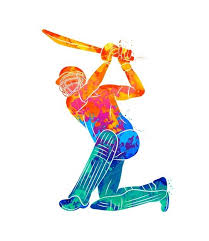
The Indian Men’s Cricket team recently clinched their third T20 World Cup title, and with this win, the team became the only team to win three T20 World Cup titles (2007, 2024, 2026), and two titles in a row, 2024 and 2026, and the only country to host and win the title. With all the cricketing marvels and celebrations around the country, the stature of Indian cricket has grown with a distinct identity.
So far, the major cricketing nations share a common background of British colonialism. Cricket arrived in these countries as a cultural instrument of the British Empire, a colonial sport played by British officers and soldiers. The Gentleman’s Game has a curious historical irony – a sport created for the colonial imperial elite is now the national passion of the formerly colonised. Yet over the past 2-3 decades, the game has undergone a remarkable transformation, becoming the second-most popular sport in the world (2.5-3 billion followers). The ICC (International Cricket Council) has added new members of cricket-playing nations, with the first generation of cricketers coming from different countries around the world. These new cricketers have started to scratch the surface of world cricket, through their sensational performance, making their appearance in the global media. These new cricketers represent a ‘Hybrid identity’; they are citizens of some nation but have their roots in India.
The new cricketing countries, such as the USA, Canada, Oman, and Italy, represent a new trend in cricket; cricket reached these countries not through colonial endeavours but through the migration of people from the former colonies. The majority of cricketers are from the Indian subcontinent. So, what was once referred to as a British colonial sport that reached its colonies is now getting topsy-turvy in India. People of Indian Origin are not only making the sport popular in foreign lands; they are leading the sport, participating in the games, and representing their country of residence. Only in this T20 World Cup 2026, around 40 players of Indian origin represented countries such as Canada, the USA, Oman, the UAE, the Netherlands, and Italy. Even earlier, players of Indian origin have represented major cricketing nations such as South Africa, New Zealand, the West Indies, and England.
Cricket as a Global System and India as a Host –
Cricket has become a global system, in which talent, capital and culture flow across borders. The end of colonialism and the beginning of globalisation have redefined cricket beyond its territorial origins, and India is the emerging hotspot of this new global era of cricket. With the expansion of the Indian diaspora worldwide, India’s cricketing culture has transcended national boundaries, spreading to overseas lands, and Indian-origin cricketers are making their mark in various national teams. This establishes a direct proportional relationship between migration, diaspora and cricket. Players of Indian Origin have become an integral part of various national teams, thus reflecting how the Indian diaspora has reshaped the cultural geography of the game. Indian-origin players are participating in the cricketing tournaments, representing different nations and demonstrating how cricket has evolved from a colonial legacy into a transnational network shaped by migration.
The emergence of India as a financial and cultural centre of cricket, especially through Institutions such as the Indian Premier League (IPL) and the International Cricket Council’s (ICC) governance structure, has blurred the national boundaries. India’s cricket infrastructure has grown to a massive capacity with 81 cricket stadiums (the highest number of international stadiums) and a well-structured domestic and international tournament season. Strengthening and producing a large pool of cricket talent in the country. Also, the expansion of digital broadcasting services has increased viewership, reaching a record of more than 1 trillion news per minute. Cricket has become a portable culture in India; it travels with Indians wherever they go. Whether they play the game, curate the game, or just become a cricket enthusiast, it always goes with them. The game has travelled to all corners of the world, as the Indian diaspora is among the most vibrant and active.
Diaspora as Cultural Carrier –
Diaspora communities act as cultural ambassadors of their home country, preserving and transmitting its traditional values and identities across geographical boundaries. Through everyday practices such as language in the household, celebrations among the community members and many other activities, they maintain a strong connection to their roots while simultaneously adapting to a new social context. In this process, the community safeguards its cultural heritage and acts as a bridge between societies, facilitating cultural exchange. The diasporic community serves as a representative of Indian culture, including cricket, which has become an integral part of it. The Indian diaspora does not merely consume cricket abroad; it reproduces and reconfigures it.
After arriving in the foreign land, the diaspora group establishes itself through several mechanisms, one of which is the practice of home culture. Through this, individuals practice their native culture to identify with the diaspora community and create a distinct identity in a foreign land. Diaspora groups not only protect and preserve culture in a static form; they also actively adapt and reinterpret it in new environments. The adoption of culture results in hybridity, a combination of elements of both the homeland and the host society. Just as chicken tikka pizza, cricket also gets combined with the host sporting culture in establishing its cricket teams. In this way, diaspora becomes a dynamic agent of cultural exchange, contributing to the introduction of cricketing culture.
Migration as the New Engine of Cricket’s Expansion –
In this new geography of cricket, the game is no longer following its imperial routes but is migratory, manoeuvring and shaping itself through the lived experiences of diaspora communities who carried it across borders, redefining its global identity. Indian migrants coming to distant lands in search of new opportunities brought cricket with them as part of their culture. Through community events, weekend games, and informal tournaments, they shaped cricket in a foreign land. Later, by establishing local clubs and organising league matches in their host countries, they popularised the game in non-traditional regions, contributing to its global expansion. These diasporic communities have influenced media consumption (a 69% increase in consumption in nontraditional markets in 2026), supported international teams and produced new players who represent their adopted countries, thereby strengthening cricket as a transnational sport (63 Players of diaspora groups featured in 15 out of 20 teams in the T20 World Cup 2026). At a deeper level, diaspora communities in foreign lands have institutionalised cricket, passing it down to the next generation as part of their cultural upbringing, blending inherited traditions with new influences from host societies.
From the 1960s onwards, Indian nationals began migrating to countries such as the USA, Canada, Britain, and later to Gulf countries after the oil boom. With them, these migrants brought their culture, practised it, promoted it, and celebrated it through community activities. The higher the migration rate, the greater the representation of Indian culture abroad. The USA hosts around 5.4 million people of the Indian diaspora, followed by the UAE (3.6 million), Malaysia (2.9 million) and Canada (2.8 million). With numbers in the diaspora community, cricket has been able to penetrate the social settings in foreign lands. Over 200,000 active amateur cricketers participate in cricketing events in North America alone, and around 44,000 grassroots matches were organised in countries like the USA and Canada in 2024. The USA alone saw approx 11,000 matches and 36,000+ registered players in 2024.
Institutional Expansion in New Cricket Geographical –
Migration has enabled the expansion of cricket into non-traditional cricketing regions worldwide. And the ICC has brought institutionalisation of the sport in these countries; from a handful of colonial-era playing nations, now it has 104 member countries, including 92 associate member nations with little or no direct cricketing legacy. There are around 1.5 million active players outside traditional cricketing nations. Migration-driven cricket is no longer confined to the informal spaces; it is becoming more organised and institutionalised. Among these, the Indian diaspora community is playing a leading role, as of its representation in countries around the world.
The convergence of diaspora-driven demand with Institutional Expansion has produced new cricketing centres. The emergence of professional leagues such as the IPL illustrates the deepening of cricket’s institutional structure. Franchise-based model, global broadcasting reach, and its financial dominance have inspired similar leagues in non-traditional regions, including North America. These leagues often ride on the popular wave of diaspora audiences and players, linking local cricketing structures to a global entertainment economy. These new cricketing geographies are not defined by their historical relationship with the British Colonial empire, but by nodes of migration and capital. Cities like New York, Toronto, Dubai, and Milan are emerging as new cricketing hubs because they host a dense network of the Indian diaspora. The expansion and institutionalisation of cricket in new geographies represent more than just the growth of sport; they signify a reconfiguration of global cultural power.
Diaspora Cricketers and Hybrid Identity –
One of the most striking features of contemporary cricket is the emergence of cricketers who embody complex, layered identities. Today’s cricketers reflect the realities of global migration, where identity is fluid, negotiated and transnational. The rise of players of Indian Origin, representing countries such as the USA, UAE, Canada, and other countries, illustrates a shift in the aboriginal identity of the players. These players were born in one country, trained in another, and culturally influenced by another country. As a result, their identities are not confined to rigid national boundaries; instead, they represent a “hybrid identity”- a blending of culture, nationality, and diasporic affiliations.
Cricket has become a medium through which identity is expressed and reconciled. Diaspora cricketers are frequently exposed to Indian cricketing traditions by watching matches, following Indian teams, and learning the game through community networks. The hybridity of identity challenges the traditional notion of a sport as a marker of fixed national identity. Cricket, historically tied to nationalism and state representation, now accommodates players whose loyalties and cultural orientations span multiple geographies. Diaspora cricketers with a hybrid identity represent a smooth departure from birthplace and ethnicity as a criterion for representation; it increasingly focuses on residency, opportunity, and professional pathways. It presents a new genre of representation, with a hybrid identity, making a strong case for the existence of Indian origin players. The hybridity of identity has been shaped by Indian-origin cricketers and by India’s new role as host of the game.
Conclusion –
The journey of cricket from a colonial sport to a global phenomenon reflects a profound historical and cultural transformation. Once described as ‘a sport created for the colonial imperial elite’ has been reimagined and globalised through the energy of the Indian diaspora. The 21st-century expansion of cricket has been shaped by migration, replacing the colonial empire as the main driving force behind the sport’s growth. Cricket today is no longer bound by colonial origins or national borders; it stands as a transnational cultural network shaped by the Indian diaspora. In the evolving landscape, the game is not merely played across nations; it is carried, reinterpreted, reclaimed and reshaped by the former colonies, especially the presence of Indians across the globe has increased the reach of the game to farthest lands.
References –
- www.bcci.tv
- https://www.icc-cricket.com/
- https://www.icc-cricket.com/tournaments/mens-t20-world-cup-2026
- https://blog.cricheroes.com/
- https://www.bcci.tv/events/267/icc-mens-t20-world-cup-2026
- https://www.cricbites.com/indian-origin-cricketers-who-played-for-other-countries/
- https://www.crictracker.com/best-indian-origin-xi-who-played-for-other-countries/
- https://timesofindia.indiatimes.com/sports/cricket/indian-origin-cricketers-that-play-for-other-countries-including-keshav-maharaj-ravi-bopara-and-more/articleshow/118823020.cms
- https://timesofindia.indiatimes.com/sports/cricket/icc-mens-t20-world-cup/about-40-indian-origin-players-will-be-part-of-the-t20-world-cup-across-different-teams/articleshow/127870154.cms
- https://sports.ndtv.com/t20-world-cup-2026/indian-origin-players-bringing-pride-to-respective-countries-pm-narendra-modi-on-t20-world-cup-11120633
Leave a Reply