
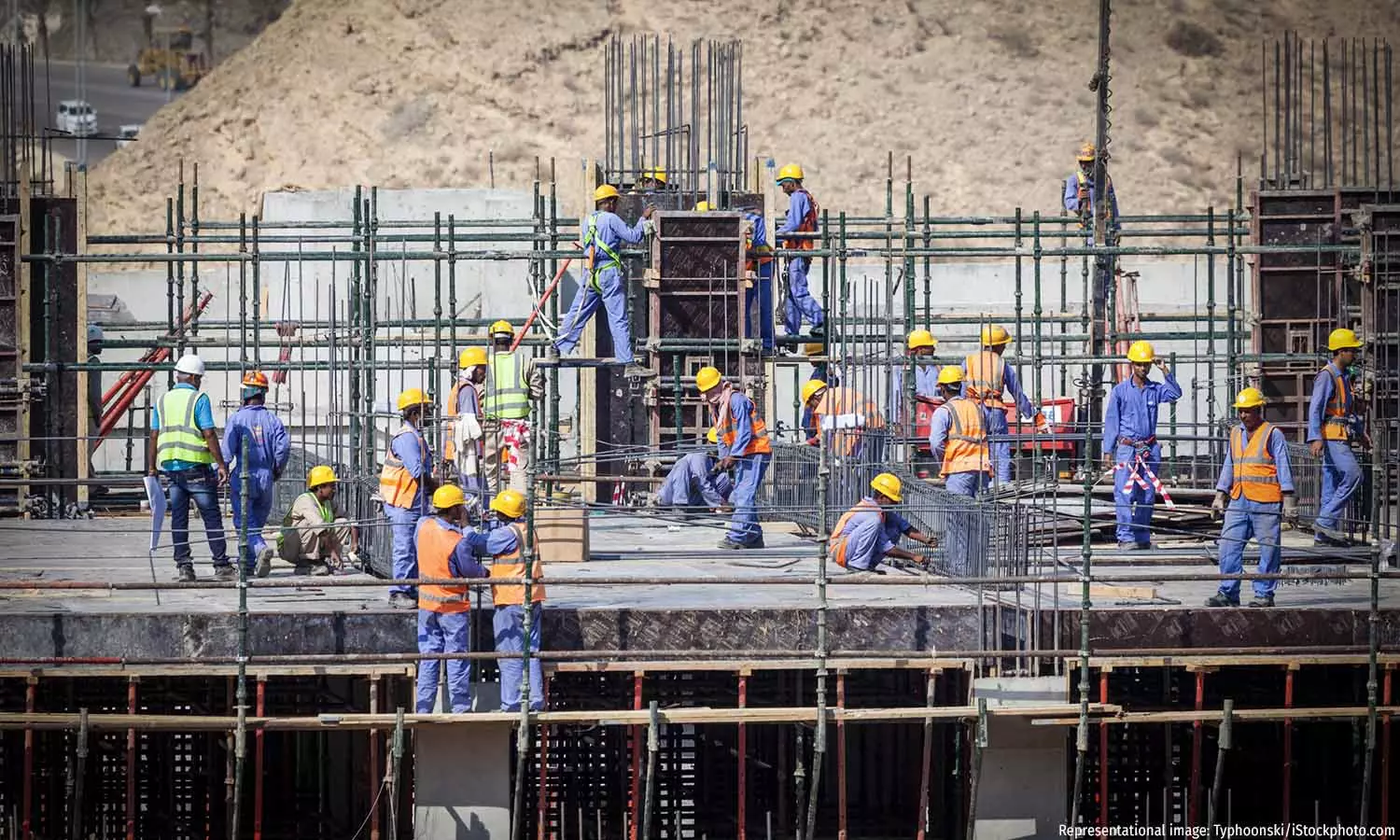
This research paper is regarding Indian labour migration to the Gulf countries namely the GCC countries (Gulf cooperation council – Saudi Arabia, Bahrain, Oman, Kuwait, Qatar and United Arab Emirates). This research paper is required in understanding the trends in Indian emigration to GCC from 1990 to 2026 and how it helps one understand interests of Indian emigrants and India as a whole due to such emigration.
Historical trajectory of Indian Labour emigration since the 1991 economic reforms in India:
The below mentioned Line Graph represents data extracted from UN DESA (United Nations Department of Economic Social Affairs) and Indian Union Ministry of External Affairs. The figures from 1990 to 2024 pertain to UN DESA which are mid-year and which do not record the reason for migration from India to GCC, nor does it mention whether such emigration is legal or not. It is cumulative estimate of Indians who crossed international borders and residing for at least 12 months in the GCC along with Indians who are born to Indian emigrants in such GCC country (they will be deemed Indians as such birth does not make them respective GCC citizen). Further data pertaining to year 2025 is as on 5 Dec 2025 and does not include illegal, trafficked and those on tourist or alternate visa category. Further none of this data separately categorizes student emigration (which is assumed to be less compared to migration for employment). Thus, 2025 figure can be said to be an undercount. However, such figure is highly reliable as it is directly made available through Indian missions and posts in GCC. Both the data do not categorize the official ECR and ECNR category (categorization explained in detail in later section of this research paper – ‘policy dimension section’).
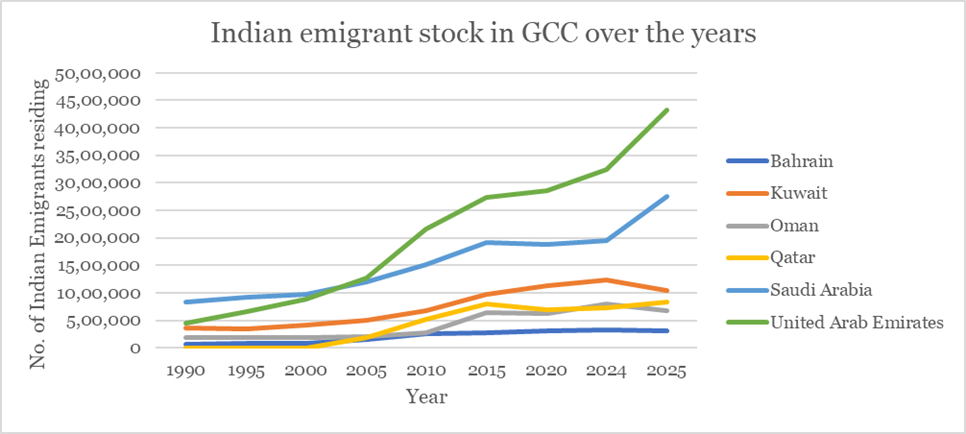
Figure 1: Author’s compilation based on data inputs from the following:
- United Nations Department of Economic and Social Affairs – International Migration stock 2024 – Destination and Origin1
- Indian Union Ministry of External Affairs2(MEA)
- Data for India – International Migration from India3
Many determinants have caused more out flux of migrants out of the country to the GCC post LPG reforms (Liberalisation, privatisation, globalisation) in India with UAE as the most preferred destination for Indian labour workers in 2025 compared to Saudi Arabia in 1990. Further, in 1990 the destinations were evenly spread among the GCC compared to 2025 where UAE and Saudi Arabia seem to dominate. Bahrain as a destination seems to have very limited growth. Additionally, steep growths can be seen from 2000 to 2015. Further, much of the growth in Indian emigrant stock in GCC is stagnant from 2020 t0 2024 with decline in Saudi Arabia, Qatar and Oman due to COVID 19 pandemic shock and recovery.
Key determinants for emigration from India to GCC:
The six GCC member nations emerged as the primary destination for South Asian migrant workers during the 1970s and the trend has maintained since then, which was also fuelled by expansive development policies as a result of the oil boom. Therefore, in South Asia including India, the largest movement of migrant workers is seen to the GCC. An overwhelming majority of the workers are from low-income households, and mostly migrate for economic reasons as per S. Irudaya Rajan in his report – South Asia Migration Report 2020 4.
Further, as per Babu P Remesh from South Asia Alliance for Poverty Eradication based in Nepal in the – ‘Poverty and Vulnerability’ report 2020; in chapter 2, mentions key drivers for migration including international migration from India to GCC such as:
- Urbanisation and regional disparities
- Agrarian/rural distress
- Climate change and natural disasters
- Development – induced displacement
- Socio – political factors
- Other factors (demographic factors; improved connectivity and communication channels; social networks)5
Additionally, Italian Institute for International Political Studies mentions push factors like unemployment6, underemployment, low per capita income, debt accumulation, other financial pressures, and various pull factors like economic stability from oil revenue, economic growth of GCC, labour demand in GCC, workers have made GCC their preferred destination and reason for emigration from South Asia including India.
It is to be noted that various sources such as MEA including Protector of Emigrants (PoEs) offices, who provides emigration clearance to emigrants, do not fully record various parameters regarding emigration including reasons for emigration from India (to GCC). Same is noteworthy in UN DESA database where reason for emigration was not available in the report. However, as per common policy industry parlance and various research citations mentioned above, it is standard that migration can be primarily for economic purpose regarding migration corridor from India to GCC.
Sectoral Distribution of Indian workers in GCC:
As per ‘West Asia Centre’ of ‘Manohar Parrikar Institute for Defence studies and analyses’ following is the data available regarding Indian emigrant workers in GCC:
| GCC Country | Estimated Indian emigrant population as % of Host country’s total Population | Key Sectors of Employment | GCC Country | Estimated Indian emigrant population as % of Host country’s total Population | Key Sectors of Employment |
| United Arab Emirates (UAE) | ~35-40% | Construction, retail, hospitality, IT, finance, healthcare, education | Qatar | ~22-25% | Construction, engineering, oil & gas, hospitality, services |
| Saudi Arabia | ~7-10% | Oil & gas, construction, healthcare, engineering, services | Oman | ~15-31% | Construction, retail, healthcare, education, and manufacturing |
| Kuwait | ~20-26% | Construction, retail, domestic work, healthcare, education | Bahrain | ~20-22% | Finance, retail, construction, hospitality, healthcare |
| TOTAL GCC | ~25% of the total GCC population | Multiple sectors across all countries | – | – | – |
Table 1: Sectoral distribution of Indian emigrant workers in GCC along with population proportion7.
As can be evident from the aforesaid table that Indians are present across all sectors in the GCC which constituent significant proportion of the total GCC population. This is due to open door policy triggered by massive development infrastructure projects initiated by GCC to diversify their economy. The neighbouring countries to GCC could not provide adequate and efficient workforce like Indians due to specific nature of Indian emigrant workforce like their docile, politically neutral, flexible, willing to work at manageable wages, and of course their hardworking nature8.
State wise and district wise data of emigrants from India to GCC
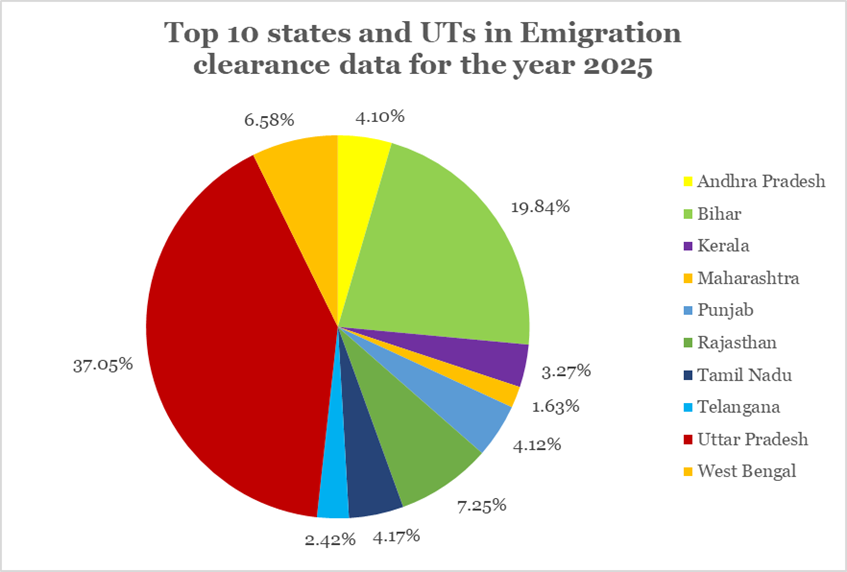
Figure 2 – Author’s calculations based on MEA data9
This pie chart represents the Top 10 states and Union Territories in India who send emigrant workers to GCC the cumulative share of these top 10 states is 90.44%, with Uttar Pradesh contributing 37.05% of the total emigrant population sent by India up to December 2025. Followed by Bihar, Rajasthan, West Bengal, Tamil Nadu, Punjab, Andhra Pradesh, Keralam, Telangana and Maharashtra.
Further, one can rely upon the analysis done by Nehal Jawed in IJEKS for data pertaining to 2012 to 2020 depict that share of North and Eastern Indian states have increased while southern and western have declined. Further, most of these migrants are male, young, and Muslim, and their average stay in the gulf countries is about four to seven years. The profile of the emigrant from new source states, especially Uttar Pradesh emigrant, is less educated, between 20 to 25 age group, and have an agricultural labour background8.
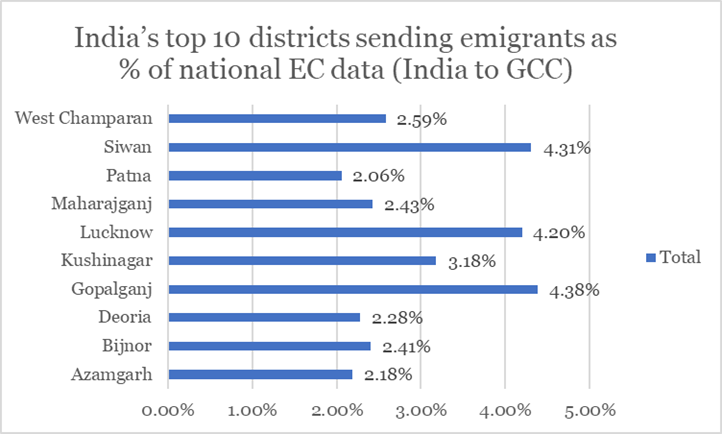
Figure 3: Author’s compilation based on MEA data9
From the above data, one can see that Gopalganj in Bihar is the no.1 district across the country to send emigrants to GCC (4.38%), followed by Siwan, Lucknow, Kushinagar, West Champaran, Maharajganj, Bijnor, Deoria, Azamgarh, Patna. Additionally, out of the top 10 districts, 4 belong to Bihar and remaining 6 belong to Uttar Pradesh. Further, analysis for top 101 districts for the year 2025 in EC clearances to GCC, one can find that only 14 states (out of 28 states) are in top 101 districts and Uttar Pradesh has almost 40 districts sending emigrants followed by Bihar’s 16 districts.
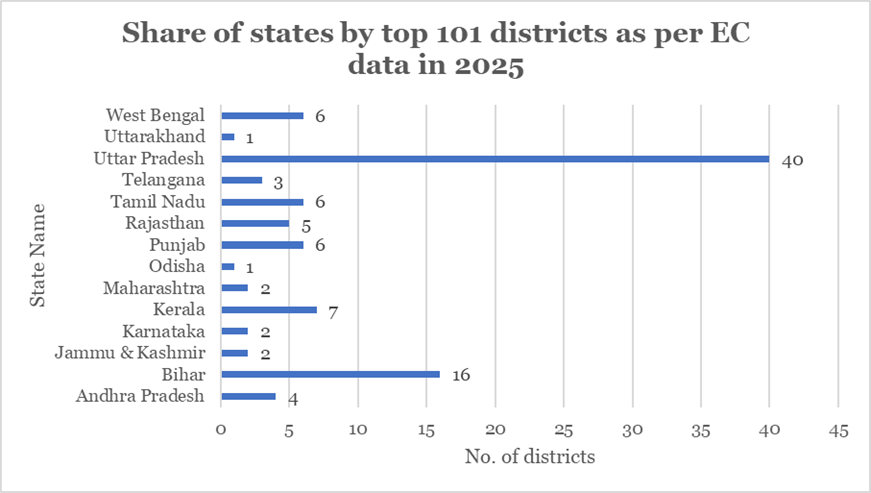
Figure 4: Author’s compilation based on MEA data9
Role of recruitment networks and migration infrastructure:
Recruiting Agent (RA) is an entity (Proprietorship, Partnership, Company) offering to provide, employment in any country or place outside India on behalf of Employer. It is mandatory that prospective RA get themselves registered with Overseas Employment Division of MEA through Protector General of Emigrants (PGE). Once registration is approved by MEA/PGE the applicants are eligible to offer employment to Indian citizens through emigrate Portal.
Further, RAs have to submit in their registration form their administrative details, police jurisdiction, audited financial details including Income tax return of the RA entity owners of the last 3 years. This requirement allows only genuine and legitimate individuals to run such business and make the emigration process safe and reliable. There are 3,432 recruiting agents registered all over India as on 17 May 202610 and out of which only 2,468 are active till that date11.
For any case registered against illegal RA or any malpractice done by them such as violating emigration rules, Emigration act, 1983, overcharge, cheat, etc. which comes to the knowledge of MEA or state personnel then state police are referred to such complaints and then First Information Registered (FIR) is registered based on prima facie evidence then Action taken Report (ATR) is submitted to the required state senior authorities and PGE. Along with permission to prosecute the alleged culprits is requested as mandated by Emigration Act, 1983. Upon approval/sanction, the state police proceed with criminal prosecution. Such RAs against whom complaint is filed can be legally registered or even bogus one. Irrespective of legal status of RA, relevant provisions of Bharatiya Nyaya Sanhita (BNS) or local state statue is charged. Further, suspension of license or/and blacklisting of the entity name is done if applicable and required.
Further, following is the data regarding complaints about illegal migration and follow up action [cumulative of year 2021 to 2025]
| Sr No | Particulars of each stage | No. of cases |
| 1 | No. of complaints registered with Emigrate portal or walk in, email, call, social media to Indian missions or MADAD or CPGRAMS portals, multilingual 24*7 emergency numbers, etc | 6,705 |
| 2 | Action Taken report (ATR) submitted by police | 1,100 ATRs filed (470 FIRs registered, 630 FIRs unregistered) |
| 3 | Number of cases where permission of prosecution is requested | 59 |
| 4 | Number of prosecution sanctions issued/approved | 76 |
Table 2: Author’s calculations based on MEA data12
From the above table it is evident that multiple portals and channels are available for Indian emigrants in various languages with updated advisories on the emigrate portal from time to time listing down fraudulent agencies and fake companies and dubious social media handles, however, the quantum of complaints remains at 6,705 (very low level) compared to lakhs of emigration everywhere and huge Indian emigrant stock in GCC. This data can be claimed to be positive and safe emigration process. However, this is not the truth due to lack of data through either census or surveys regarding feedback, satisfaction nd reviews from Indian emigrants. Such lack of data also represents how the ‘migrant infrastructure’ made by the Indian Union or state government is working.
Further, this dealing of complaints against RAs remains challenging and time consuming due to PGE sanction requirement. Further, approx. 57% of the ATRs filed without any FIR registrations this can be due to “lack of prima facie evidence” which exists but migrants or complainant are unable to produce due to falling into the trap of economic desperation or being less educated.
Additionally, based upon analysis done for total complaints received from 2021 to 2025 state wise12 – emigrants from Southern states have 80% share of complaints. [Andhra Pradesh (49%), Kerala (11%), Tamil Nadu (10%), and Telangana (7%), and Karnataka (2%)], whereas trailblazers states in sending emigrants like Uttar Pradesh and Bihar in aggregate have less than 1%. This depicts the difference in migration infrastructure provided by southern states compared to Northern states. Thus, migration infrastructure like in northern states lack of following like: safe and reliable RAs, social networks of migrants, skill and Training centers, financial assistance and banking, education, documentation, police verification, affordable and reliable transport infrastructure, information infrastructure like WhatsApp/Facebook groups, newspaper ads, and institutional and policy support.
Challenges faced by emigrant workers
Two major types of problems faced are13:
- Pre – departure problems in India
- Post – departure problems abroad
Under Pre departure problems in India
- High cost of emigration:
Indian Emigrant pays at least three to four times higher than the INR 30,000 service charge threshold to the RAs due to plenty of unregistered sub agents in the emigration process, despite PGE and PoE oversights.
- Other malpractices by the RAs:
RAs draft some good contract in India in order to get approval from PoE for emigration clearance, irrespective of the actual fulfillment of the contract abroad. This helps in luring more workers for emigration and getting PoE. Further, at times, they send workers on tourist visas, hence bypassing Emigration check requirement. Such workers are then detained at the ECR point at the Indian airports.
- Financing the emigration cost:
Emigrant workers don’t usually have proper mainstream sources of funding and they rely on borrowings from friends, relatives, family, and money lenders by mortgaging their family jewellery and valuables. Interest on such borrowings from ‘money lenders’ is equivalent to about six months of their earnings abroad.
Under Post Departure problems faced abroad.
Common problems faced by Indian emigrant worker faced abroad are listed below:
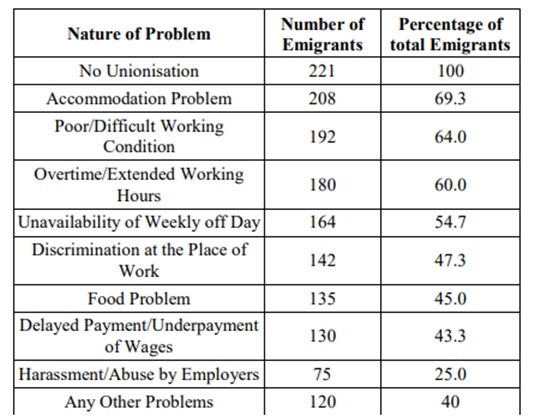
Table 3: Sourced from Dr Rajeev Kumar13
Further discussion on such post departure problems is as follows:
- Left at the Destination airport without food and accommodation:
Many workers reported that they were left unattended at the airport after their arrival without any food or water, irrespective of whether the worker is legal or not, RAs leave those workers to avoid the cost of feeding and lodging. Workers get the taste of reality from the non-fulfilment of huge promises by RA.
- Contract Substitution and Passport Confiscation:
The cosmetic contract made earlier which was approved and signed (by Indian authorities, RA, FE and worker) is taken into the custody of the FE and torn apart or disposed, and new contract is made in Arabic, a language which the worker is not able to read, write or understand, with such terms which are not at all favourable to the worker. Further, passport is confiscated by the foreign employer (FE) and given only after completion of term decided by the FE and up to their satisfaction. Skill and Medical Reassessment and lower wages, increase in working hours without adequate overtime payment, indecent working conditions, inhuman and pathetic accommodation, shackled employment, no job security, no unionization, no bargaining power are added as terms in the new contract.
- Special challenges to women emigrant workers:
Women face dual oppression based on their gender and ‘emigrant worker’ identity. Women who usually work in domestic worker industry and such industry are kept out of local legal protection purview. Further, female emigrants face cruelty, violence, sexual abuse, harassment, mental pain, and gross human rights violation. They are kept in solitary confinement without anyone to talk to, no good food. Further, any legal protection for them is not reachable as they are confined and are not allowed and unable to interact with people outside the FE’s residence/workplace.
- Special challenges to Irregular emigrant workers:
Irregular emigrant workers are those who ‘emigrate illegally’ or ‘emigrate legally and then later become illegal emigrant due to overstay their visa period, violating terms of contract, changing their employer, changing their country within GCC. It is the ECR category based irregular emigrant workers who are the most vulnerable and face the most miseries. They are the easy victims of abuse, fraud and harassment from RAs and FEs and sexual harassment as well if irregular worker is a woman. Further, many regular emigrant workers are forcefully converted into irregular category at the whims of the employer. However, due to constant fear of authorities and deportation, they continue to serve their old or new FEs up to their satisfaction.
- Additional common problems faced by emigrant workers abroad are:
The Kafala system, in its present form, may be rightly called a slavery system where the sponsors (kafil) pay huge amount of fee to their governments to almost enslave a foreign worker, nativization policies of the GCC (where host GCC country reserves certain percentage of seats within the companies and industries for natural citizens of the host country, lack of knowledge of local language, constant criminalisation of irregular workers, and the most important one – Rising suicide rate among the Indian emigrant workers in gulf due to constant exploitation and abuse they face from the FE.
- Limited laws and bilateral agreements
Laws have been adopted by many GCC countries (mentioned later in the article under ‘Policy Dimension’) and bilateral agreements signed by India and GCC countries such as following:
| Country Name | Agreement | Year of signing |
| Qatar | Agreement concerning Organization of Manpower Employment | 1985 |
| UAE | MoU in the Field of Manpower | 2006 |
| Oman | MoU in the Field of Manpower | 2008 |
| Bahrain | MoU on Labour and Manpower development | 2009 |
| Saudi Arabia | Agreement on Labour Cooperation for ‘Domestic service workers’ and ‘General category workers’ | 2014 and 2016 respectively |
| Kuwait | MoU ON Labour, employment and development | 2007 |
Table 4: Author’s compilation based on MEA data14
However, despite such laws remain ineffective and bilateral agreements in place remain on paper. Indian government, Indian missions, and posts in the host country also remain clueless about the condition of the emigrant workers.
Impact on India’s Economy – Inward Remittance and development
The money earned by expatriates sent to their home country while working within a host territory is termed remittances. A study revealed that international Migration and remittances reduced inequality and poverty in developing countries8.
India consistently leads as the top recipient of remittances globally including in the year 2025 at $ 135 Billion 15, 16, with share from the GCC mentioned below.
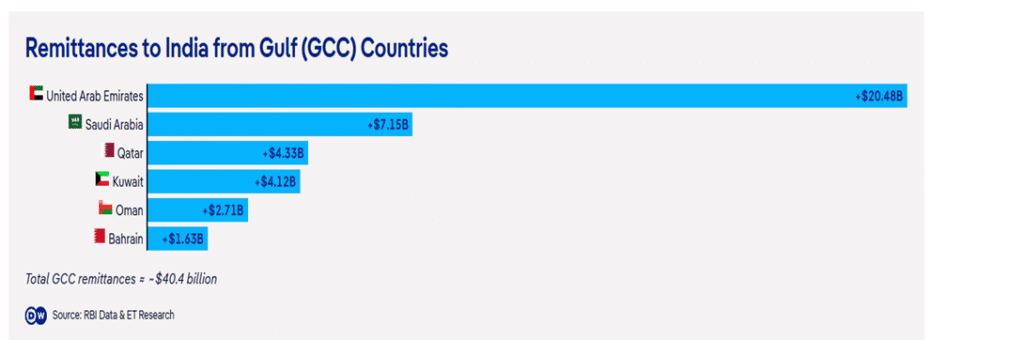
Figure 5: DW portal, RBI data and ET Research
Further, in case of India, GCC share among all the countries is at approx. 30% for 2025 with drop from 38% of total inflows in 202416. This drop is attributable to the war in West Asia. However, this drop is less significant as inflows are continuous and countercyclical due to resistant to economic shocks and are more stable source than capital inflows which tend to decrease during a crisis. This trend is visible during COVID-19 pandemic as well from the inward remittance analysis from the year 2015-2022 done in the ‘South Asia Migration Report 2024’. 17
Thus, emigration out of India offers many solutions to India economy like – Favourable Balance of Payment, improvement in economic indicators like “reduced inequality, poverty and unemployment” despite not counting inward remittance in GDP calculations. This inward remittance does not produce goods and services in the Indian economy but boosts savings, investments and consumption due to cash/bank amount transferred by emigrant workers in GCC to their families in India through formal routes or hawala and hundi (informal routes).
Policy Dimensions
- India
The emigration is broadly governed by Emigration Act, 1983 with its rules framed under this act which have been amended in 2009, 2017, 2020, 2023.
India broadly classifies its emigrant workers into – ECR (Emigration check required) and ECNR (EC not required). ECR category workers are those – skilled, semi-skilled, and unskilled workers as well as certain professions like Nurses, for employment aboard in 18 notified countries including GCC. They will be those who have not clear their matriculation (class 10). They would have their passports mention the word “ECR” and they require approval for emigration process from Protector of Emigrants (PoE).
Other than mandatory RA registration for running the business, FEs are also required to mandatorily register in order to directly hire within India. Any non-compliance can lead to black listing of RA and FE on the MEA website.
An emigrant has to compulsorily send application through the Emigrate portal either individually by self or through RA.
Pravasi Bharatiya Bima Yojana (PBBY), Pradhan Mantri Jeevan Jyoti Bima Yojana (PMJJBY) and Atal Pension Yojana are few welfare schemes directly applicable for Indian emigrant worker.
Indian emigrant worker who is aggrieved can also file complaint online on any of the various portals like – MADAD, CPGRAMS, Emigrate, multilingual 24*7 emergency numbers, WhatsApp numbers, walk-in or email the embassy or consulate office.
On receipt of complain or grievance from Indian emigrant worker, the Indian embassy /consulate abroad proactively – takes it up with the concerned FE, and if needed then visit the work place of the worker as well. The issue is also escalated to local labour department and other concerned authorities of the host country for redressal. Indian missions also organize – Open Houses and Consular Camps in remote areas to get feedback from Indian workers residing in such areas, and to address their grievances.
Further, for protection of Indian female emigrant workers, those who work in various industries abroad including domestic work there are mandatorily recruited through Registered RA and no direct application. India also mandates minimum age criteria of 30 years for female workers except nurses for female workers under ECR category.
India also maintains Indian Community Welfare Fund (ICWF), which is utilized by Indian Missions and Consulate aboard to provide financial and legal aid to Indian nationals in distress on a means-tested basis. Under ICWF, the major assistance includes Boarding and Lodging, air passage to India, legal assistance, emergency medical care, transportation of mortal remains to India, and payment of small fines and penalties2.
Further, Indian Ministry of External affairs have made a draft of Overseas Mobility (Facilitation and Welfare) Bill, 2025 made public on 9 October 2025 with inviting comments by 7 November 202518. This public consultation period was less than one month, which is not sufficient enough for dissemination of information to the emigrant group who are directly affected as they are not fluent in English. Draft was not available in Hindi or regional language. Thus, other than digital divide there is also language divide in the consultation process.
As per Section 3 of the draft bill19, which mentions about Overseas Mobility and Welfare Council and its formation, however it does not mention any specific stakeholder who represents the trade unions, civil society, and emigrant groups or veterans.
As per Section 2(t) of the draft bill19, mentions about “returnee” who is an emigrant returning to India after a period of ‘182 days.’ This makes the emigrant, who finds out about the fraudulent FE or job offer after arriving at the host country, vulnerable. These emigrants who want to return back immediately get stuck there or return back at a huge personal cost without any compensation or legal aid as non-recognition of such emigrant under the new “returnee” definition.
Further, the draft bill19 does not mention about representation of state governments. Inclusion of state government is also important as they are responsible for investing in education and up skilling of the emigrant, law and order to register and take action against fraudulent activities in the emigration process, pre departure support to emigrants and rehabilitation and reintegration of returnees.
Also, as per the Scroll website’s investigation20 of MEA data, currently 44% of the recruitment agents are concentrated in Delhi and Mumbai. Only 5% of the RAs are located in Uttar Pradesh and Bihar, even though these states contribute 56.89% of the emigrant clearances (figure 2 from this research paper). Due to this disparity, there are a lot of unregistered RAs who assist the registered RA in the emigration process and charge fees. Although recruitment service charges are legally capped at INR 30,000. Excess fees are charged with amount above INR 30,000 is taken and borne in cash by the migrant worker due to desperation for employment and money. Legal mandates are required but are not the ultimate tool for welfare. Thus, more expansion of legal recognition of RAs including sub agents is not clear from the new draft bill.
Further, the universal principle “employer pays principle” is also not recognised by the bill as in most the case elsewhere in the world. This principle mandates employer bear cost of the migrant worker from visa fees, traveling overseas, accommodation, insurance, etc.
Many emigrant workers complaint about non sympathetic behaviour of the diplomatic missions in acknowledging the atrocities and violation of human rights they face. Only Indian missions can coordinate with the workers, FE and host country. This burdens the Indian missions. However, non-state actors like NGOs, individuals, civil society and trade unions are also in the picture who already work on ground, however such bill does not mention anything regarding recognising them as “partners” for making such post departure emigration experience smoother or reducing the burden on Indian missions.
Further, there are no similar creations of state mandated companies across the country like one can observe in the Telangana for Telangana Overseas Manpower company and Tamil Nadu for Overseas Manpower corporation Ltd who assist in manpower supply to overseas countries at affordable prices and reliability of work.
Further, recent Iran vs America-Israel war has bought the gulf economies at standstill and hampered any growth and employment opportunities. Due to this war, many migrant workers are stuck in the GCC as they chose to take bets with the missiles on their head than with same level of poverty at home. The narrative of the India and its diplomatic missions is about the securing the oil tanks and their prices for the India economy. However, the safety and well-being of the Indian emigrant workers (who mostly belong to blue collared and Muslim background) is not in the news. It is evident by the fact that – 8 Indians are dead and one went missing in GCC amid such war21.
- UAE
It introduced Federal Decree Law No. 33 in 2021 with more additional amendments in 2024 under Federal Decree Law No. 9 ensuring equal pay irrespective of gender and other background. Article 8 makes written contract mandatory. Abolishing contracts with unlimited tenure with capping term of an individual contract up to 3 years. Legal recognition of various work categories like full time, part time, flexible, temporary, remote and job-sharing under Article 7. Extending maternity leave from 45 to 60 days. Mandatory onboarding process to complete within 5 days with allocation of labour card, visa, and Emirate ID and Wage Protection System made mandatory7.
- Saudi Arabia
It has legally abolished the modern slavery system called Kafala system in June 2025 through Labour Reform Initiative. It brought in new laws which removed the mandate of emigrant worker requiring permission of Saudi employer to switch jobs/contacts, even removed the mandate of having permission from Saudi employer to leave the country. Employment duration must be specified in the contract (Article 37), Contract in writing or oral both are valid and employee can demand a written form as well, further unified form for various types of employment is also introduced compared to previous one size fits all contract (Article 52). However, many such additional laws introduced enforceable since February 2025 are yet to be implemented. Additionally, employers in Saudi must adhere to minimum 50 Saudi citizen employee quota in their workforce in order to continue the emigrant quota. This Saudi quota is now being amended to specify new threshold7.
- Kuwait
It has introduced and implemented Resolution No. 15 of 2025, effective 1 November 2025, requiring all private sector employers to electronically record and submit daily working hours, rest periods, weekly rest days, and official holidays through Public Authority for Manpower (PAM) dedicated electronic system, in order to protect the rights of labourers by ensuring documentation and overtime payment. However, Kuwait is tightening labour laws which do not benefit emigrant workers, unlike in the case of Saudi Arabia. Kuwait is doing so through mandating emigrant workers to have exit permits from their employers, with submitting departure request form to their employers who then process it through Ministry of Interior’s digital platforms. Kuwait is also pushing local Kuwait citizens in their workforce by mandating quota for them and enforcing penalty for non-compliance7.
- Qatar
It has introduced Law no. 19 of 2020, eliminating the requirement to get Non objection certificate (NOC) from their employer to change job, provided they give adequate notice and serve the notice period mentioned in the contract. It even abolished exit permit requirement for leaving the country. Introduced minimum wage for all workers irrespective of nationality or sector with minimum wage of QAR 1000 as basic salary per month (INR 2,62,973 as per conversion rates on 22 May 2026), along with allowance of QAR 500 for accommodation, and QAR 300 for food if not provided in kind. This reform even extends to domestic workers. It also established Workers’ Support and Insurance Centres, which provide legal assistance, dispute resolution and insurance coverage. New Labour courts and Dispute resolution committees were also established to expedite resolution of labour disputes and provide justice to the emigrant workers7.
- Bahrain
King Hamad on Bahrain in December 2024 ratified law no. 14 of 2024 amending labour fund regulations, which only serves to enterprises that are 100% owned by Bahraini citizens. There are implications or opportunities for such enterprises to conduct joint ventures with foreign companies but these such projects must prioritise Bahraini nationals. Further, instead of strengthening labour laws in favour of the labour force including emigrant workers, Bahrain has made regressive laws like prohibiting visit visa on work visa, limiting number of foreign workers and increasing the number of Bahraini workers7.
- Oman
It introduced Royal Decree 53/2023 which prohibits employers from taking away the passport of the emigrant worker without written consent of the worker, all contracts must be in writing and registered with Ministry of Manpower, contracts should specific duration of not more than five years with clause of renewal if required. Further, reduced burden on workers by providing at least 30 days annual paid leaves applicable after completion of 6 months of continuous service, with provision of sick leave, emergency leave and other types of leaves with protection to worker’s rights. Further, the new law also prohibits employment of person below age of 15 years of age. Formation of labour inspectors, labour dispute resolution committee and labour courts was also mandated. However, inclusion of local Oman citizens in the workforce is also being pushed and banning of emigrant workers in more than 200 professions is also noticeable observation here7.
Overall Analysis
Analysis as been covered in each individual sub section of this paper. However, one overall analysis of the entire research can be found below:
Data is available regarding emigration clearance that is legal clearance done by the Indian government to send workers to the GCC. However, the government has not made data regarding feedback collected from Indian missions through open houses and consular camps conducted with emigrant workers. Further, government through its agencies like PoE, does not record the reason of emigration in its database even though it assesses each individual application before sending an emigrant person. Whether, the person is going for work for short term, long term, which industry, pay grade promised or expected, or joining another close relative in work, or marriage, etc, such data is not readily available. One should understand that such data is important for framing a emigration policy in India, say for instance a worker is going for long term, then their family in India and India as country will have stable income and revenue generation respectively and if it’s a pay grade more than what is offered in India, the better, and if such pay grade expectations or promises are not met, then Indian government can accordingly intervene through new laws or treaties to provide justice for its workers.
Further, based upon the regional data and data regarding complaints against RAs, one can see that UP and Bihar, the leading states in sending emigrants are unable to provide safe accessible complaint registration environment. It is more like such states have their job finished as soon the emigrant leaves the country, which should not be the case. Low sanction approval rate is another disaster in this current Indian emigrant policy.
Coming to the challenges faced by emigrants pre and post departure – a very basic level of fluency in the local language of the foreign country is not available with the Indian emigrant stock, also they are not able to contact the Indian embassy or other stakeholders like NGOs or humanitarian organisations due to social and physical isolation. Further, no unionization allowed by the GCC is purely inhumane and have reduced workers to legal slaves. Indignity and inhumane conditions to workers not only affects India’s remittance flow but also India’s image abroad that – “Indians are slave material”. This entire policy on emigration is not just lack of awareness about emigration but also lack of morals. Mainly, these workers are not upskilled or educated properly as they face rampant discrimination based on their caste and religious identity within India and that further turns to be another reason for discrimination abroad due to no education.
Policy Recommendations:
- Conduct National and state level surveys: like Kerala Migration survey 2023 which includes international emigration including effect on remittance, sectoral distribution, age, district source, reason for emigration, reasons for returning back, feedback on emigration process and stay in GCC, etc.
- Expand RA registration: To non – metro cities and remote districts, for greater reach, sub agents should be allowed registration under the emigration laws with leniency by having guarantee from the main Principal RA partner. Thus, expanding the reach of RA legally and making the process more reliable.
- Formation of Government companies in overseas manpower supply in other states: very similar to workings of Telangana and Tamil Nadu state owned companies who provide same outsourcing of labour to foreign countries and affordable rates, which brings win-win situation for worker and FE.
- Removal the sanction requirement or granting in-principle indefinite sanction approvals: Removing the sanction approval on police action against the RAs for fraudulent activities will be a pathway to speedy justice. However, in order to maintain Union government’s oversight in the emigration operation, Union government can grant in – principle approval up to say 1000 complaints or indefinite approval with right to revoke such decision and doing case to case approval based on state police’s performance in handling the case with impartiality and judicial conviction rate.
- Government recognition and regulation of various Skill development and education centres who actively send emigrants abroad:
Private institutes type up with registered RAs or FEs to train and upskill emigrants in India and then send them abroad. However, they train such workers according to specifications of the FEs, and worker’s interests are not discussed and hence such interests are not met. However, government can recognise such institutions for contribution to emigration and regulate their syllabus and training programme to include rights of workers and human rights to uphold their dignity and well-being. Hence, one day pre departure seminar exercise by Emigration office and post departure consular camps are now expanded in-effect to years of education happening pre departure.
- Negotiations with GCC countries on the treatment of emigrant workers: through not just 0n paper but in effect banning the kafala system, criminalising illegal procession of emigrant passports and personal effects of the emigrant by the FE. Legalising free movement outside the country, back to India and even to other GCC country for better opportunities.
- Recognising non state actors abroad: Many NGOs, non-profits, and humanitarian organisations work for immigrant and migrant workers and even study them and make reports like a think tank. Such non state entities can be very useful to reach out to emigrant workers when the Indian embassy cannot. These non-state actors are at times more humane than government payroll employees. Such non state actors can be recognised for their roles of helping out emigrants with their challenges like illegal passport detention, lower wages, unionisation, etc – by compensating such NGOs with grants and funding.
- Negotiations with other emigrant sending countries: Other countries especially those in South Asia who send workers to GCC can be approached and a united front can be made for welfare of emigrant workers irrespective of nationality or other background, with mutual benefits like – expected growth in remittance and image building of such countries towards human rights compliant world.
- Rehabilitation and reintegration of returning workers: These workers work everyday in inhumane condition and send dollars back to their home in India. Such workers deserve rehabilitation after completion of their work contract or due to any unforeseeable circumstances like war or global health pandemic. Rehabilitation like gratuity or leave encashment or retirement compensation in monetary basis through ad hoc basis or any fixed formula can be considered. Such money can be generated from a fund that is made from certain percentage of the inward remittance received by India, say like 5-10% of inward remittance which is like – 10% of $ 40 billion generated remittance from GCC is like $ 4 billion ~ INR 383.1 Billion (based on 27 May 2026, US INR exchange rate).
Conclusion:
The current West Asia crisis may have forgotten ECR based emigrant workers, however, this research paper, its author and its publisher have not. The findings of this research paper explain the complex nature of the emigration process from India to GCC and it does not start with mere application of emigration clearance and visa but with training and up skilling at various institutes and does not end with emigrants staying in the GCC but their rehabilitation back in India in the case of ECR category based emigrant workers.
This research paper also highlights the trends are of emigration like source district, sectors they work in, destination GCC country, cases registered against RAs, challenges emigrants face pre and post departure, inward remittance received. This helps one understand why emigration is such an important issue to look at and why many robust changes and policy action plans are pending and required.
On the top of this, the current mindset of Union government of India is anything but ‘pro emigrant worker’, which is evident from the draft bill made available regarding emigration.
While GCC countries have passed many reforms in their labour laws in past few years, however, how such laws will affect the emigrants will be evident in long term through the surveys and feedback.
This research paper also debunks the image of – “Muslim emigrant worker will find safe haven in Muslim countries”.
Hence, one can conclude that early intervention, data-based policy making, bilateral cooperation and human empathy is required for a good emigration policy in India.
References
- “International Migration stock 2024 – Destination and Origin”. United Nations Department of Economic and Social Affairs. https://www.un.org/development/desa/pd/content/international-migrant-stock
- “Lok Sabha unstarred question no. 982 – Indian migrant workers in gulf countries”. Ministry of External Affairs, 5 Dec 2025. https://www.mea.gov.in/lok-sabha.htm?dtl/40391/QUESTION+NO+982+INDIAN+MIGRANT+WORKERS+IN+GULF+COUNTRIES
- “International Migration from India”. Data for India, 30 July 2025 https://www.dataforindia.com/international-migration/
- Rajan S. Irudaya. “South Asia Migration Report 2020”. Taylor and Francis Group, 2 June 2020. https://www.taylorfrancis.com/books/edit/10.4324/9780429321450/south-asia-migration-report-2020-irudaya-rajan
- Remesh Babu P. “Chapter 2 – Migration Scenario of South Asia: Drivers, ‘Core Determinants’ and Issues”. SAAPE Poverty and Vulnerability Report, 4 September 2020. https://saape.org/wp-content/uploads/2023/12/Migration-in-South-Asia-Report-2020.pdf
- Rajan S. Irudaya. “The Evolving Patterns of South Asian Migration to the Gulf States”. Italian Institute for International Political Studies, 21 November 2024. https://www.ispionline.it/en/publication/the-evolving-patterns-of-south-asian-migration-to-the-gulf-states-191492
- Tabassum. “Indian Expatriates and Labour Reforms in GCC Countries”. West Asia Centre – MP IDSA, 5 February 2026. https://idsa.in/publisher/issuebrief/indian-expatriates-and-labour-reforms-in-gcc-countries
- Jawed Nehal. “Indian migration to GCC: Trends, challenges and prospects”. International Journal for Emerging Knowledge Studies, 30 January 2024. https://ijeks.com/wp-content/uploads/2024/02/IJEKS-3-01-004.pdf
- “Emigration Clearance Related Report”. Emigrate portal, MEA. https://emigrate.gov.in/#/emigrate/resources/emigration-clearance-EC-related-report
- List of Recruiting agents. Emigrate Portal, MEA, 17 May 2026. https://emigrate.gov.in/#/emigrate/emigrant/list-of-ra-consolidate-report
- Emigrate portal, MEA, 17 May 2026. https://emigrate.gov.in/#/emigrate
- “Rajya Sabha unstarred question no. 728 – Action against recruiting agent”, Ministry of External Affairs, 5 February 2026. https://www.mea.gov.in/rajya-sabha.htm?dtl/40670/QUESTION_NO_728__ACTION_AGAINST_ILLEGAL_RECRUITING_AGENTS
- Kumar Rajeev. “Indian Workers Migration to GCC Countries: Problems and Challenges”. International Journal of Research in Academic World, 11 July 2023 https://academicjournal.ijraw.com/media/post/IJRAW-2-7-21.1.pdf
- Indian Treaties Database, Ministry of External Affairs https://www.mea.gov.in/treaty.htm
- “World Migration Report, 2026”, International Organisation for Migration, United Nations, 2026 https://publications.iom.int/books/world-migration-report-2026-chapter-4
- Wesley Rahn. “Iran war puts South Asia’s Gulf remittances at risk”
- 17. DW news portal, 24 March 2026 https://www.dw.com/en/iran-war-puts-south-asias-gulf-remittances-at-risk/a-76513989
- Rajan S. Irudaya. “South Asia Migration Report 2024”. Taylor and Francis Group, 10 December 2024. https://www.taylorfrancis.com/books/oa-edit/10.4324/9781003521228/south-asia-migration-report-2024-irudaya-rajan
- “Invitation for comments on Overseas Mobility (Facilitation and Welfare) Bill, 2025”, Ministry of External Affairs, 9 October 2025. https://www.mea.gov.in/overseasmobilitybill2025.htm
- “Draft bill – Overseas Mobility (Facilitation and Welfare) Bill, 2025”, Ministry of External Affairs – https://www.mea.gov.in/Images/amb1/Overseas-Mobility-2025.pdf
- Jawed Usman. “Most Indians in Gulf states are staying put as war continues. Can a new bill protect their rights?”. The Scroll, 28 March 2026. https://scroll.in/article/1090558/most-indians-in-gulf-states-are-staying-put-as-war-continues-can-a-new-bill-protect-their-rights
- “8 Indians Dead, 1 Missing Amid Middle East Conflict: Foreign Ministry”, NDTV, 30 March 2026 https://www.ndtv.com/india-news/8-indians-dead-1-missing-amid-middle-east-conflict-foreign-ministry-11286715

Leave a Reply