
Abstract
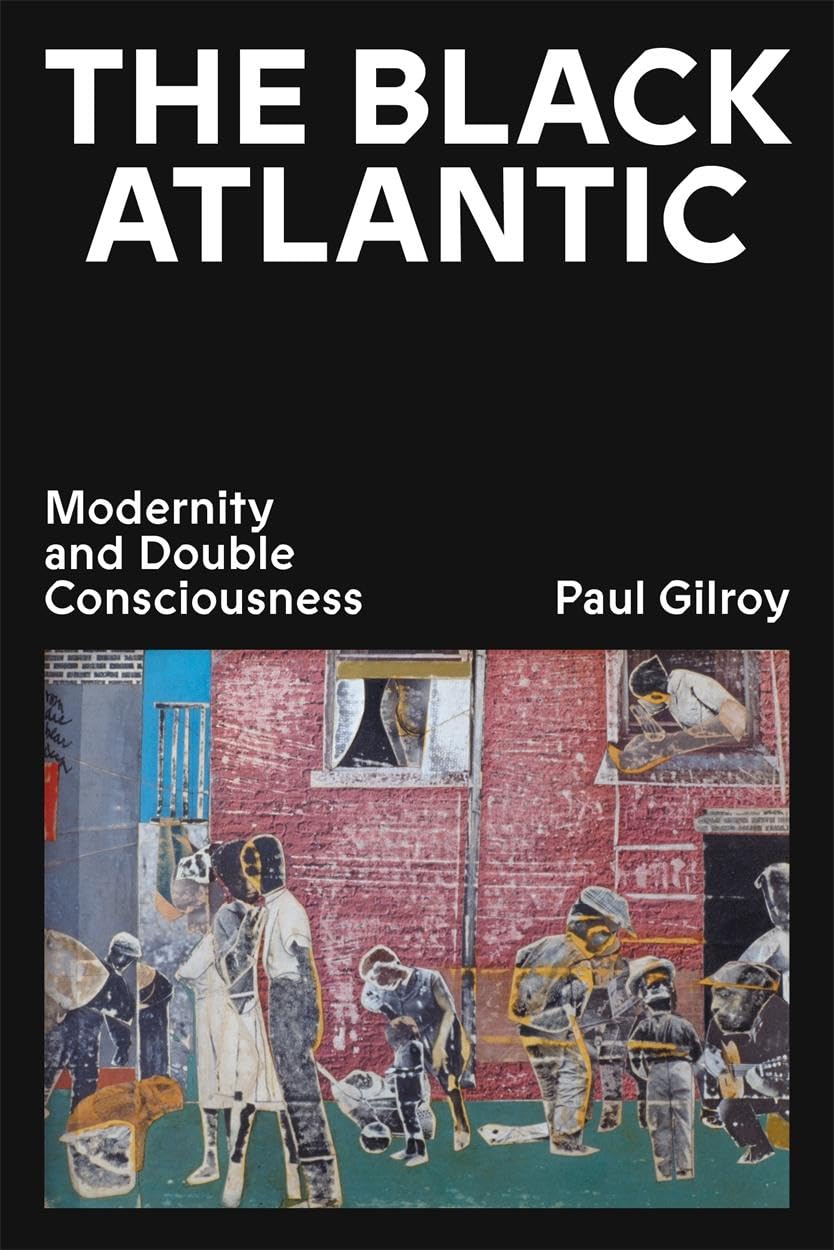
The Black Atlantic: Modernity and Double Consciousness by Paul Gilroy is a pioneering work in diaspora studies, which has completely redefined the concepts of modernity, culture, and identity. Beyond the nation-centred constructs, Gilroy visualises the Black Atlantic as a transnational space that was created due to slavery, colonialism, racial violence, and long-standing cultural sharing among Africa, Europe, the Caribbean, and the Americas. By highlighting the peripheral role of Eurocentric modernity, the book challenges such accounts, demonstrating that the Black intellectual tradition, political movements, and cultural practices are integral to the modern world-making process.
Gilroy constructs the notion of double consciousness through an intensive engagement with history, music, literature, and political philosophy to identify the identities of diasporic subjectivity formed by displacement, hybridity, and various senses of belonging. The review critically analyses the book’s main arguments, intellectual contributions, and continued relevance to diaspora studies. It also considers the book’s weaknesses, mainly that it focuses on the Atlantic world and shows little interest in non-Atlantic diasporas and material political economy. These constraints notwithstanding, The Black Atlantic remains a standard and influential work that continues to shape discussions worldwide on diaspora, race, migration, and modernity.
Introduction
Since its publication in 1993, Paul Gilroy’s The Black Atlantic: Modernity and Double Consciousness has become one of the most influential texts in diaspora studies, cultural theory, and postcolonial scholarship. The book marked a decisive shift away from approaches that explained identity and culture primarily through the framework of the nation-state. Instead, Gilroy proposed a transnational perspective that foregrounds movement, circulation, and historical connection as central features of diasporic life.
Gilroy wrote at a moment when debates on race, multiculturalism, and migration were intensifying in Europe and North America. It is on this backdrop that The Black Atlantic served as a strong critique of small national identities and cultural essentialism. The book posited that the Black diasporic cultures were the result of a historical process of displacement and resistance that cannot be restricted within the borders of the nation. This review discusses the book’s main arguments, examines its contributions to diaspora scholarship, and assesses its enduring value to the globalised world in terms of identity and belonging.
The Black Atlantic as a Transnational Historical Formation
The central theme of the book is the concept of the Black Atlantic, as discussed by Gilroy, both as a historical fact and a method of analysis. The Atlantic Ocean turns into the space of forced migration, culture, and political struggle that emerged with the help of the slave trade and colonialism. This history gave rise to the intertwined black communities that spanned across continents, whose identity was formed by mobility rather than being rooted in territories.
Gilroy criticises traditional historical approaches to modernity, which treat Europe as its sole source. He demonstrates how contemporary concepts of politics, such as freedom, democracy, and citizenship, evolved through thematic interaction with the history of enslavement and racial hegemony. The Black Atlantic is thus not an outsider to modernity; it is a part of it. Having made Black diasporic histories central to modern thought, Gilroy challenges Eurocentric histories and compels a rethinking of how modern societies emerged.
Double Consciousness and Diasporic Subjectivity
A concept that has had a significant impact on the theories presented in the book is the re-conceptualisation of W.E.B. Du Bois’s notion of double consciousness. Gilroy takes Du Bois’s insight out of its original context and offers a broader definition of the condition of being a diaspora. Double consciousness refers to the sense of being part of both cultural and political worlds, yet being marginal to both.
In the case of Gilroy, the identity of the diaspora is the result of constant negotiation between memory and movement, heritage, and transformation. This state creates a critical consciousness that allows the diasporic subjects to challenge the mainstream accounts of the nation, race and progress. Instead of portraying the concept of two consciousnesses as a psychological burden, Gilroy offers a new perspective, viewing it as a means of intellectual and political creativity. The unsettled nature of the notion of Diasporic identities reveals the limitations of nationalist thought.
Culture, Music, and Transnational Political Expression
One of the most notable aspects of The Black Atlantic is that Gilroy takes music and cultural production seriously as a form of political thought. He illustrates musical cultures such as jazz, blues, and reggae to show how diasporic culture bears the histories of suffering, resistance, and solidarity. These cultural practices transcend national boundaries, forging common political languages among the dispersed Black communities.
According to Gilroy, music prevents hegemonic histories. Black Atlantic music challenges national borders, as it encompasses rhythms, performance, and circulation that offer alternative images of community and belonging. Such a cultural focus expands the field of diaspora studies by appreciating artistic expression as a theoretical and critical space, rather than simply representing it.
Critique of Cultural Nationalism
Another intervention that seems among the most significant in the book is a critique of cultural nationalism. Gilroy doubts the strategies of establishing the Black identity based on the standardised beliefs about race, ethnicity, or national origin. Although he considers the significance of nationalist movements in the fight against colonialism in the historical context, his book proposes that cultural nationalism can restore exclusionary boundaries.
Gilroy demands that hybridity, translation, and exchange have always been determinants of diasporic cultures. At a time of cultural purification or identity fixation, there is a disregard for the historical displacement. His criticism targets not only the dominant-nationalist versions but also the essentialist inclinations in the politics of the diaspora. This argument remains highly topical in modern discussions, where issues of authenticity and belonging continue to be sources of tension.
Intellectual Significance and Scholarly Influence
The Black Atlantic has enormous implications for the study of diaspora. The book changed the field of cultural studies by making popular culture a legitimate subject of political discussion. It criticised linear and Eurocentric histories of modernity in postcolonial theory. It prompted migration researchers to perceive mobility as a structural attribute of the contemporary world, rather than a disruption.
Gilroy’s work would also influence further scholarship on transnationalism, racial capitalism, and global cultural flows. The book focused more on the circulation of history and culture, thus offering a guide to how identities are created transnationally and over time. It has an interdisciplinary approach, which is one of its strongest points.
Limitations and Critical Reflections
The Black Atlantic has its limitations, despite its enduring significance. The fact that the book’s central theme is the Atlantic world implies that other diasporic establishments, especially in Asia and certain parts of Africa, have received little coverage. Consequently, the framework fails to adequately represent the diversity of global diasporic experiences, shaped by various colonial and economic histories.
Additionally, the book is not as directly concerned with material political economy as it offers a strong cultural analysis. Problems such as labour exploitation, class inequality, and modern-day migration regimes are not yet fully developed. These are actually limitations of the book, not a failure of the analysis, as they are inherent to the theoretical framework. They refer to the spheres in which future scholarship can expand on the knowledge of Gilroy.
Contemporary Relevance for Diaspora Scholarship
The Black Atlantic remains highly relevant, more than thirty years after its publication. In a globalised world where migration rates have been heightened, racial inequalities and identity politics have intensified; the focus on transnational relationships and historical memory, as detailed by Gilroy, offers practical tools of analysis. The book encourages scholars to be sceptical of simplistic accounts of belonging and to recognise that diaspora is a multifaceted influence on contemporary social life.
For contemporary diaspora scholarship, Gilroy’s work offers a framework for thinking beyond borders and fixed identities. It highlights how displacement and movement can give rise to new forms of political imagination and cultural expression.
Conclusion
Black Atlantic: Modernity and Double Consciousness is one of the most significant works on the study of diaspora. The transnational approach, as outlined by Paul Gilroy, has fundamentally transformed the way scholars perceive culture, identity, and modernity. The book challenges Eurocentric discourse and exposes the limitations of nation-centred thinking by focusing on the lives of the African diaspora.
The book remains inspirational in critical scholarship across other fields, despite its geographic and analytical limitations. The book is essential for individuals interested in diaspora, race, and global modernity, as it emphasises migration, hybridity, and historical injustices.

Leave a Reply